How Deep Should a Raised Bed Be? It Depends on the Crop
Bed depth comes down to what you grow and what is under the frame. See what extension services give for beds over soil and on hard surfaces, by crop group.
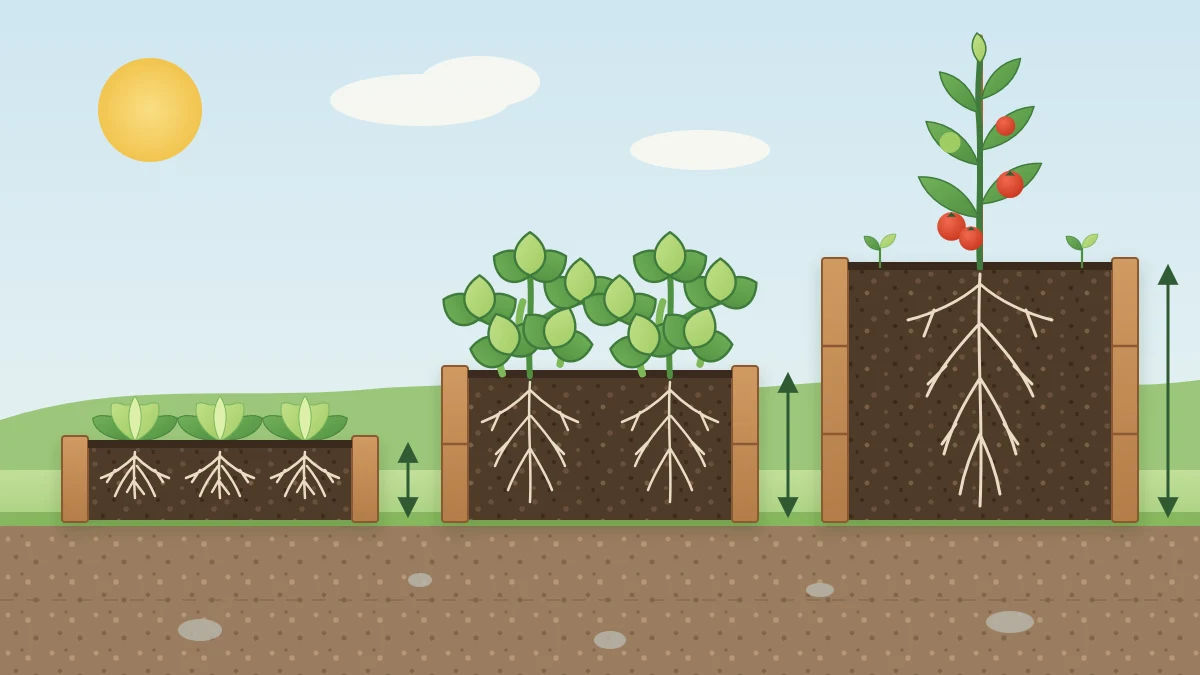
Ask ten gardeners how deep should a raised bed be and you will hear ten figures. That is not carelessness. The honest answer depends on two things: what you want to grow, and what lies underneath the frame.
A low bed over good ground can grow a wide range of crops, because roots keep going below it. The same low bed on a paved patio is a shallow container. Once you know which situation you have, choosing a depth gets much easier.
Two questions that decide the depth
What will you grow? Lettuce and other leafy greens have shallow, fibrous roots. Tomatoes, peppers and squash root far more deeply. Long carrots and parsnips need loose soil at least as deep as the root you hope to pull.
What is underneath? If the bed sits on soil that roots can enter, the ground adds to the depth of the fill. If it sits on concrete, paving or soil that roots cannot use, the fill is the whole root zone.
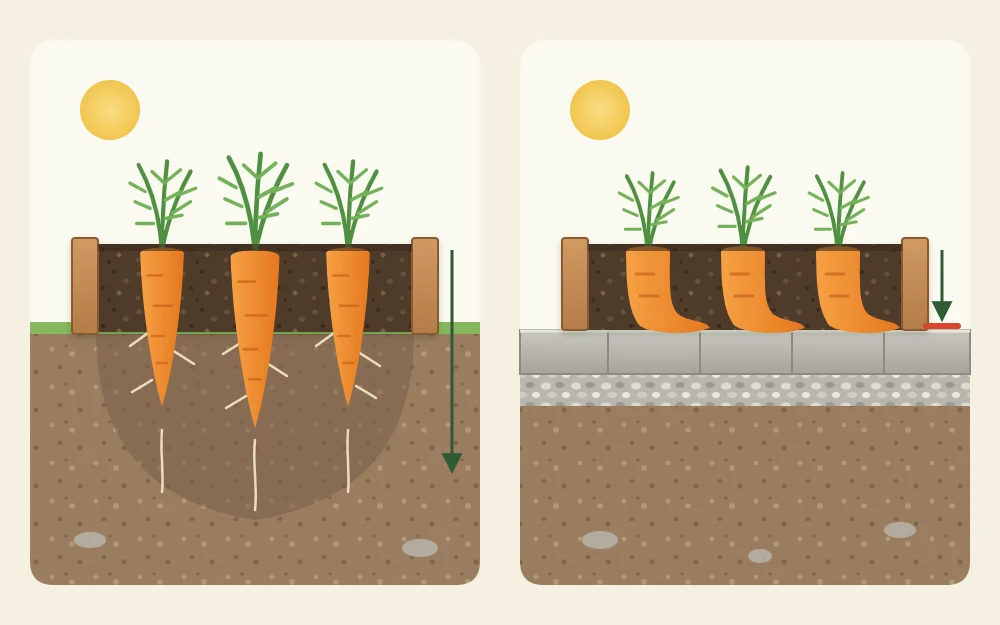
Over open soil: the ground does part of the work
Most backyard beds sit on lawn or garden soil. Here the frame holds a layer of improved soil mix on top of ground that roots can explore. Oregon State University Extension’s raised bed gardening guide describes beds about 8 in (20 cm) deep as giving sufficient rooting depth for most vegetables. The University of Maryland Extension describes raised beds as anywhere from 2 to 12 in (5 to 30 cm) tall.
The two sources give different figures, and both are describing beds over soil. A low bed is not a compromise in that setting, provided the ground below is welcoming. Before filling, loosen the native soil with a garden fork so roots and water can pass from the fill into the ground without meeting a packed layer.
If the native soil is heavy clay or badly compacted, roots will use less of it. A somewhat taller bed gives them more good soil to work with.
On a hard surface: the fill is all the plant gets
A bed on a paved patio or driveway has no ground to borrow from. For this case, the University of Maryland Extension’s guide to soil for raised beds gives minimum depths by crop: 8 in for leafy greens, beans and cucumbers, and 12 to 24 in (30 to 60 cm) for peppers, tomatoes and squash. It suggests filling such beds with compost and soilless growing mix in equal parts.
These are minimums, and they come as a range for the larger crops because varieties differ in size. A compact patio tomato and a tall indeterminate vine are not asking for the same root room.
Treat a bed the same way when the soil below is unusable, for example ground you have been advised not to grow food in. What goes into the frame matters more than usual here, and the guide to raised bed soil mix explains the options.
Depth by crop group
The table gathers the published figures. Read each one with its source and situation, and check the seed packet or plant tag for the variety in hand.
| Crop group | Bed over soil roots can use | Bed on a hard surface |
|---|---|---|
| Leafy greens | A low bed is commonly enough; Oregon State University Extension describes about 8 in as sufficient for most vegetables | At least 8 in (University of Maryland Extension) |
| Beans and cucumbers | As above, with the ground loosened first | At least 8 in (University of Maryland Extension) |
| Peppers, tomatoes and squash | Roots travel into the native soil, so a low bed can work over good ground | 12 to 24 in (University of Maryland Extension) |
| Long carrots and parsnips | Loose fill plus loosened ground at least as deep as the mature root | Fill at least as deep as the root length on the packet, or choose short varieties |
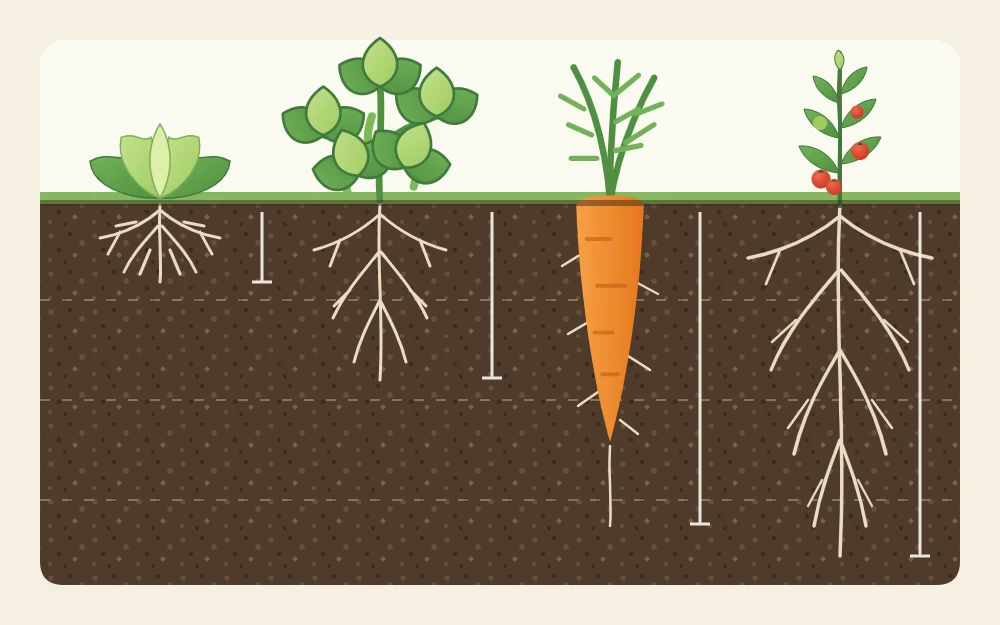
Root crops and deep-rooted crops
Carrots show the principle most clearly. A long variety that meets a packed layer or a hard surface commonly forks or stays stubby. You have two fixes: give the root loose depth to match its length, or grow a short or round variety bred for shallow soil. The guide to growing carrots and root vegetables in raised beds covers the choice of variety.
Tomatoes sit at the other end. They root deeply and are heavy feeders and drinkers by midsummer, so a generous root zone keeps them steadier between waterings. See growing tomatoes in raised beds for how depth, spacing and support fit together.
What a deeper bed gives you, and what it costs
- Less bending. A taller bed brings the soil closer to your hands, which matters a great deal to some gardeners.
- More root room where the ground below is poor or absent.
- More soil to buy. Fill volume rises in step with depth, and fill is commonly the largest cost of a bed.
- More weight. Wet soil is very heavy, and a tall bed holds a great deal of it.
- Different drying. A deep bed holds a larger reserve of moisture lower down, but the surface still dries quickly, so seedlings need the same attention.
Good to know
Wet soil pushes outward hard on the walls of a tall bed. Follow the kit maker’s instructions and get qualified help for tall or long beds. If a bed is going on a deck, balcony or roof, have a qualified professional confirm first that it can carry the weight.
Frame choices affect how tall you can sensibly go, and the overview of raised bed materials compares them.
Choosing your depth
- List what you most want to grow, and note the deepest-rooted crop on the list.
- Check what is underneath: soil that can be loosened, soil roots cannot use, or a hard surface.
- Over usable soil, a low to medium bed with the ground loosened below suits a wide range of crops.
- On a hard surface, take the minimum for your deepest-rooted crop from the table as your starting point.
- Then weigh comfort against the cost and weight of the extra fill.
If you are torn between two heights, remember that soil settles and you will top it up each year. A frame with a little spare height is easier to live with than one filled to the brim.
Frequently asked questions
Is a 6 inch raised bed deep enough?
Over loosened, healthy ground it can be, because roots continue into the soil below the frame. Salad greens, radishes and bush beans are common choices for low beds. On a hard surface 6 in is below the minimums the University of Maryland Extension gives, so choose a deeper bed there.
Do I need to dig up the ground under a raised bed?
You do not need to dig it over, but loosening it helps. Push a garden fork in and rock it back across the footprint before filling, so roots and water can move from the fill into the native soil. Skip this only where the bed sits on a hard surface.
Does a deeper raised bed need less watering?
A deeper bed holds a larger reserve of moisture, so established plants may go longer between waterings. The top few inches still dry out quickly, though, and that is where seeds and young transplants live. Check the soil with a finger rather than assuming depth has it covered.