Growing Carrots and Root Vegetables in Raised Beds
How to grow straight carrots, beets and radishes in a raised bed: matching the variety to your loose soil depth, sowing and thinning, and the usual reasons roots fork.
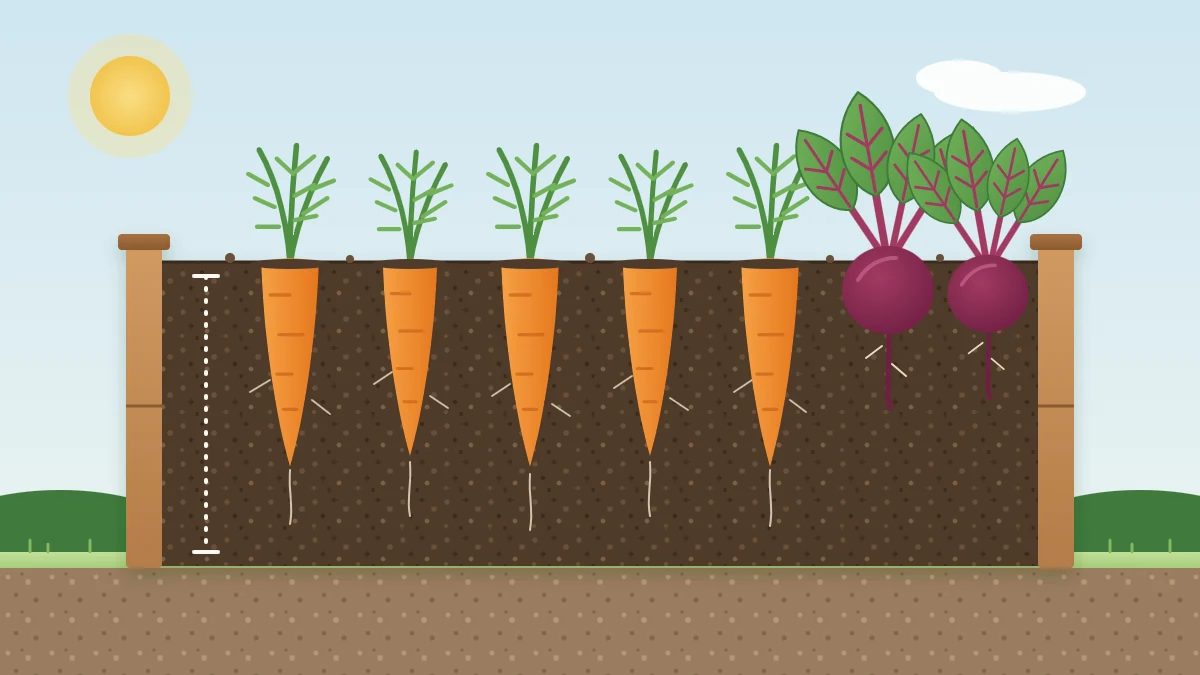
Root crops ask for one thing above all: soil they can push through without meeting resistance. That is why growing carrots in raised beds works so well for many gardeners. The fill is loose, nobody walks on it, and you chose what went into it.
The same holds for beets and radishes, which share a bed comfortably with carrots. This guide covers how the three differ, how much loose soil the variety in your hand needs, how to get slow carrot seed to come up, and what commonly lies behind forked or stunted roots.
Why raised beds suit root crops
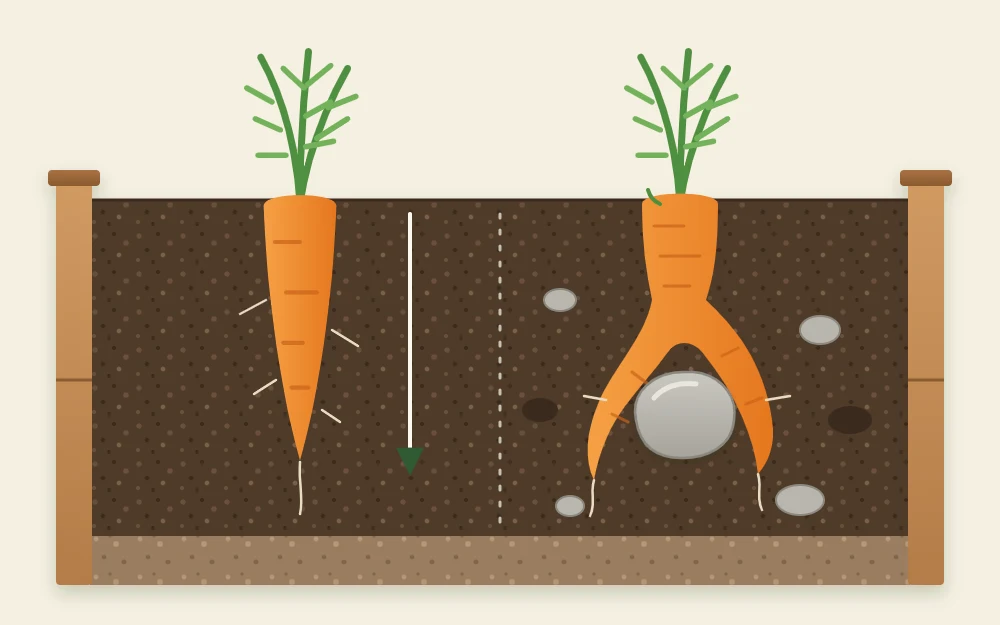
A carrot is a taproot. It grows straight down until something stops it, and then it bends, splits or stalls. In ordinary garden ground the usual obstacles are stones, hard clods and a compacted layer left by feet and wheels.
A raised bed removes most of those. You work from the path, so the soil stays open from one season to the next. Beds also drain well, although that means the surface dries quickly while seeds are germinating.
Match the variety to your soil depth
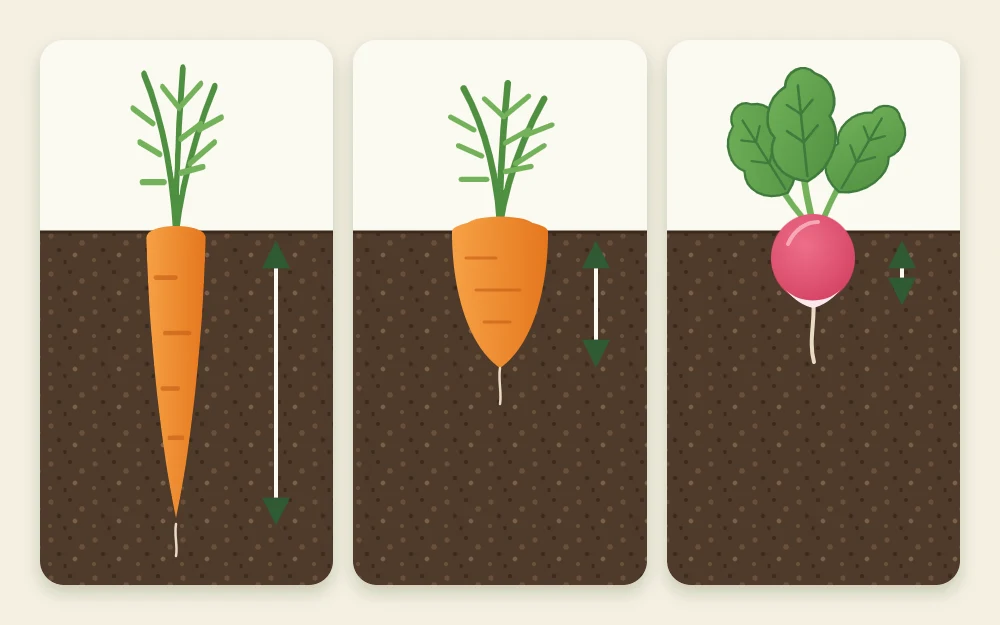
Carrot varieties differ a great deal in length. Some are long and slender, some are short and stubby, and a few are almost round. The seed packet normally states the mature root length, and that figure tells you how much loose soil the variety needs: at least as deep as the root itself, with a little to spare.
What counts is loose depth, which is the fill plus any loosened native soil beneath it. A low frame over forked, healthy ground can grow a long carrot. The same frame on a hard surface, or over ground the roots cannot enter, suits short and round types better. The guide to how deep a raised bed should be explains how to judge this for your own bed.
Prepare a fine, stone-free seedbed
Before sowing, loosen the bed with a fork to the depth your variety needs and break up clods by hand. Pick out stones, sticks and lumps of unfinished compost. Rake the top inch or so (2 to 3 cm) until it is fine and level, because small seed sown into coarse lumps germinates patchily.
A blend with plenty of mineral body and well-finished compost is what you want here. If your bed is new, the article on choosing a raised bed soil mix covers the ingredients. Root crops are not heavy feeders, so add fertilizer only as a soil test and the product label call for.
Good to know
Never use fresh manure on a food bed. Use only fully composted material, and work it in well ahead of sowing. Fresh or rich, lumpy amendments are also commonly linked with forked and hairy carrots.
Sow directly and keep the surface moist
Carrots, beets and radishes are direct sown. A damaged taproot rarely recovers its shape, so these crops are not started in trays and moved the way tomatoes are.
All three are cool-season crops, sown in spring and again toward fall. Your local extension planting calendar gives the windows for your area.
- Draw a shallow furrow across the bed. Carrot seed is fine and is typically covered only lightly; beet and radish seed is larger and goes a little deeper. Follow the depth printed on the packet.
- Sow thinly. Mixing fine carrot seed with dry sand makes it easier to spread.
- Cover, firm gently with the back of a rake and water with a soft shower so the seed is not washed out.
- Keep the surface from drying out until seedlings show. Radishes are often up within days, beets take longer, and carrots can take two or three weeks in cool soil.
That long wait is where many carrot sowings fail. A board or a strip of burlap laid over the row holds moisture; lift it as soon as the first seedlings appear.
Thin to the packet spacing
Thinning feels wasteful, but crowded roots stay thin and tangle around each other. Once seedlings have a couple of true leaves, remove the extras so the remaining plants stand at the distance the packet gives. Snipping at soil level disturbs the neighbors less than pulling.
Published intensive spacings are commonly a few inches (roughly 5 to 10 cm) between plants for carrots and beets, and about an inch for small radishes, but they vary with the variety and its mature size. The University of Maine Cooperative Extension planting chart is a good example of a per-crop reference to check against your packet.
Each beet “seed” is a cluster that often produces several seedlings, so beets nearly always need thinning. The thinnings are tender greens for the kitchen.
Why roots fork or stay small
A misshapen carrot has several possible causes, and often more than one applies. Forking and twisting are commonly associated with:
- stones, hard clods or woody debris in the root’s path
- a compacted layer or a hard surface below the loose soil
- fresh manure or very rich, uneven amendments
- crowding from late or skipped thinning
- damage to the young root tip, including from transplanting
Small roots under generous tops can point to crowding, too much shade, or soil richer in nitrogen than the crop needs. If a problem repeats, your local extension office can help you narrow it down.
Sow radishes with carrots
Radishes and carrots make a practical pair because of timing. The University of Maryland Extension lists radishes with carrots among common interplantings in its guide to succession and companion planting. A pinch of radish seed in the carrot furrow comes up fast, marks the row so you can weed around it, and is harvested before the carrots need the room.
Tip
Sow a short row at a time instead of the whole packet. A few small sowings spread over the cool season give a steadier supply than one large one, as the guide to succession planting in raised beds explains.
When to harvest
Use the days to maturity on the packet as a rough guide, then check the roots themselves.
- Radishes: pull promptly once the root has reached the size described for the variety. Left too long, they tend to turn pithy and sharp.
- Beets: the shoulder shows at the soil line, so you can judge the diameter without digging. Smaller roots are usually more tender.
- Carrots: brush soil from the top of a root to see its width and color, and pull one to test. Water the bed first, or loosen alongside the row with a fork, so tops do not snap off.
Frequently asked questions
How deep does a raised bed need to be for carrots?
It depends on the variety. A long carrot needs loose soil at least as deep as its mature root, which the seed packet usually lists. Short and round types manage in much shallower soil. Loosened native soil under the frame counts toward the total, so a low bed over good ground can still grow longer roots.
Can I start carrots indoors and transplant them?
It is not usually worth it. Carrots form a taproot from the first days, and disturbing that root tip is commonly linked with forked or stunted carrots. Direct sow the seed where the plants will grow, keep the surface moist until seedlings appear, and thin them later to the packet spacing.
Why did my carrot seeds not come up?
There are several possibilities. Carrot seed is slow, often taking two or three weeks in cool soil, and the surface must not dry out in that time. Seed sown too deep, a crust on the soil, old seed, or heavy rain washing seed away are other common reasons. Resow thinly and cover the row to hold moisture.