Growing Tomatoes in Raised Beds: Space, Support and Water
How to grow tomatoes in a raised bed: choosing between determinate and indeterminate types, giving each plant enough room, planting deep, supporting it from day one and keeping moisture even.
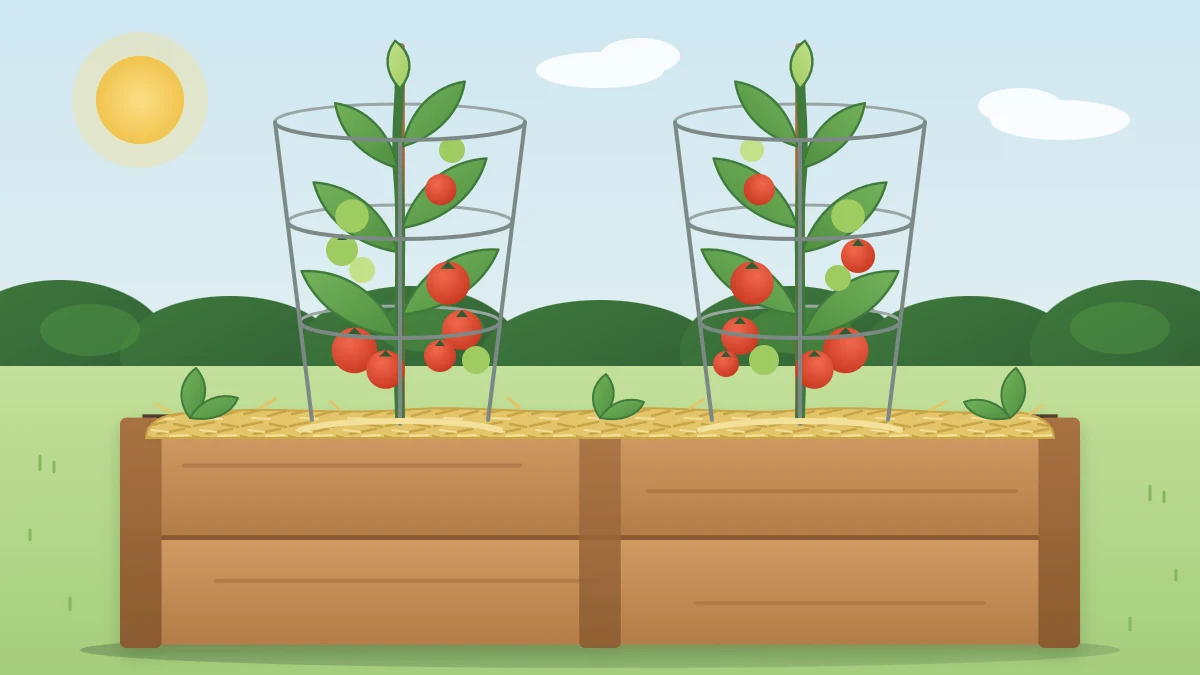
Tomatoes are the crop most people picture when they plan a vegetable bed, and they respond well to the warm, loose, deep soil a bed provides. They are also the plants most likely to outgrow the space you gave them.
Growing tomatoes in raised beds successfully is mostly a matter of three decisions made at planting time: which type you are growing, how much room each plant gets, and what will hold it up. Steady moisture does much of the rest.
Determinate or indeterminate: check before you plant
Every tomato variety falls into one of two growth habits, and the plant tag or seed packet will say which.
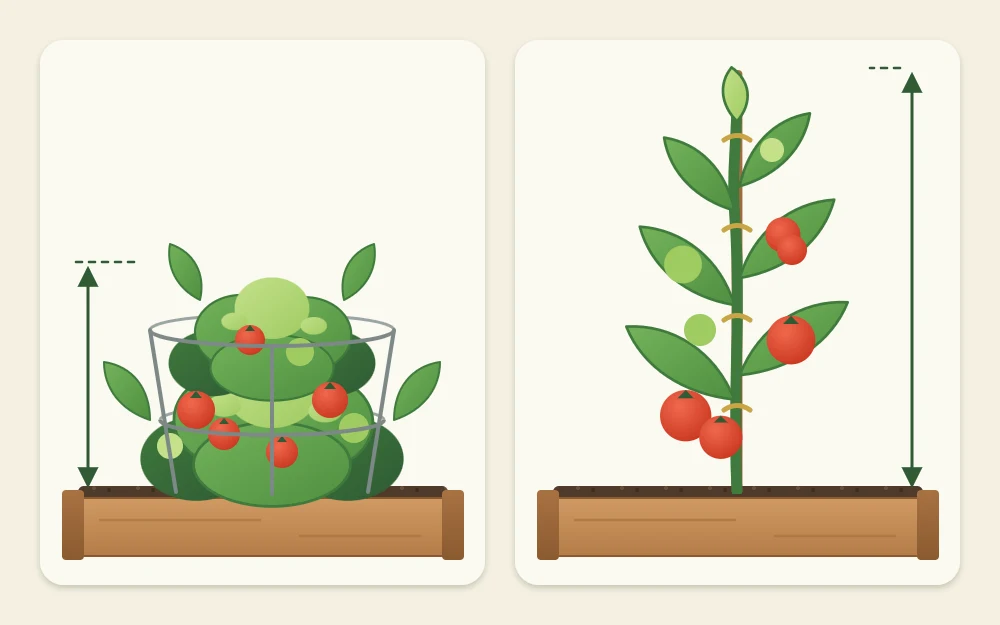
- Determinate tomatoes, often called bush types, grow to a set height, flower and ripen most of their fruit over a few weeks. They stay fairly compact and need only a short cage or stake.
- Indeterminate tomatoes are vines. They keep growing, flowering and fruiting until frost or disease stops them, and can end up taller than the gardener. They need tall, strong support and more room.
How many tomato plants fit in a bed
Fewer than most people hope. Spacing for tomatoes is a range that depends on the type and on how you train the plant. University of New Hampshire Extension’s article on raised beds for small spaces says a single tomato plant needs at least 18 in (45 cm) in all directions and that 2 ft (60 cm) is better, especially for indeterminate varieties.
Treat that as a floor, then check the tag for the variety you bought. Large, unpruned plants in cages are commonly given more room than plants pruned to one stem on a stake. Crowded tomatoes shade each other and their leaves stay wet longer after rain, and both conditions are commonly associated with more leaf disease. The guide to spacing plants in a raised bed explains how to work from tag figures to a layout.
Tip
In the Northern Hemisphere, plant tomatoes along the north side of the bed. They will be the tallest thing in it by midsummer, and there they will not shade shorter crops.
Depth and how to plant
Tomatoes root deeply when they can. In a bed set on open ground, roots continue from the fill into the native soil below. Where a bed stands on a hard surface, the fill is all the plant has: the University of Maryland Extension gives a minimum depth there of 12 to 24 in (30 to 60 cm) for tomatoes, peppers and squash.
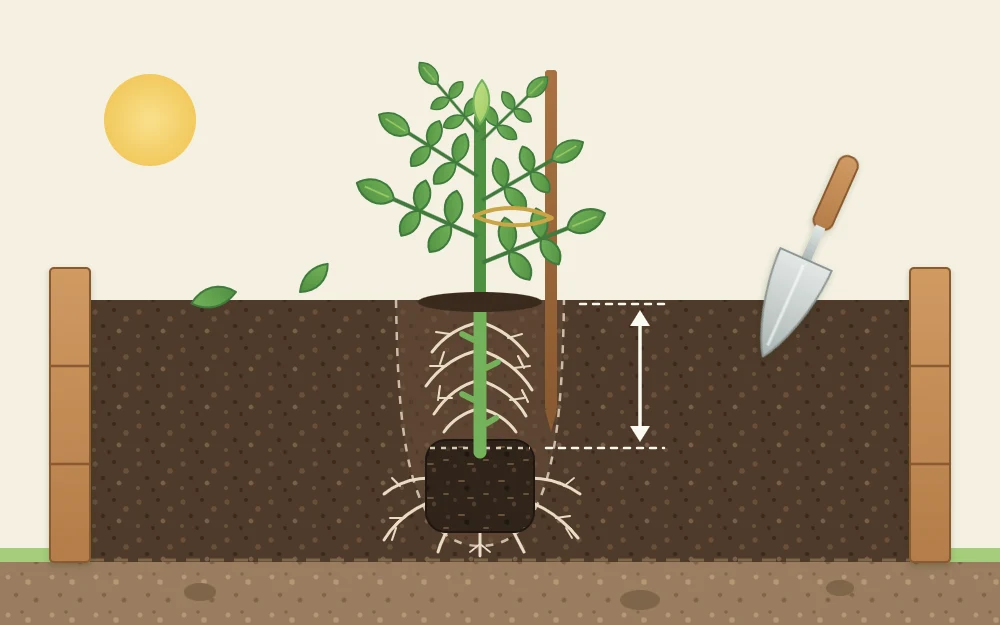
Tomatoes also have an unusual ability to grow roots along a buried stem. You can use that when planting:
- Water the transplant in its pot.
- Pinch off the lowest leaves, leaving the top clusters.
- Dig a hole deep enough to bury part of the bare stem, or lay a tall, leggy plant at an angle in a shallow trench.
- Set the plant in, fill around it and firm the soil gently.
- Water it in well.
Wait for warm soil
Tomatoes are warm-season plants with no tolerance for frost, and they sulk in cold soil even when the air is mild. Set transplants out after the last frost date for your area, once nights have warmed. Raised beds warm sooner in spring than ground soil, which helps, but it does not replace checking your local dates and the forecast.
Good to know
The last frost date is an average, so later frosts do happen. Keep covers handy for the first weeks and use them if a cold night is forecast.
Put supports in at planting time
Install the cage, stake or string before or at planting. Pushing a stake in later means driving it through roots, and wrestling a cage over a plant that has already spread breaks stems.
- Cages suit determinate types and gardeners who prefer not to prune. Choose one sized to the mature plant, since small cones are often overtopped.
- Stakes suit indeterminate plants trained to one or two stems. Tie the stem loosely with soft ties as it grows.
- Strings or a trellis along one side of the bed work for a row of vining plants. A row of fruit-laden vines is heavy and catches wind, so follow the maker’s instructions for any kit.
Even moisture and mulch
Tomatoes do best when soil moisture stays steady. Swings between dry and soaked are commonly associated with fruit cracking and with blossom-end rot, the dark, sunken patch on the bottom of a fruit. Both have more than one possible cause, but steadier watering is the usual first step.
Raised beds dry faster than ground soil, so check instead of guessing: push a finger into the soil a couple of inches down and water when it is dry there. Aim water at the soil, not the leaves. The guide to watering raised beds covers the method in full.
A layer of organic mulch slows evaporation, evens out moisture and keeps soil from splashing onto lower leaves. Wait until the soil has warmed before spreading it. See the guide to mulching raised beds for materials and depth.
Feeding and rotation
Soil with a good share of compost carries tomatoes a long way. If you feed, do it lightly and apply only what a soil test and the product label call for. Too much nitrogen is commonly associated with lush leaves and few fruit.
Next year, plant tomatoes somewhere else. University of Maryland Extension’s page on succession and companion planting describes crop rotation as moving crop families to different garden locations each growing season. Peppers, eggplant and potatoes belong to the same plant family as tomatoes, so they count as the same crop for this purpose. The guide to crop rotation in raised beds shows how to plan it.
Common troubles in brief
- Yellowing lower leaves. Often normal aging or shading. Other possibilities include leaf diseases, wet soil and low nutrients.
- Flowers but no fruit. Commonly linked to very hot or cold nights, too much nitrogen or too little sun.
- Cracked fruit. Often follows heavy rain or watering after a dry spell. Some varieties crack more than others.
- Spotted leaves. Several fungal and bacterial diseases look alike. Remove affected leaves, improve airflow and clear away plant debris at season’s end.
If a problem persists or spreads, your local extension office can help identify it from a sample.
Frequently asked questions
How many tomato plants can I put in a 4 by 8 foot raised bed?
It depends on the type and how you train it. The University of New Hampshire Extension gives at least 18 inches in all directions per plant and calls 2 feet better, especially for indeterminate varieties. Check the plant tag, and remember that fewer, well-spaced plants are easier to keep healthy.
Should I prune tomato plants in a raised bed?
Determinate types are generally left unpruned, since removing shoots reduces their crop. Indeterminate types are often pruned to one or two stems when staked, which saves space and improves airflow. Caged vining plants can be left fuller if they have enough room.
Why do some tomatoes have dark patches on the bottom?
That is commonly blossom-end rot, which is often associated with uneven soil moisture while fruit is forming, though other factors can contribute. Keeping moisture steadier and mulching the soil are the usual first steps. Later fruit on the same plant is frequently unaffected.