Raised Bed Plant Spacing: Why Every Crop Is Different
Why spacing follows the crop, the variety and its mature size, where to find the right distance for what you are planting, typical ranges for contrasting crops, and how to thin seedlings.
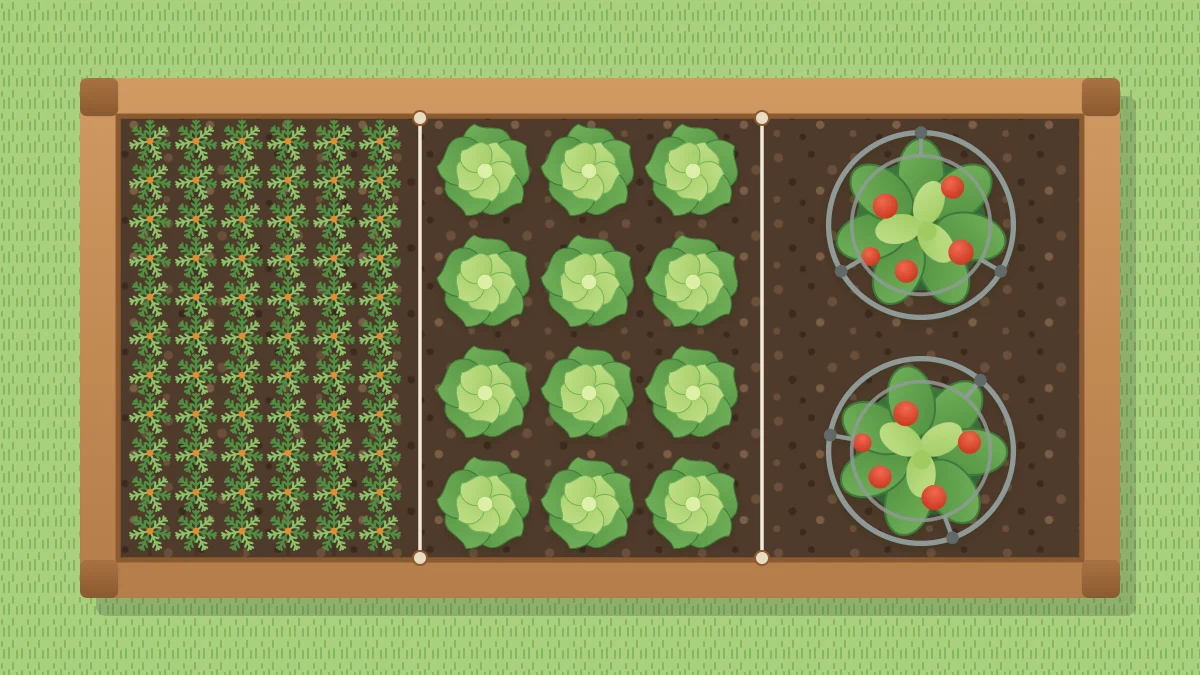
The bed is filled, the seedlings are waiting, and the question is how far apart to put them. It would be convenient if raised bed plant spacing came down to one number, but it does not, and any chart that offers one is hiding the differences that matter.
A radish and a tomato plant differ in size by a factor of dozens. What you need is not a figure to memorize but a way to find the right distance for the crop and variety in your hand.
Why there is no single number
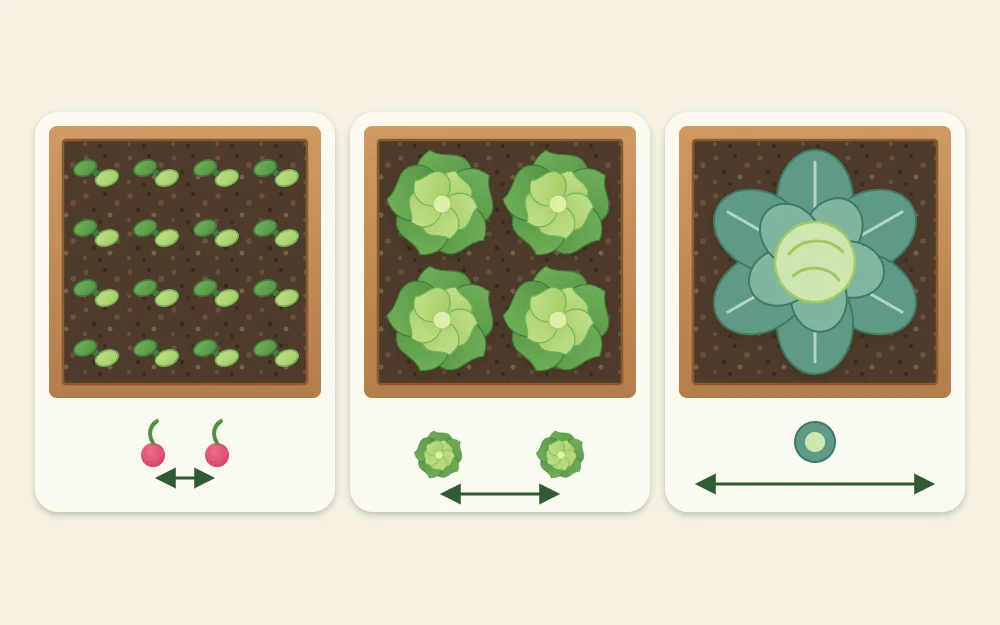
Spacing follows the plant, and three things about the plant decide it.
- Mature size. Give each plant the room it will fill when fully grown, not the room it takes as a seedling. This varies by crop and by variety: a compact lettuce and a large romaine are both lettuce.
- How it is grown. A cucumber climbing a trellis takes a fraction of the ground that the same plant uses sprawling. A staked tomato needs less width than a caged or unsupported one.
- What each plant needs. Every plant draws light, water and nutrients from the space around it and needs air moving through its leaves.
Where to find the right figure
Look in this order.
- The seed packet or plant tag. It is written for that exact variety, which makes it the best source you have. Look for the distance between plants after thinning.
- An extension planting chart. When the packet is lost or vague, a chart from a university extension service fills the gap. The University of Maine Cooperative Extension planting chart is a good example: it lists the distance between rows, the distance between plants and the planting depth crop by crop.
- Your own notes. After a season you will know which crops felt cramped and which left bare soil in your conditions.
Rows on the packet, no rows in the bed
Seed packets usually give two distances: one between plants in the row and a larger one between rows. The row figure is there so a gardener can walk and hoe between the lines.
In a raised bed you work from the path and never step on the soil, so that walking space is not needed. Many gardeners therefore use the in-row plant distance in all directions, setting plants in a grid or a staggered pattern. Large crops are the exception worth checking, since their between-row figure partly reflects how wide the plant itself grows. The guide to raised bed planting layouts shows how rows, blocks and staggered patterns work in practice.
Typical ranges for contrasting crops
The table shows how widely spacing differs. These are typical published ranges for the distance between plants, they vary by variety, and they are here for comparison. The packet or tag for your variety comes first.
| Crop | Typical published range | What changes it |
|---|---|---|
| Radishes | About 1 to 2 in (2.5 to 5 cm) | Larger winter types need more |
| Carrots | About 2 to 3 in (5 to 8 cm) | Root width of the variety |
| Leaf lettuce | About 4 to 8 in (10 to 20 cm) | Baby leaf is sown closer; heading types need more |
| Bush beans | About 3 to 6 in (8 to 15 cm) | Vigor of the variety |
| Cabbage, broccoli and relatives | Around 18 in (45 cm), often more | Compact versus large-headed varieties |
| Tomatoes | From about 18 in to 3 ft (0.9 m) or more | Determinate or indeterminate, staked or caged |
Tomatoes show the spread best. The University of New Hampshire Extension’s article on raised beds for small spaces says a single tomato plant needs at least 18 in in all directions and that 2 ft (60 cm) is better, especially for indeterminate varieties.
If you are still choosing crops, the round-up of the best vegetables for raised beds sorts common choices into small, medium and large space needs.
What crowding costs
Tight planting is tempting because seedlings look lost in an empty bed. The cost arrives weeks later.
- Small or misshapen roots. Root crops that touch their neighbors often stay thin or twist around each other.
- Competition. Crowded plants share the same water, nutrients and light, and commonly grow tall and weak as they stretch for the sun.
- Poor airflow. Leaves packed together stay wet longer after rain, and damp, still foliage is commonly associated with leaf diseases.
- Hard harvesting. Fruit hides in the tangle and stems break when you reach in.
What wide spacing costs
Going too far the other way has a price as well. Bare soil between plants gets full sun, so weed seeds sprout and moisture evaporates faster. You also grow less in the space you built and filled.
The aim is for the leaves of neighboring plants to just meet when the plants are mature, shading the soil without piling onto each other. Until then, mulch or a quick crop such as radishes can cover the gaps.
Spacing is about room sideways. Room downward is a separate question, covered in the guide to how deep a raised bed should be.
Thinning seedlings
Crops you direct sow, such as carrots, radishes, beets and lettuce, are sown thicker than their final spacing because not every seed comes up. Thinning is removing the extras so the remaining plants have the room the packet calls for.
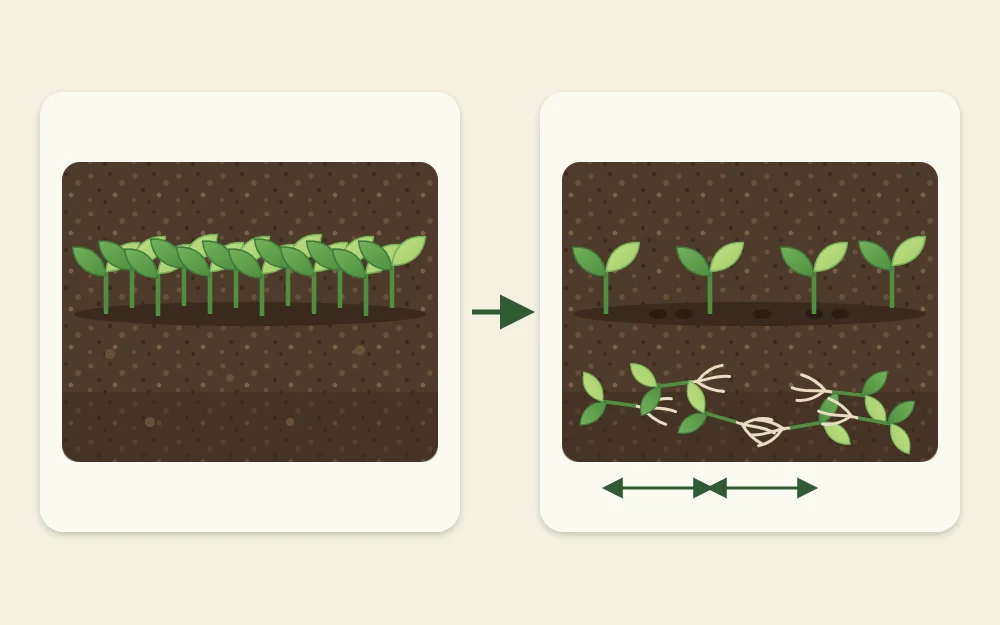
- Wait until the seedlings have a pair or two of true leaves and are easy to handle.
- Water first if the soil is dry, so roots slide out without disturbing neighbors.
- Keep the sturdiest seedlings at the distance on the packet and remove the rest.
- Where seedlings are tightly bunched, snip the extras at soil level with scissors instead of pulling.
- Firm the soil gently and water again.
Tip
Thin in two passes: first to half the final distance, then to the full distance a couple of weeks later. Lettuce and beet thinnings from the second pass are big enough to eat.
A quick check before you plant
Lay the transplants out on the soil, still in their pots, at the distances from their tags. Step back and picture each one at its mature size. If the bed already looks full, it is: remove a plant now rather than fight the crowd in midsummer.
Frequently asked questions
Can I plant closer together in a raised bed than in the ground?
Often you can drop the wide gap between rows, because you never walk in the bed. The distance between individual plants still follows the crop and the variety, so use the in-row figure from the seed packet or plant tag rather than shrinking it.
What happens if I plant vegetables too close together?
Crowded plants compete for light, water and nutrients. Roots commonly stay small, stems stretch and weaken, and leaves stay damp longer, which is often associated with disease. Harvesting gets harder too. Thinning early is easier than dealing with a tangled bed in midsummer.
How many tomato plants fit in a raised bed?
It depends on the bed and the type of tomato. The University of New Hampshire Extension gives at least 18 inches in all directions for a single plant and calls 2 feet better, especially for indeterminate varieties. Check the plant tag and measure your bed before buying.