Raised Bed Planting Layouts: Rows, Blocks and Tall-to-Short
Ways to arrange plants inside one raised bed: cross-rows, grids, staggered blocks and an edge trellis, ordered from tall to short, with two example plans to adapt.
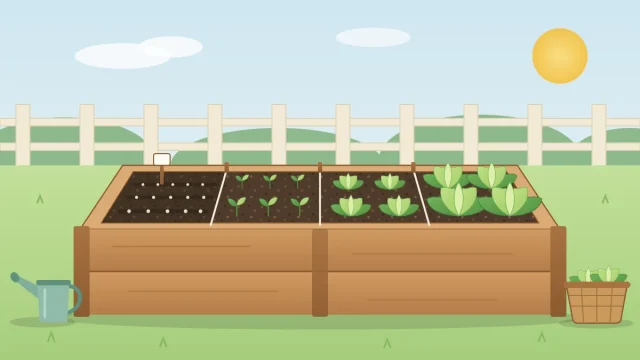
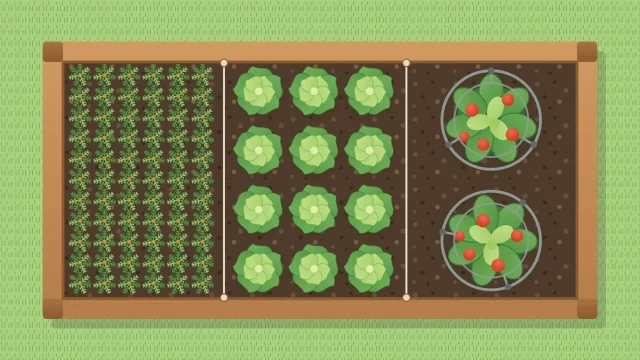
A filled bed and a tray of seedlings raise an immediate question: where does everything go? A raised bed has no walking rows, so the long single rows of a traditional plot waste space, yet scattering plants at random makes the bed hard to weed, water and pick.
A good raised bed planting layout is simply a pattern you can repeat and reach into. This guide describes the common patterns, how to order crops by height, and two example plans you can adapt.
Start with reach and spacing
Two things are fixed before you choose a pattern. The first is the bed itself: you should reach the middle from the path without stepping on the soil, which is the reasoning behind the widths discussed in the guide to choosing a raised bed size.
The second is how much room the plants need, which differs by crop and variety. A layout tells you how to arrange plants, not how far apart they go. Take that distance from the seed packet or plant tag, and see the guide to raised bed plant spacing for how to read it.
Four patterns that work in a bed
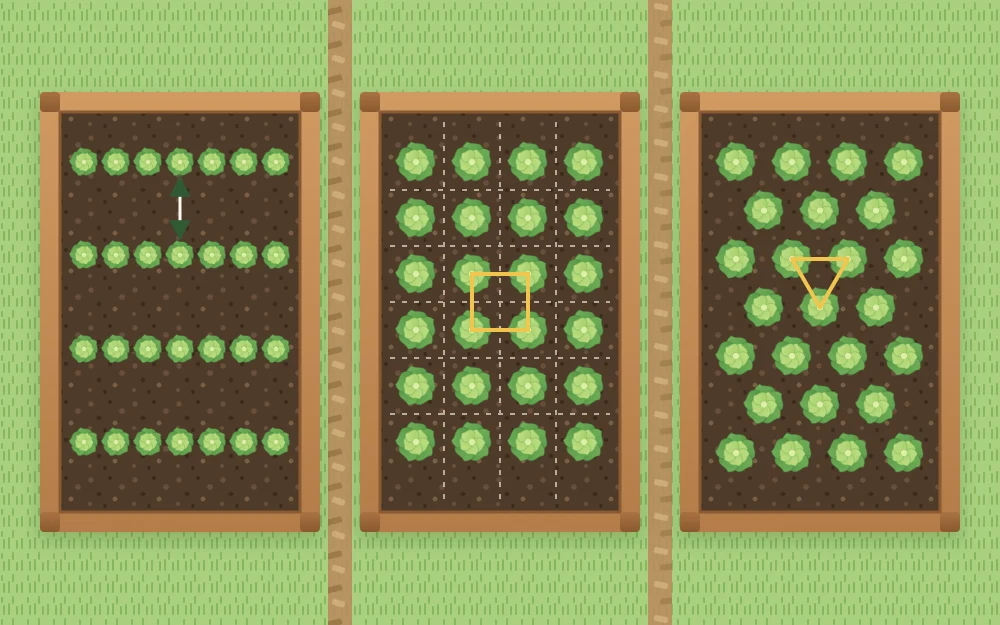
Most beds use a mix of the following.
- Short cross-rows. Rows run across the width of the bed instead of along its length. They are quick to sow, easy to hoe between and simple to replant one at a time. Good for direct-sown crops such as carrots, radishes, beets and bush beans.
- Blocks or grids. Plants stand at the same distance in every direction, with the in-row spacing from the packet commonly used both ways. Suits transplants such as lettuce, kale and peppers.
- Staggered planting. Each row is offset by half a space so plants form triangles. It fits slightly more plants into the same area at the same plant-to-plant distance and covers the soil evenly.
- A trellis along one long edge. Climbing beans, peas and cucumbers grow upward on a support at the edge and leave the rest of the bed free.
Order crops by height
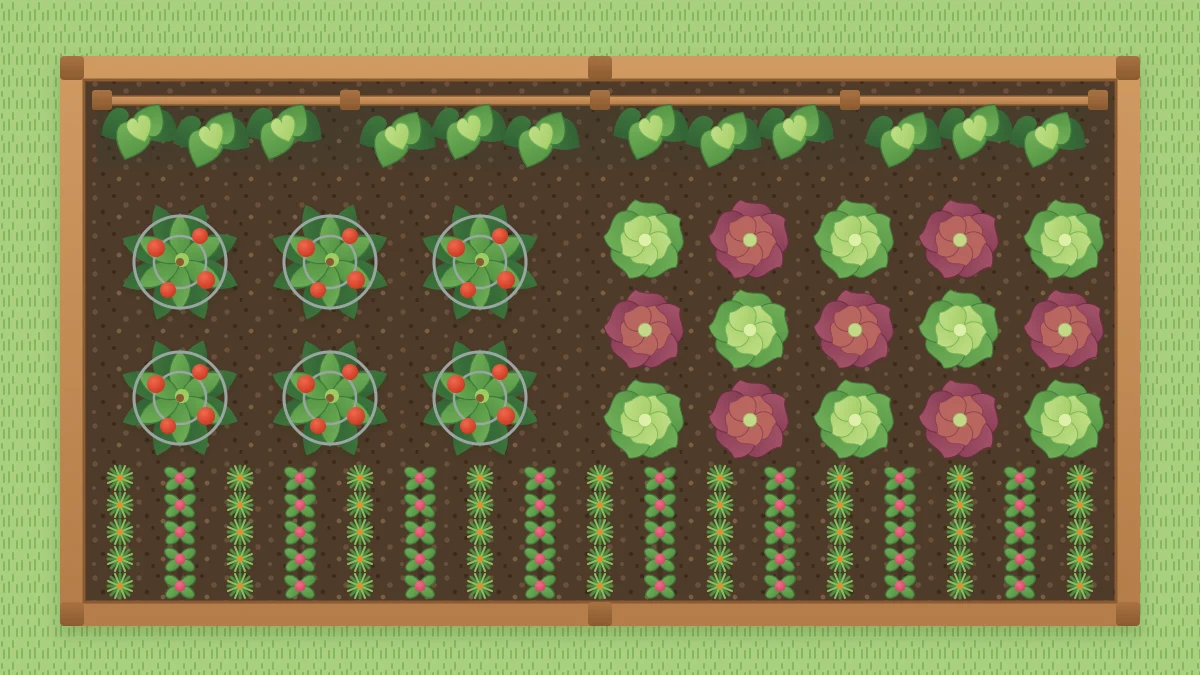
Tall plants cast shade, and where that shade falls decides whether the plants behind them grow well. In the Northern Hemisphere the sun sits to the south for most of the day, so shadows fall toward the north.
The University of Maryland Extension advises placing taller crops on the north and west sides in its guide to planning a vegetable garden. In practice:
- North side: trellised crops, staked or caged tomatoes, and other tall plants.
- Middle: medium, bushy plants such as peppers, kale, chard and bush beans.
- South side: low crops such as lettuce, radishes, carrots and most herbs.
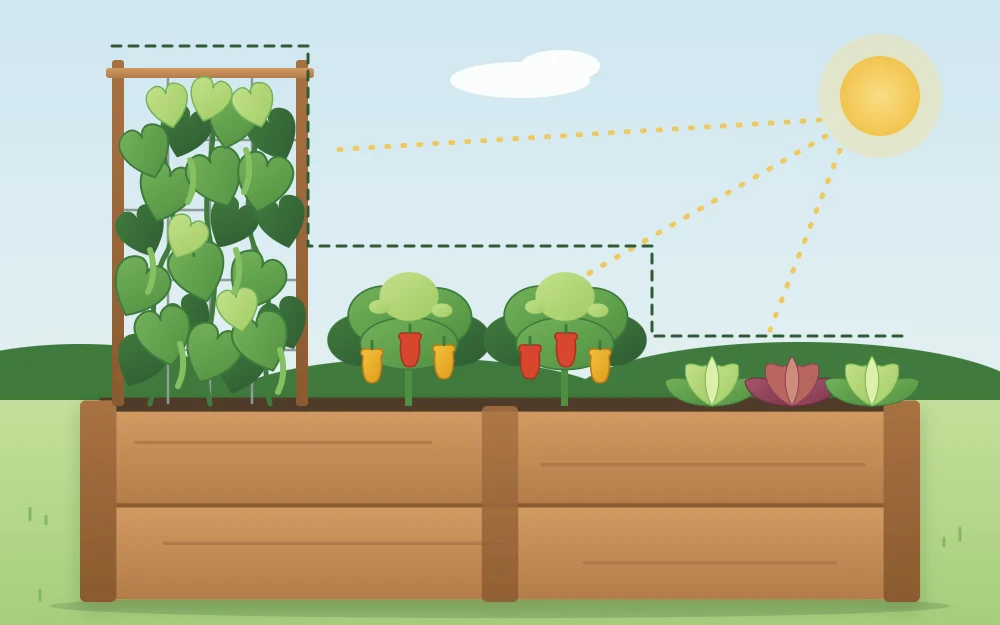
Put supports in before or at planting, so you do not disturb roots later. And remember that shade is sometimes useful: lettuce planted just north or east of a taller crop gets relief from hot afternoon sun in summer.
Use the edges
The outer strip of a bed is the easiest part to reach, so give it to crops you pick often or replant often: salad leaves, radishes, scallions and kitchen herbs. Low, trailing herbs such as thyme sit well at a corner, where they can spill over the frame without smothering anything. If herbs get a bed of their own, the tutorial on laying out a raised bed herb garden applies the same ideas.
Grid-per-square methods
Grid-per-square methods divide the bed surface into equal squares, often with string or thin slats, and assign a set number of plants to a square. As an organizing aid this is helpful. It stops you from sowing too much of one thing, makes small successive sowings easy and turns a blank bed into manageable units.
The grid does not change what a plant needs, though. The number of plants in a square still has to come from that crop’s own spacing: many radishes, a few lettuces, perhaps one pepper, and a large tomato or squash may need several squares to itself. Work the count out from the packet instead of trusting a chart that does not name the variety.
Tip
Before planting, lay the pots or mark sowing spots on the soil with a stick. Seeing the pattern at full scale shows crowding that a sketch hides.
Interplant quick crops with slow ones
Young slow crops leave bare soil around them for weeks. A fast crop can use that space and be harvested before the slow one fills in. The University of Maryland Extension’s page on succession and companion planting mentions radishes with carrots and lettuce in the shade of taller plants as common combinations.
- Radishes sown in the same furrow as carrots mark the row and are pulled early.
- Lettuce set beside young tomatoes is cut before the tomatoes spread.
- Scallions or spinach tucked between young cabbage-family plants are out before the larger leaves close over.
These pairings work because of timing and shared needs. When a patch empties, replant it; the tutorial on succession planting in raised beds shows how to plan those follow-ons.
Leave room for hands and air
A layout has to work on harvest day. Before you plant, check that you can reach the back of the trellis, get a hand under tomato foliage and pull a row of carrots without trampling lettuce. A narrow gap between blocks of different crops serves as both an access slot and an air channel.
Two example plans for a 4 ft wide bed
Both plans assume a bed about 4 ft (1.2 m) wide, reached from both long sides, with a long side facing south. Plant counts are left out on purpose: they follow from the packet spacing for your varieties.
A summer bed
- North edge: a trellis the length of the bed with pole beans or cucumbers.
- Next strip: a single line of caged tomatoes at one end and peppers in a staggered block at the other.
- Middle strip: bush beans in short cross-rows.
- South edge: basil, lettuce and scallions in a narrow band.
A cool-season bed
- North edge: peas on a trellis.
- Next strip: kale or broccoli in a staggered line.
- Middle strip: cross-rows of carrots with radishes, and beets.
- South edge: a grid of lettuce and a band of spinach.
Treat these as templates. Swap crops for ones your household eats, keep the tall-to-short order, and sketch the result so next year’s plan can move plant families to a different place.
Frequently asked questions
Should rows run across or along a raised bed?
Short rows across the bed are usually handier. Each row can be reached from both paths, sown or cleared on its own and replanted without disturbing the rest. Rows along the length suit a trellis or a single line of large plants at the edge. Many beds combine both, with cross-rows in front of a trellis.
Where do tall plants go in a raised bed?
In the Northern Hemisphere, place tall and trellised crops on the north side so their shadows fall away from shorter plants. Medium, bushy crops go in the middle and low crops on the south side. In the Southern Hemisphere the order is reversed. A little shade from tall plants can help lettuce in hot weather.
How many plants fit in one square of a grid layout?
It depends on the crop and variety, so no chart fits every case. Take the plant-to-plant distance from the seed packet or plant tag and see how many plants fit the square at that distance. Small roots fit many to a square, leafy plants a few, and large fruiting plants may need more than one square.