Raised Bed Materials: Wood, Metal, Block and What to Know
The common frame options for a raised bed with their trade-offs: untreated and treated wood, galvanized steel, block, stone and composite, plus what extension research says about treated lumber near food.
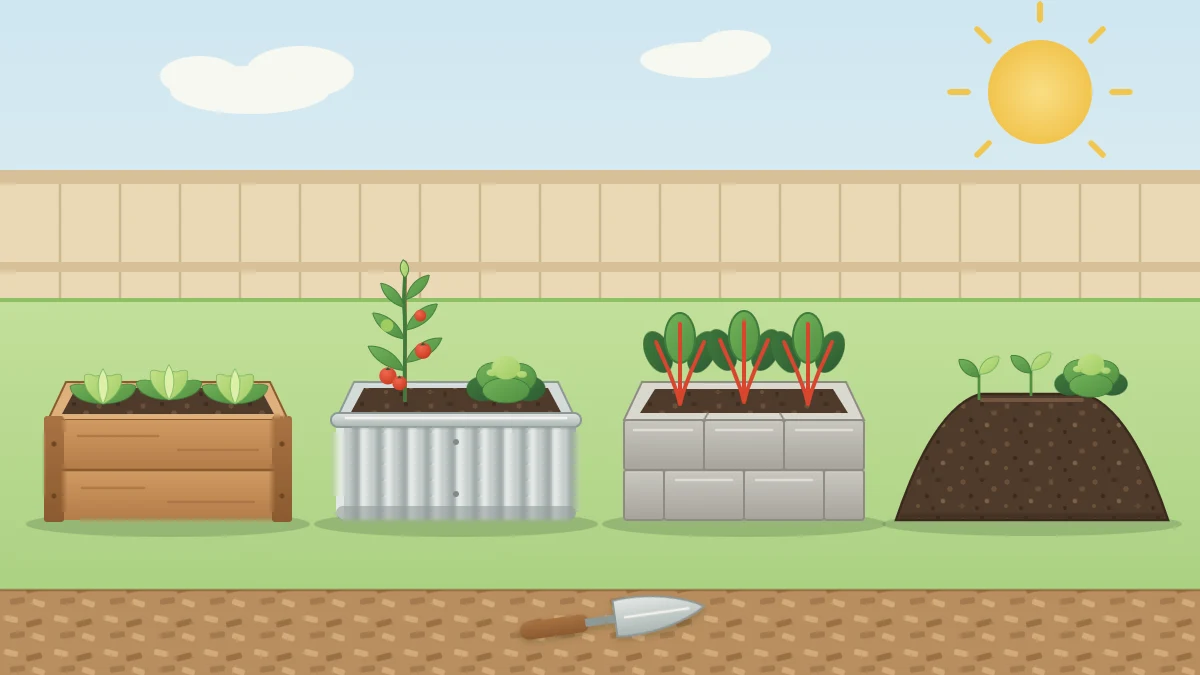
The frame of a raised bed has one job: to hold soil in place for years while sitting in the wet. Choosing among raised bed materials means weighing how long each lasts, what it costs, how much work it takes, and what you are comfortable having next to food crops.
This overview covers the common options and their trade-offs. It is not a set of building plans. For anything beyond a low, simple bed, the kit maker’s instructions or a qualified builder are the right guide.
The options at a glance
| Material | Lifespan | Cost | Worth knowing |
|---|---|---|---|
| Cedar, redwood, black locust | Long for untreated wood | Higher | Naturally decay-resistant |
| Untreated pine or fir | Short | Lower | Expect to replace boards |
| Modern pressure-treated lumber | Long | Moderate | Copper-based; see the section below |
| Galvanized steel kits | Long | Moderate to higher | Quick to assemble |
| Masonry block and stone | Very long | Varies | Heavy, hard to move later |
| Composite boards | Long | Higher | Check the maker’s intended use |
Untreated wood
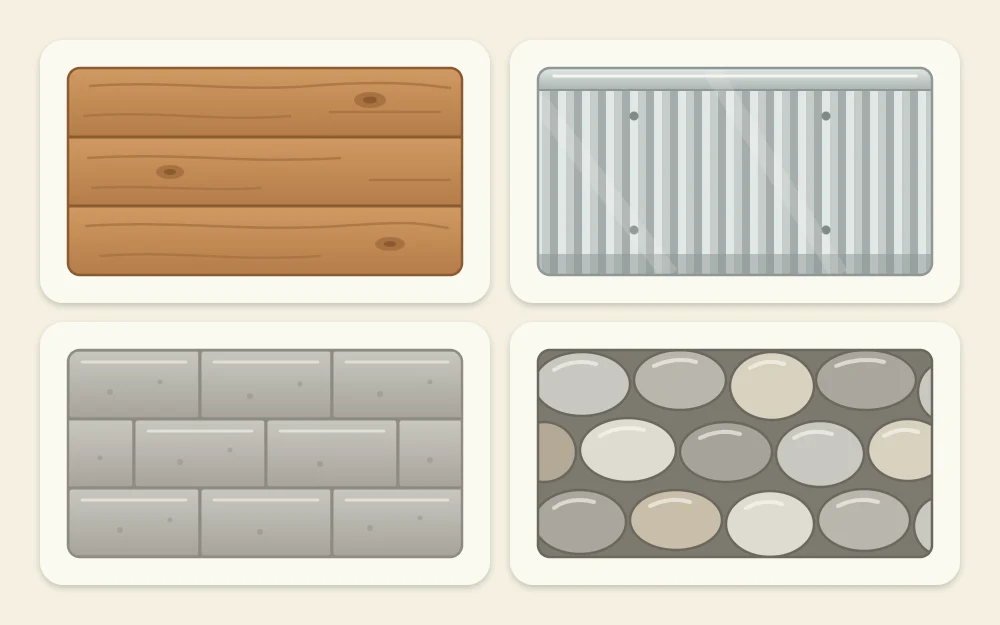
Wood is the most common choice because it is easy to cut, easy to find and looks at home in a garden. Untreated wood splits into two groups.
- Decay-resistant species. Cedar, redwood and black locust contain natural compounds that slow rot. They last considerably longer in contact with damp soil than ordinary softwood, and they cost more.
- Pine and fir. These are inexpensive and widely sold, but they rot fairly quickly where they touch wet soil. They suit a first bed, a trial layout or a tight budget, as long as you expect to replace boards within a few years.
Modern pressure-treated lumber
This is the material people worry about most, and the worry has a history. Older treated wood was preserved with chromated copper arsenate (CCA), which contains arsenic. According to the University of Maryland Extension’s page on the safety of raised bed materials, CCA-treated wood has not been available for residential use since 2004.
Current residential treatments are copper-based. The same page names micronized copper azole (MCA) as the most widely available one, notes that it contains copper and no arsenic, and describes it as low in toxicity.
Field research points the same way. An Oregon State University Extension study of pressure-treated wood in raised beds found that copper rose in the soil only within 1 in (2.5 cm) of the bed edge and stayed within the natural range for local soils. It found no increase in copper in the vegetables and herbs grown. The publication advises using only lumber treated with preservatives approved for residential use and rated for ground contact.
That is what the research found. Whether to use treated wood around food remains a personal choice, and both views are reasonable.
If you want extra caution
The University of Maryland Extension lists three options for gardeners who prefer a wider margin:
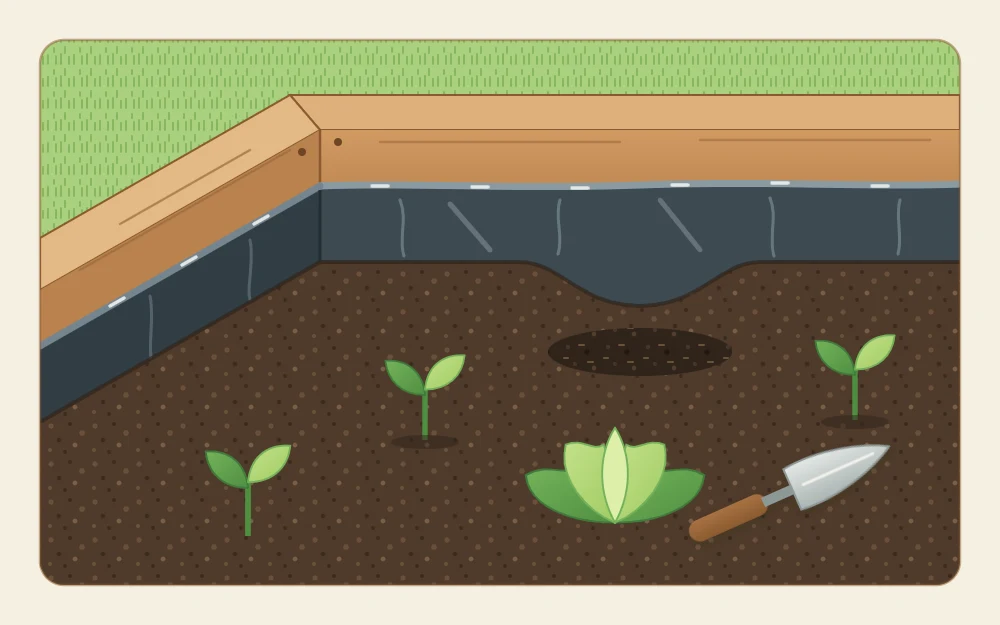
- Place a heavy plastic liner between the boards and the soil. Line the inside walls only, not the bottom, so the bed still drains.
- Paint or stain the wood.
- Choose decay-resistant untreated wood such as cedar or black locust.
Wood to avoid
Good to know
Skip any wood whose history you do not know. Old paint on salvage boards may contain lead, and pallets can have been treated or contaminated with anything they once carried.
- Railroad ties. Oregon State University Extension advises avoiding old railroad ties and older treated wood, which may contain creosote.
- Old treated lumber of unknown age. The same source advises against treated lumber more than about 20 years old, which may date from the era of older treatments. The University of Maryland Extension likewise says to avoid older treatments such as CCA, creosote and penta.
- Painted or stained salvage wood and pallets of unknown history.
- Tires, which are sometimes suggested as planters and are best kept away from food beds.
Galvanized steel kits
Corrugated steel beds are sold as kits of panels that fasten together. The steel is coated with zinc to resist rust, so the panels generally last many years, and assembly is quick with basic tools.
Points to weigh: metal edges can be sharp until the trim is fitted, panels can warm up in strong sun, and the sides of a long bed may bow under the weight of wet soil unless braced the way the maker specifies. Follow the kit maker’s instructions on assembly, bracing and the maximum size.
Masonry block and stone
Concrete blocks, bricks and natural stone do not rot and can last for decades. They are heavy, so a low bed often stays put under its own weight, and they hold warmth from the sun.
The drawbacks are the labor, the cost of materials you do not already have, and permanence: a block bed is hard to relocate. The University of Maryland Extension notes that concrete block may contain fly ash and that there is little research on it; gardeners who are concerned can seal the blocks with polymer paint. Stacked block or stone more than a course or two high is a job for qualified help, not guesswork.
Composite boards and unframed mounds
Composite boards are made from wood fiber and plastic. They do not rot or splinter and need little upkeep, but they cost more and can flex more than solid wood. Formulations differ, so check that the maker intends the product for garden beds and ground contact.
The cheapest material is none at all. A mounded bed, soil and compost raked into a low flat-topped shape, needs no frame. It gives up neat edges and height, and it removes every question about what the frame is made of. The comparison of raised beds and in-ground gardens covers this option in more detail.
Size, weight and when to get help
Whatever the material, remember what it has to hold. Wet soil is very heavy and pushes outward on the walls. The wider, longer and taller the bed, the greater the push.
Settle the dimensions before you buy: the guide to raised bed size covers width and length, and the guide to how deep a raised bed should be covers height. Low beds are forgiving. For a tall or long bed, follow the kit maker’s instructions and get qualified help. For a bed on a slope, or on a deck, balcony or roof, have a qualified professional confirm that the ground or the building can carry the weight before you start.
Frequently asked questions
Is pressure-treated wood okay for a vegetable bed?
Arsenic-based CCA has not been sold for residential use since 2004, and current treatments are copper-based. An Oregon State University Extension study found raised soil copper only within an inch of the boards and no increase in the crops. It remains a personal choice; a plastic liner or untreated cedar are options for extra caution.
What is the longest-lasting material for a raised bed?
Masonry block and stone do not rot and can last for decades, and galvanized steel generally lasts many years. Among untreated woods, cedar, redwood and black locust outlast pine and fir. Actual lifespan depends on your climate and how wet the soil stays against the frame.
Should I line the inside of a wooden raised bed?
It is optional. The University of Maryland Extension lists a heavy plastic liner between the boards and the soil as one choice for gardeners who want extra caution with treated wood. Line the inside walls only and leave the bottom open so that water can drain.