Raised Beds vs. In-Ground Gardens: Which Suits Your Yard?
A balanced comparison of raised beds and in-ground gardens: what each does well, what each costs in money, water and effort, and how to tell which one fits your soil and plans.
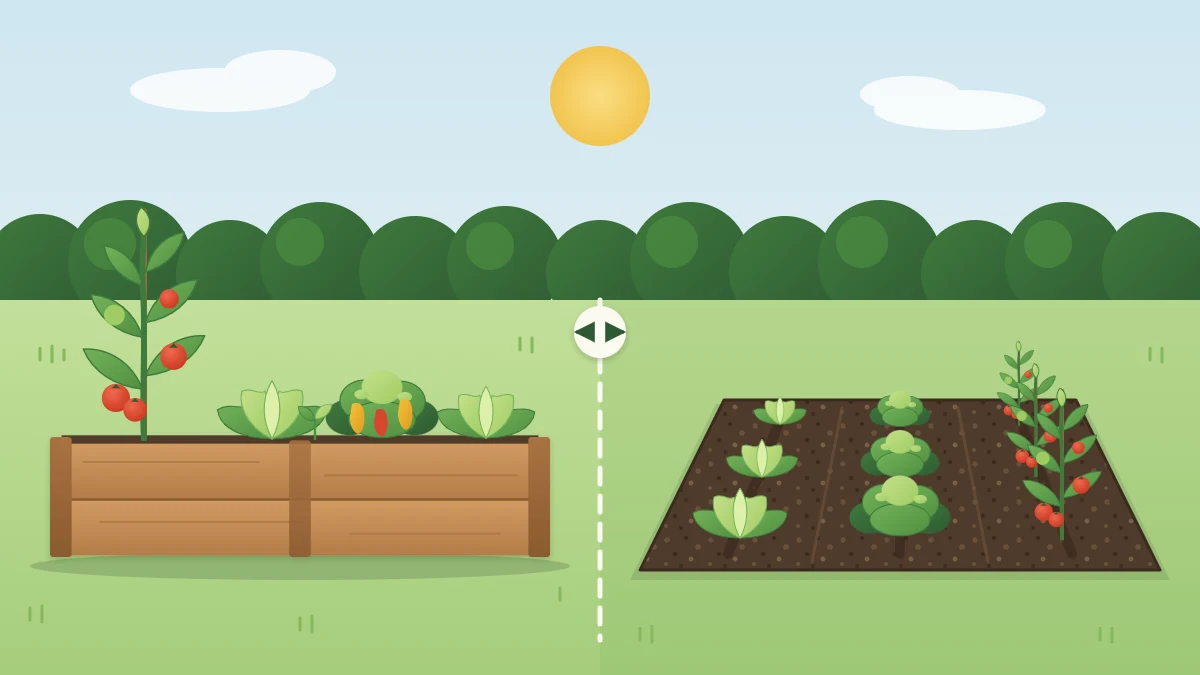
Raised beds get a lot of praise, and some of it is earned. But a frame full of bought soil is not automatically better than a plot dug in the yard. The honest answer to raised beds vs. in-ground gardening is that each suits certain yards, soils and gardeners.
What follows sets out what a raised bed gives you, what it costs, and the situations where planting straight into the ground is the more sensible choice. There is also a middle option that many people overlook.
What raised beds do well
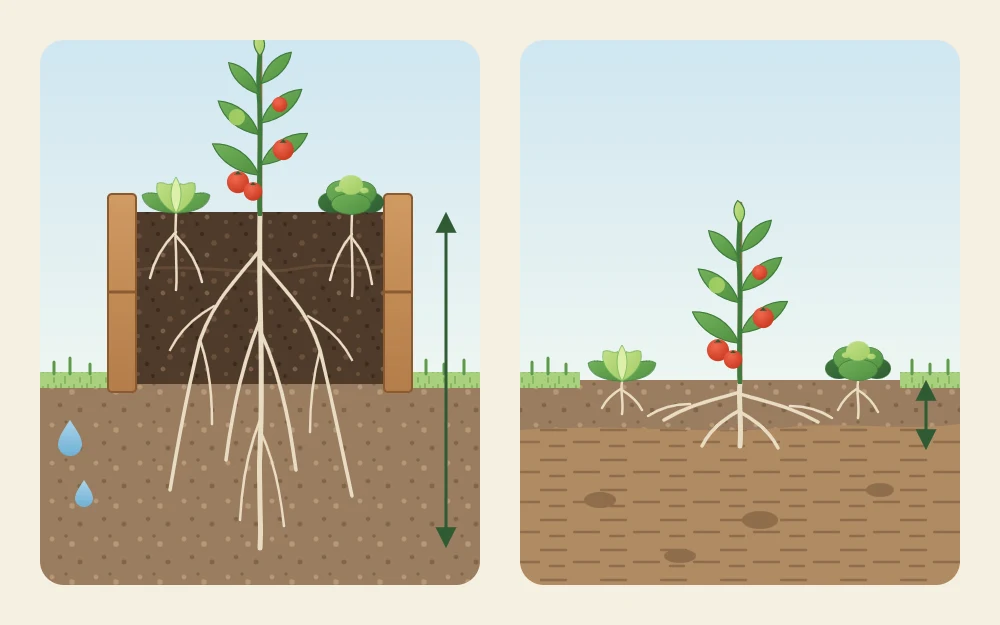
The University of Maryland Extension’s guide to growing vegetables in raised beds lists three main advantages: the soil warms sooner in spring, drainage is better, and plants get more rooting area. Other benefits follow from how a bed is used.
- An earlier start. Soil above ground level warms and dries sooner after winter, so it is often workable before the ground beside it.
- Better drainage. Water moves down and out of a raised bed, which helps where the yard is wet or the soil is heavy clay.
- No compaction. You work from the path and never step on the soil, so it stays loose for roots, water and air.
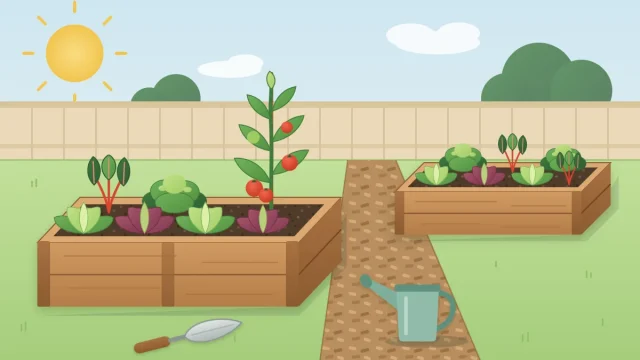
- Clear edges. A defined bed is easy to reach across, easy to weed and easy to tell apart from the lawn.
- Control over the soil. Where native soil is thin, rocky, compacted or contaminated, a bed filled with a known soil mix is a way around the problem.
What raised beds cost you
The same extension guide is frank about the drawbacks: the cost of materials, soil that dries faster and needs more monitoring and irrigation, a structure that is relatively permanent, and materials that need upkeep.
- Money up front. You pay for the frame and for the fill, and the fill is often the larger share. An in-ground plot needs neither.
- More watering attention. The free drainage that helps in a wet spring works against you in a dry summer. A raised bed dries out sooner than ground soil and has to be checked more often. The guide to watering raised beds explains how to tell when it needs water.
- Less flexibility. Once built and filled, a bed stays where it is. Changing the layout means moving a lot of heavy soil.
- Upkeep. Wooden frames weather and eventually need repair or replacing, and the fill settles and has to be topped up.
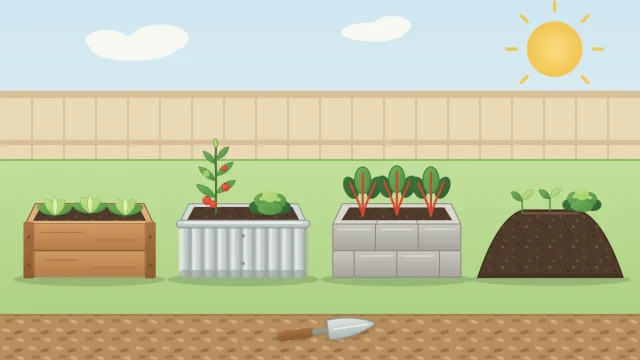
Frame choice changes both the cost and the upkeep. The overview of raised bed materials compares wood, metal, block and stone.
Side by side
The table sums up the tendencies. Your yard may differ on any line, especially the first two.
| Factor | Raised bed | In-ground garden |
|---|---|---|
| Cost | Frame and fill to buy | Little beyond compost and tools |
| Soil control | High: you choose the soil mix | You work with and improve the native soil |
| Watering | Dries faster, needs closer watching | Holds moisture longer in most soils |
| Spring start | Warms and drains sooner | Later, especially in heavy or wet soil |
| Effort | More to set up, less bending and digging afterward | Less to set up, more ground to dig and weed |
When planting in the ground makes more sense
A raised bed solves problems. If you do not have those problems, the ground may serve you better.
- Your native soil is already good. Deep, crumbly, well-drained soil that grows a healthy lawn or flower border needs compost, not a frame.
- You want a large planting. Rows of potatoes, corn or dried beans take a lot of area. Framing and filling that much space is expensive for little gain.
- You grow sprawling crops. Pumpkins, winter squash and melons run many feet in every direction and quickly outgrow a bed.
- Your climate is hot and dry. Where water is scarce and summers are long, the faster drying of a raised bed is a real disadvantage. Soil at ground level stays cooler and holds moisture longer.
Good to know
Near old painted buildings or busy roads, have the soil tested for lead before growing food in the ground. A raised bed with clean fill is one common response, and your local extension office can help you read the results.
When a raised bed is worth it
The case for a bed is strongest in these situations.
- The soil is heavy clay, stays wet in spring or is badly compacted.
- There is very little topsoil, or the ground is full of stones or rubble.
- You have reason to doubt the soil and want to grow in a fill you know.
- You want a small, tidy garden that is easy to reach and manage.
- Bending and kneeling are difficult, and a taller bed would bring the soil closer. For a tall bed, which holds a great deal of heavy wet soil, follow the kit maker’s instructions and get qualified help.
The middle option: unframed mounded beds
A raised bed does not need walls. You can mark out a bed, loosen the soil, add compost and rake it into a low, flat-topped mound a few inches above the paths. The sides slope gently and nothing holds them but the soil itself.
Mounded beds give you most of what matters: soil you never walk on, better drainage, earlier warming and clear edges. They cost almost nothing and can be reshaped any season. The trade-offs are that the edges slump and need raking back into shape, paths and beds blur without attention, and the bed cannot be very tall.
It is a sensible way to try the raised bed habit before spending on frames. If it suits you, frames can be added later around beds whose position you already trust.
How to decide
Three questions settle most cases.
- What is your soil like? Dig a hole a spade deep. If the soil is dark, crumbly and drains after rain, the ground is a fine place to grow. If it is hard, soggy or mostly stones, a bed earns its cost.
- How much do you want to grow? A few salads and tomatoes fit neatly in a bed or two. A year’s worth of potatoes does not.
- How much watering can you keep up with? Be realistic about hot spells and time away.
Many gardens end up using both: beds near the house for salads, herbs and tomatoes, and open ground farther out for the crops that need room. If a bed looks like the right call, the beginner’s guide to raised bed gardening takes you through the first decisions in order.
Frequently asked questions
Are raised beds better than planting in the ground?
Not as a rule. Raised beds help where soil is wet, compacted, thin or doubtful, and they warm sooner in spring. They also cost more and dry out faster. Where the native soil is already deep and well drained, an in-ground garden can do just as well for less money.
Do raised beds need more water than in-ground gardens?
They usually need checking more often, because soil above ground level drains and dries faster. How much more depends on the weather, the soil mix, the depth of the bed and whether the surface is mulched. Feel the soil a couple of inches down instead of assuming.
Can I make a raised bed without a frame?
Yes. A mounded bed is loosened soil and compost raked into a low, flat-topped mound a few inches above the paths. It drains and warms much like a framed bed and costs very little, though the edges slump and need reshaping from time to time.