Raised Bed Gardening Mistakes: 10 Common Errors to Avoid
Ten common raised bed errors, from beds too wide to reach across to watering by timetable, with the reason each one matters and the simple change that puts it right.
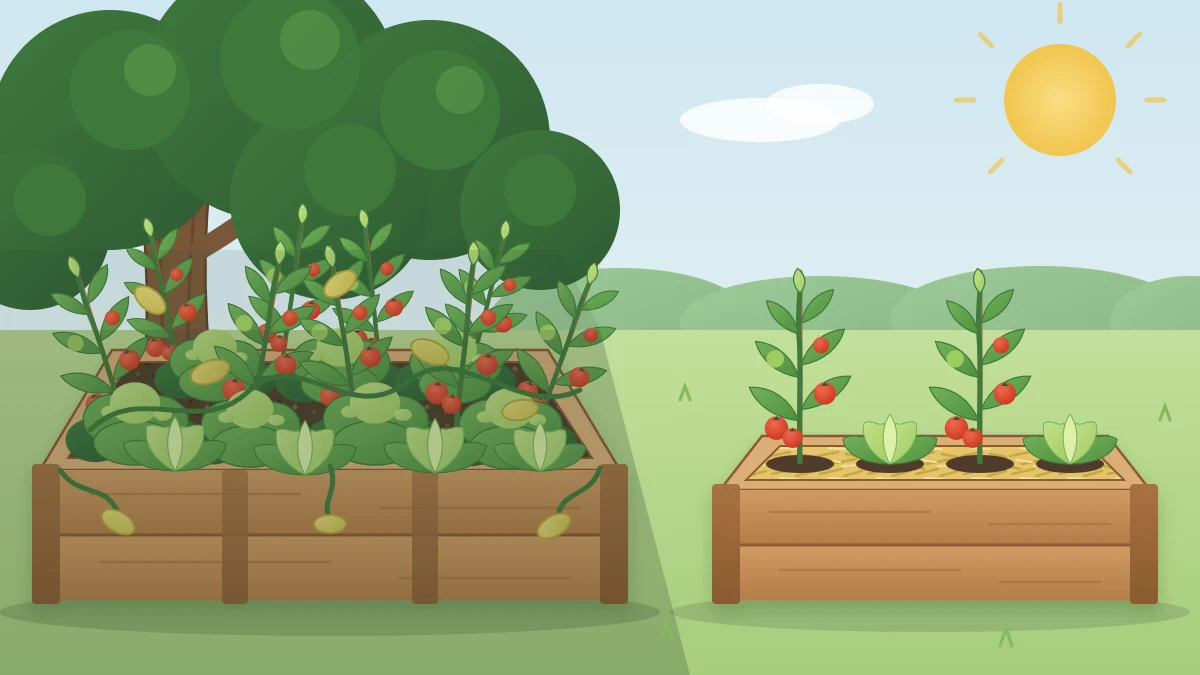
Most raised bed gardening mistakes are made before the first seed goes in: the bed is in the wrong place, the wrong shape or full of the wrong material. The rest are habits, and habits are easy to change once you can see them.
Here are ten common errors, grouped by when they happen, each with the reason it matters and what to do instead. If your first bed disappointed, expect to recognize two or three, not all ten.
Mistakes in planning the bed
1. A bed too wide to reach across
If you cannot reach the middle from the path, you end up stepping on the soil, and soil that is walked on packs down. That gives away the main advantage of a raised bed. Oregon State University Extension calls a maximum width of 4 ft (1.2 m) a good choice for adult gardeners, and a bed against a fence or wall, reached from one side only, has to be narrower. Measure your own reach before settling on a raised bed size.
2. A shady or tree-rooted site
The University of Maryland Extension advises at least 6 hours of full sun a day for a vegetable garden, ideally more, and recommends avoiding sites bordered by trees and shrubs. Trees cost a bed twice: they shade it, and their roots grow up into the rich, watered fill. Watch the spot through a whole clear day before you build. Moving a filled bed is hard work.
Mistakes in filling it
3. Whatever soil is at hand, or pure compost
Soil dug from elsewhere in the yard, or cheap fill of unknown origin, may be heavy subsoil, full of weed seeds or contaminated. Pure compost sounds generous but tends to hold too much water, shrink quickly as it decomposes and oversupply some nutrients and salts.
A blend of topsoil and compost, or compost and a soilless growing mix where there is no soil below, does the job better. Published recipes differ, and the guide to raised bed soil mix compares them. Use only fully composted manure on a food bed, never fresh.
Mistakes at planting time
4. One spacing for every crop
A radish and a tomato plant do not need the same room, so no single figure can serve a whole bed. Spacing follows the mature size of the crop and the variety. Start with the seed packet or plant tag, then see the guide to raised bed plant spacing for how to apply it in a bed without rows.
5. Overcrowding
Seedlings look lost in an empty bed, and it is tempting to fill the gaps. A few weeks later the plants are competing for light and water, and air no longer moves between them, a condition commonly associated with leaf diseases. Thin direct-sown seedlings to the distance on the packet, even though it feels wasteful, and leave the gaps alone.
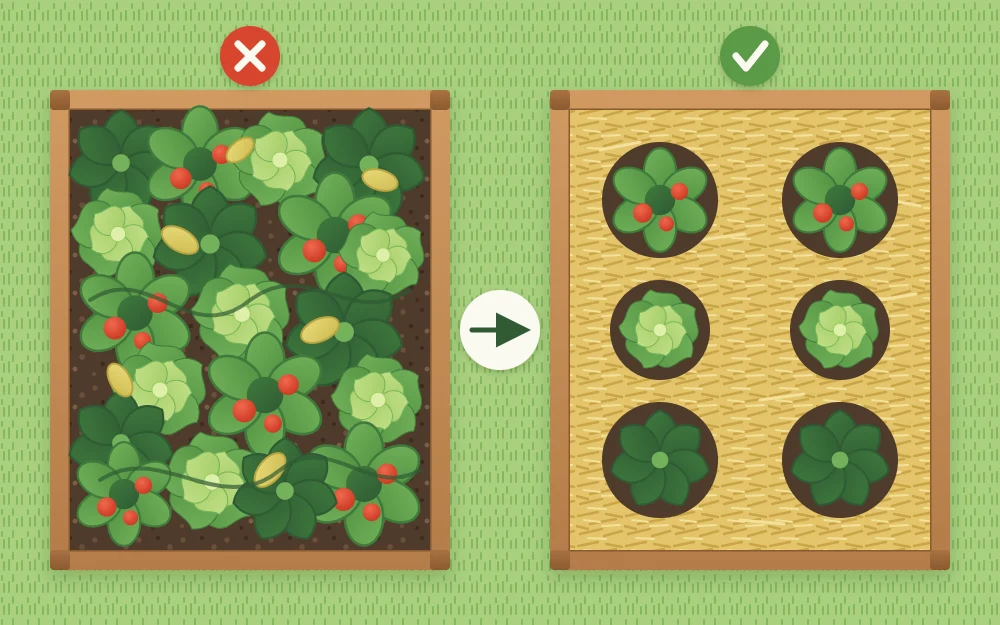
6. Planting everything on one day
Cool-season crops such as peas and lettuce and warm-season crops such as tomatoes and beans want different conditions. Set them all out together and some will be too early or too late. Planting dates follow the last frost date for your area and the soil temperature; your local extension planting calendar has them. Sowing quick crops in several small batches also avoids a glut followed by nothing.
Mistakes in everyday care
7. Watering by timetable
Raised beds dry faster than the ground, but how fast changes with the weather, the crop and its stage of growth. A fixed routine gives too much in a cool week and too little in a hot one. Push a finger a couple of inches into the soil and water when it is dry at that depth. The guide to watering raised beds explains the method.
8. Bare soil with no mulch
Uncovered soil dries quickly, crusts under rain and invites weeds. A layer of straw, shredded leaves or another clean organic mulch, spread once seedlings are tall enough, slows all three.
9. The same family in the same spot each year
Tomatoes after tomatoes, or peppers after tomatoes, give the pests and diseases tied to that plant family a host every season. Move each family to different soil each year, by bed or at least by end of the bed, and keep a sketch of what grew where.
Mistakes with the frame
10. Risky materials, or a tall bed built by guesswork
Old railroad ties and salvage lumber are tempting because they are free. Oregon State University Extension’s publication on pressure-treated wood for raised bed construction advises avoiding old railroad ties and treated lumber more than about 20 years old. Unknown salvage wood may also carry old paint that contains lead, and pallets of unknown history and tires are poor choices for a food bed.
Modern treated lumber is a separate question. In the Oregon State study, copper rose in the soil only within 1 in (2.5 cm) of the bed edge, and there was no increase in copper in the vegetables and herbs grown. Whether to use it remains a personal choice. For readers who want extra caution, the University of Maryland Extension’s page on raised bed materials lists a heavy plastic liner between the boards and the soil, or decay-resistant untreated wood such as cedar.
Good to know
Wet soil is very heavy and pushes outward on the walls of a bed. For a tall or long bed, follow the kit maker’s instructions exactly and get qualified help instead of improvising.
If the bed is already built
Sort the list by how much each fix costs. Some can be done this week: check the soil before watering, spread mulch, thin crowded rows. Some wait for the next planting: spacing by the packet, staggered sowing, moving plant families.
The planning mistakes are the stubborn ones. A bed that is too wide can be given a stepping board or a narrow access path across the middle so you stop treading on the soil. A shaded bed can be turned over to lettuce, parsley and other crops that tolerate less sun. Moving the bed, or replacing a frame you no longer trust, is a job for the off-season.
One change at a time
Beds rarely fail for a single reason, and poor growth has many possible causes. Fix the cheap things first, note what you changed, and watch what the plants do over the following weeks. That record is worth more next spring than any list of rules.
Frequently asked questions
What is the most common mistake with raised beds?
It differs from garden to garden, but poor siting and overcrowding come up again and again. A bed in too much shade limits most vegetables whatever else you do, and plants set too close compete for light, water and air. Both are easier to prevent than to fix once the bed is full.
Can I fill a raised bed with only compost?
It is not a good idea. Pure compost tends to hold a lot of water, sinks quickly as it continues to break down and may supply more of some nutrients and salts than plants want. Blending compost with topsoil or a soilless growing mix gives roots a more stable soil to grow in.
Why are the plants in a raised bed small and struggling?
There are several possible causes and usually more than one at work: too little sun, crowding, soil that stays too wet or too dry, poor fill, or planting at the wrong time for the crop. Check each in turn, starting with hours of direct sun and soil moisture, before changing anything else.