Raised Bed Gardening for Beginners: A Practical Starting Guide
What a raised bed changes and the six decisions that matter for a first one, in order: the spot, the width, the depth, the fill, the crops and the watering habit.
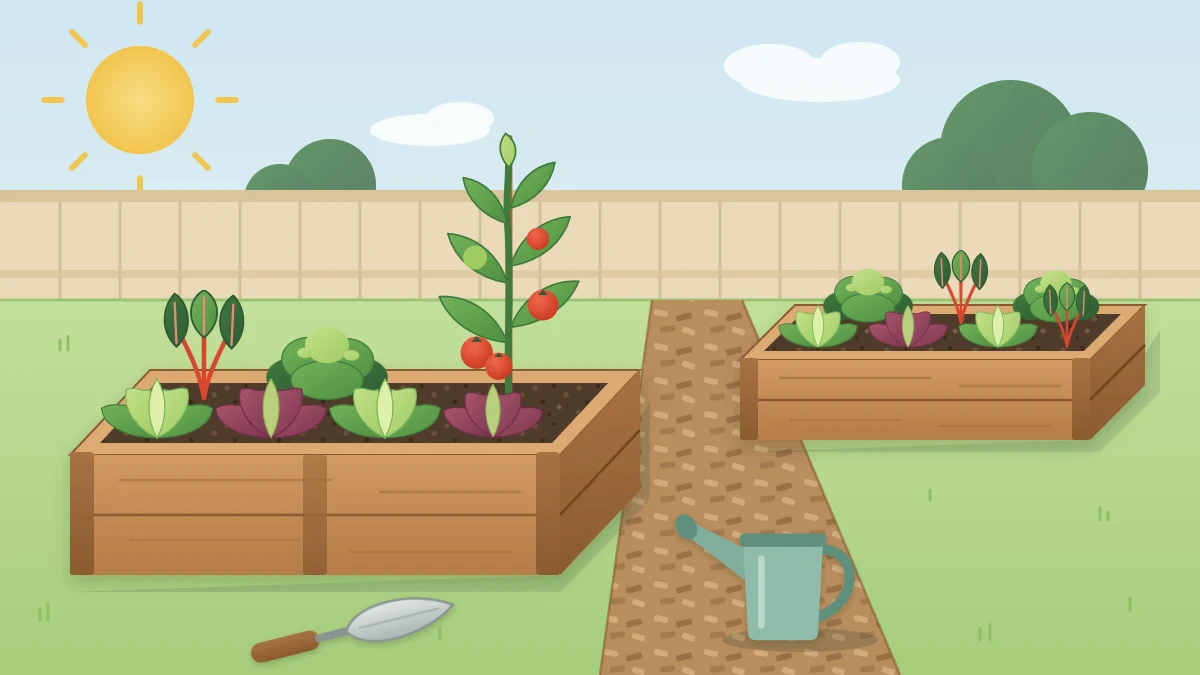
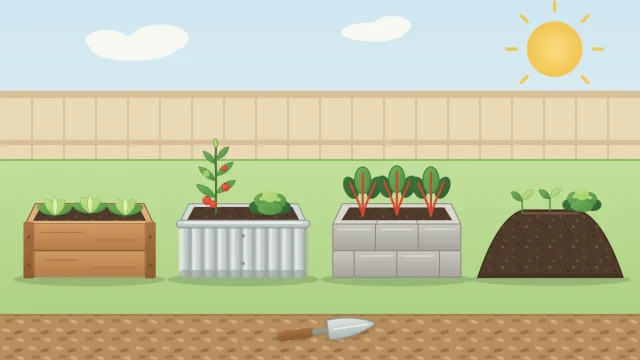
A raised bed is simply soil that sits above the surrounding ground, either mounded or held inside a frame, and that nobody walks on. That one habit, keeping your feet off the soil, explains most of what makes raised bed gardening for beginners so forgiving: the soil stays loose, roots spread easily, and you tend everything from the path.
It also changes a few things you have to plan for. This guide takes the decisions in the order you will meet them, says what matters most at each step, and points you to the detailed guide when you need more.
What a raised bed changes
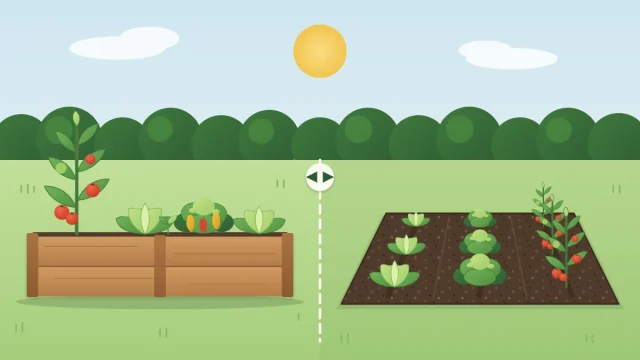
Lifting the soil a little above ground level has three practical effects, and they come as a package.
- Looser soil. Because you never step in the bed, the soil is not pressed down. Water and air move through it and roots have an easier time.
- Faster spring warming. Soil above ground level warms sooner, so the bed is often ready to plant a little earlier than the ground around it.
- Faster drying. The same exposure and free drainage mean the bed loses water sooner in warm weather, so it needs checking more often than ground soil.
Oregon State University Extension puts the temperature side plainly: raised beds warm up and cool down faster. Expect both halves of that trade.
The decisions, in order
Most first beds go well when these choices are made in sequence, because each one limits the next.
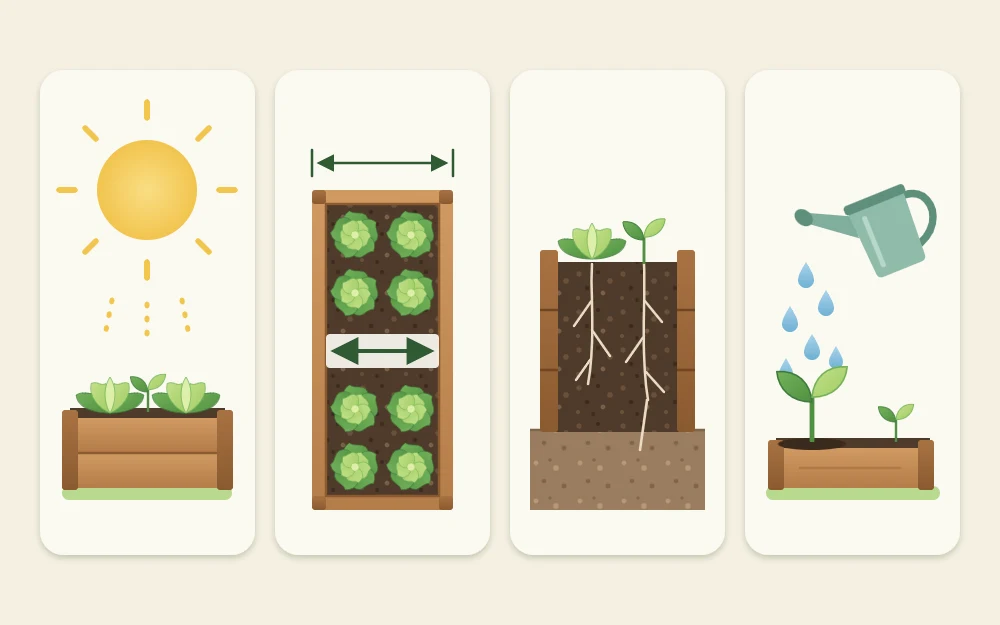
- Find a sunny, level spot near water.
- Choose a width you can reach across without stepping in.
- Choose a depth that suits your crops and what lies under the bed.
- Fill the bed with a blend of soil and compost.
- Plant a short list of easy crops.
- Water by checking the soil, not by the calendar.
Start small
The most common first-year problem is not a bad bed but too many beds. A small garden that is weeded, watered and harvested on time gives more food than a large one that gets away from you by midsummer.
The University of Maryland Extension’s guide to starting a vegetable garden suggests 25 to 50 square feet (about 2.3 to 4.6 square meters) for a starter garden. That is one or two modest beds. You can add more next year, once you know how much time the first one takes.
Pick the spot before anything else
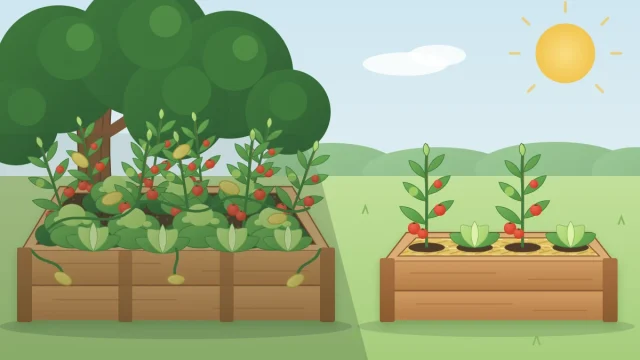
Sun is the one thing you cannot add later. Extension services commonly give at least 6 hours of direct sun a day for most vegetables, and more is better for fruiting crops such as tomatoes and peppers.
After sun, look for ground that is close to level, a place where water does not stand after rain, and a spot a hose reaches easily. Stay clear of large trees and shrubs, which shade the bed and send roots into it. The guide on choosing where to put a raised bed works through each of these checks.
Choose a width you can reach and a depth that fits
Width is set by your arm, not by a rule. You should be able to reach the middle of the bed from the path without leaning on the soil. Oregon State University Extension calls a maximum width of 4 ft (1.2 m) a good choice for adult gardeners, and a bed against a fence or wall, reached from one side only, has to be narrower. The raised bed size guide shows how to test your own reach.
Depth depends on two things: what you want to grow and what is under the bed. Over loosened soil, roots keep going below the frame, so a low bed serves many crops. Oregon State University Extension’s raised bed publication describes beds about 8 in (20 cm) deep as sufficient rooting depth for most vegetables in that situation. On a patio or other hard surface the fill is all the plants get, and deep-rooted crops need more of it.
Good to know
Wet soil is very heavy and pushes outward on the walls of a bed. For a tall or long bed, follow the kit maker’s instructions and get qualified help rather than improvising.
Fill it with soil and compost
The fill has to hold water, drain, hold nutrients and stay loose. In practice that means a blend: topsoil for mineral body, compost for organic matter, and sometimes a soilless growing mix where there is no ground underneath.
Published recipes differ from one extension service to another, and that is normal. The guide to raised bed soil mix lays out the common starting points and what to leave out, such as soil of unknown origin and fresh manure.
Plant a short list of easy crops
Choose four or five crops your household actually eats. Leaf lettuce, radishes, bush beans, Swiss chard and a tomato plant or two make a sensible first season, because they cover both cool-season and warm-season growing and show results quickly.
The round-up of the best vegetables for raised beds explains how much room each needs and whether to direct sow or set out a transplant. Three habits help from the start:
- Follow the seed packet or plant tag for spacing. Each crop and variety is different.
- Plant by your area’s last frost date and your local extension planting calendar, not by a date from somewhere else.
- Put tall crops and any trellis on the north side of the bed so they do not shade shorter plants. That direction assumes the Northern Hemisphere.
Build a watering habit, not a schedule
How much water a bed needs changes with the weather, the crop, the growth stage, the soil and whether the surface is mulched. A fixed timetable is wrong as often as it is right.
Instead, push a finger a couple of inches (about 5 cm) into the soil. If it is dry at that depth, water slowly and deeply at the base of the plants. If it is still moist, wait and check again tomorrow. Seeds and new transplants need the closest attention, because their roots are still near the surface.
Tip
A layer of straw or shredded leaves over the soil slows evaporation, so the bed stays moist longer between waterings.
Keep a few notes through the first season: what you planted and when, what thrived, where the afternoon shade fell. They describe your yard and nobody else’s, which makes them the best guide you will have next spring.
Frequently asked questions
How many raised beds should a beginner start with?
One or two is enough. The University of Maryland Extension suggests a starter garden of 25 to 50 square feet, which a couple of modest beds will cover. A small area you can keep weeded, watered and picked usually gives more than a large one you cannot keep up with.
Do I need to dig up the lawn before placing a raised bed?
Not necessarily. Many gardeners smother the grass under the bed with plain cardboard or overlapping newspaper and cover it with the fill. Loosening the ground first, where you can, helps roots and water pass from the bed into the soil below.
When should I plant my first raised bed?
It depends on where you live. Cool-season crops such as lettuce and radishes go in before warm-season crops such as tomatoes, which wait until after the last frost date for your area. Your local extension office publishes a planting calendar, and the seed packet gives timing for each crop.