Compost for Raised Beds: What It Does and How Much to Add
What compost does in a raised bed, how to tell when it is finished, which kinds to use, and how published guidance on amounts differs depending on the soil you start with.
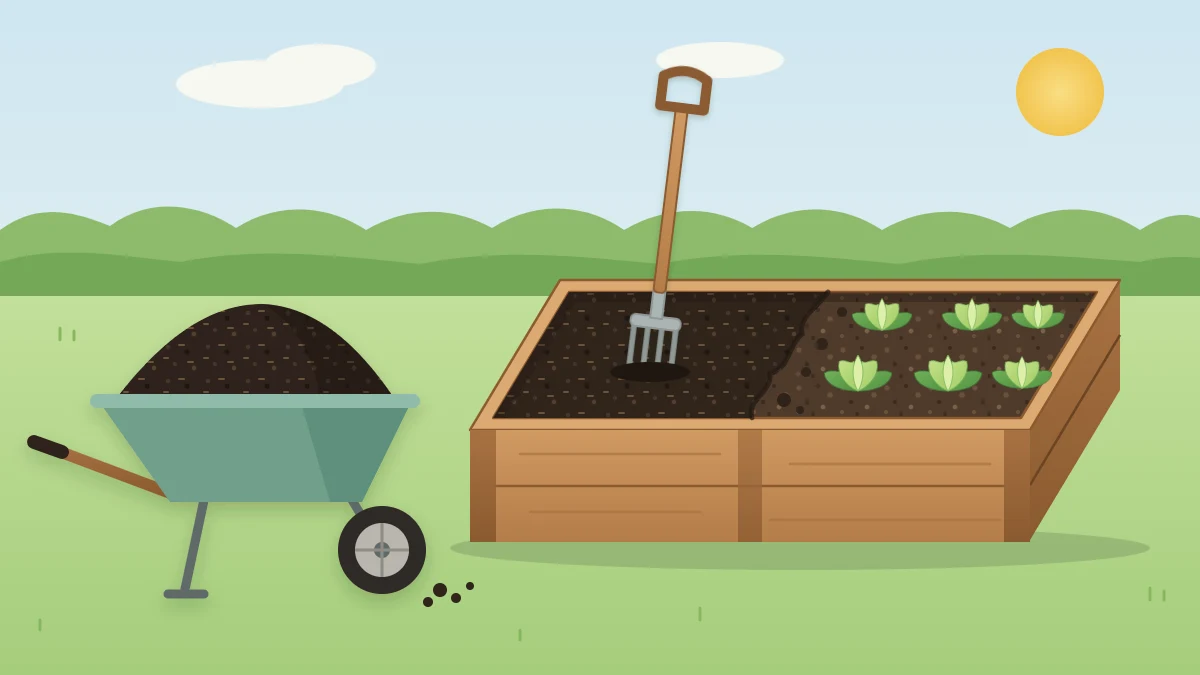
Compost is the one ingredient nearly every raised bed guide agrees on, and the one most often added by guesswork. Some gardeners scatter a token handful over the surface. Others fill the whole frame with nothing else. Neither approach gets the best out of it.
Using compost for raised beds well comes down to three things: knowing what it does in the soil, recognizing when it is finished, and matching the amount to the soil you already have. This guide explains those ideas instead of handing you a single recipe, because published amounts differ and your starting point matters.
What compost is and what it does in a bed
Compost is organic matter, such as leaves, plant trimmings, kitchen scraps and animal bedding, that microbes have broken down into a dark, stable, soil-like material. Mixed into a soil mix or laid on top of it, compost does several jobs at once:
- Improves structure. It helps soil particles clump into crumbs, which leaves air spaces that roots can grow through.
- Balances water. The same crumb structure holds moisture in dry spells and lets excess water pass in wet ones, so water holding and drainage improve together.
- Feeds soil life. Worms, fungi and bacteria live on organic matter and keep working it into the bed.
- Supplies nutrients slowly. Nutrients are released a little at a time as the material continues to break down.
Compost is not a quick fertilizer, and its nutrient content varies from batch to batch depending on what went into it. Think of it mainly as a soil conditioner that also feeds plants gently.
What finished compost looks and smells like
Finished compost is dark brown to nearly black, crumbly and even in texture. It smells earthy, like a forest floor. You should not be able to pick out peelings, leaves or grass, though a few woody bits are normal and can be sifted out. It should also be cool: a pile that is still warm in the middle is still working.
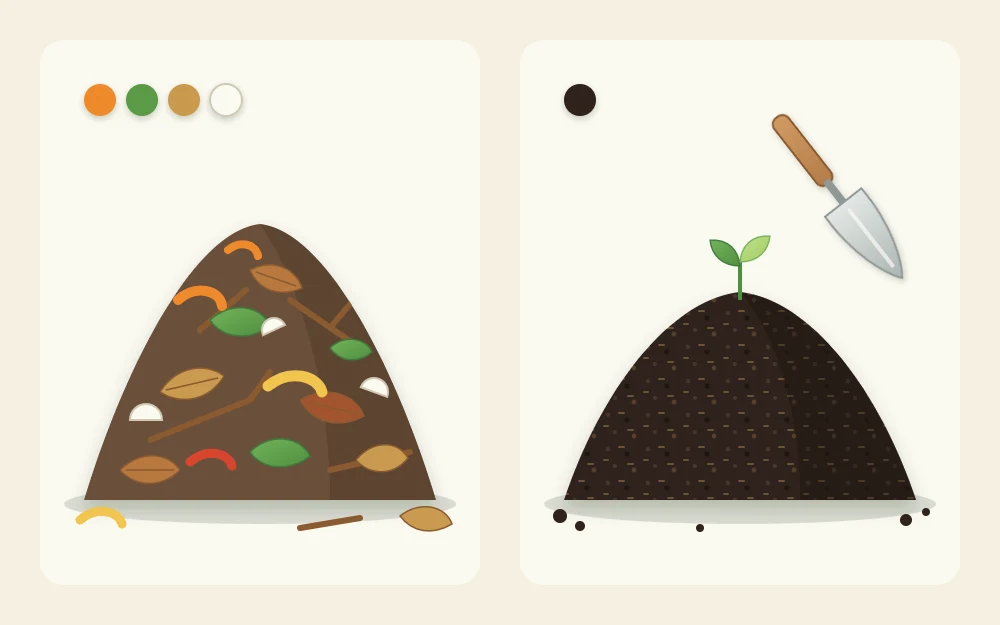
Unfinished compost keeps decomposing after you add it, and that process can compete with young plants for nitrogen. A sour, sharp or ammonia-like smell is one hint that a batch needs more time.
Kinds of compost you can use
Several materials are sold or made under the name compost, and they behave a little differently.
- Homemade compost. Made from yard and kitchen waste. Quality depends on the ingredients and on how completely it has broken down.
- Leaf mold. Leaves that have rotted slowly on their own. It is low in nutrients but very good for structure and water holding.
- Municipal or bagged compost. Convenient and usually consistent. Ask a bulk supplier what the compost is made from and whether it has been tested, and check the bag for the ingredient list.
- Composted manure. Richer in nutrients than plant-based compost, and often higher in salts, so it is commonly used as part of the compost share instead of all of it.
Good to know
Never put fresh manure on a food bed. It can carry organisms that make people sick and it can scorch roots. Use only manure that has been fully composted, and treat a bag or load with a strong manure smell as unfinished.
How much compost to add
There is no single figure, and the sources you will find do not agree with each other. That is the honest picture: the right amount depends on the soil you are starting with.
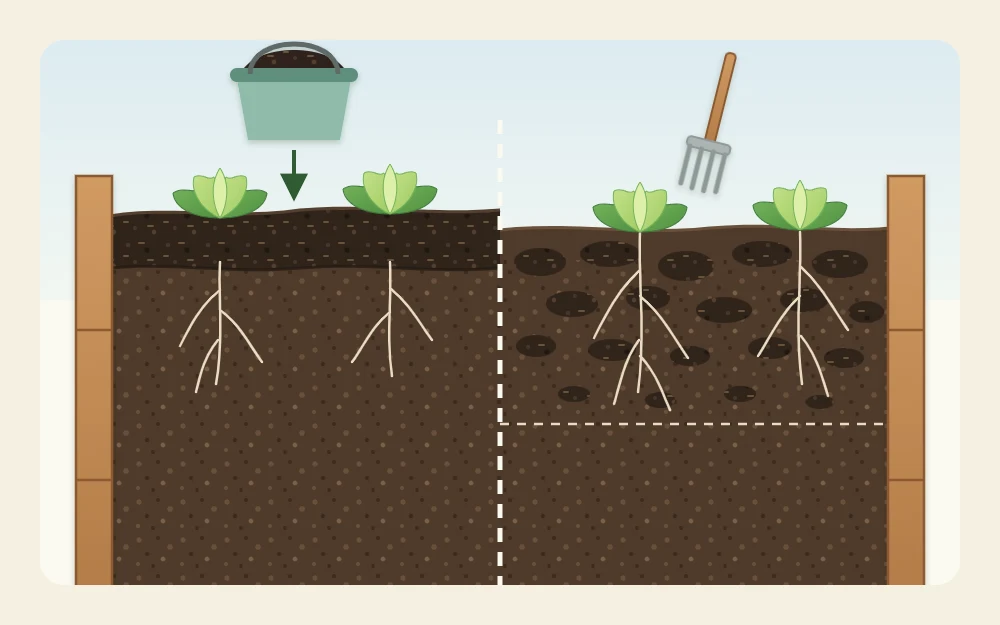
For a new bed, compost is one part of the fill. University of Maryland Extension’s guide to growing vegetables in raised beds describes organic matter of 25% to 50% by volume in a raised bed. The University of New Hampshire Extension, by comparison, describes a fill of 70% topsoil and 30% compost. Both are starting points. How the compost share fits with topsoil or soilless growing mix is covered in the guide to choosing a raised bed soil mix.
For a bed that is already growing, the amounts are smaller. University of Maryland Extension’s page on soil to fill raised beds suggests 2 to 4 in (5 to 10 cm) of compost mixed into the top 4 in (10 cm) of an existing garden bed. A bed that already has dark, crumbly soil rich in organic matter usually needs less than a bed with pale, dense soil that crusts over.
Why more is not better
It is tempting to treat compost as something a bed cannot have too much of. In practice, heavy applications year after year can cause problems of their own.
- Nutrient buildup. Compost, and composted manure in particular, can oversupply some nutrients, commonly phosphorus, which then accumulate in the bed.
- Salts. Some composts are high in soluble salts, which can hold back germination and stress seedlings.
- Shrinking fill. A bed filled with compost alone keeps decomposing and sinks quickly. It can also swing between soggy and hard to re-wet.
A soil test is the practical guide for repeat applications. It reports organic matter, pH and nutrient levels, so you can see whether the bed needs more compost, less, or something else entirely. If the report points to fertilizer or lime, apply only what the soil test and the product label call for.
Using compost as a top-dressing or mulch
You do not have to dig compost in. Spread on the surface around established plants, it works as a top-dressing: rain, watering and soil life carry it down gradually without disturbing roots.
A thicker surface layer of finished compost also acts as a mulch, slowing evaporation and protecting the soil from heavy rain. It breaks down faster than straw or shredded leaves and gives weed seeds a good place to sprout, so many gardeners put a coarser material over it. The guide to mulching raised beds compares the materials.
When to add it
Compost can go on whenever a bed is empty or between crops. Two moments are especially convenient: before planting in spring, and in fall after the bed is cleared, so that it settles in over winter. Adding a modest layer each year is commonly preferred to one very large dose.
If the soil level has dropped well below the rim, compost is part of the answer but not always all of it. The step-by-step method for topping up and refreshing a settled bed explains when to add a compost and topsoil blend instead.
Frequently asked questions
Can I fill a raised bed with compost only?
It is not usually advised. Compost on its own keeps decomposing, so the level sinks fast, and it can oversupply some nutrients and salts. Extension recipes combine compost with topsoil or a soilless growing mix, which gives the bed mineral body and a more stable structure.
How do I know if bagged compost is finished?
Open the bag and look, feel and smell. Finished compost is dark, crumbly and earthy, with no recognizable scraps and no heat. A sour or ammonia-like smell, or a lot of visible wood and leaves, suggests it needs more time before it goes around seedlings.
Do I need to add compost every year?
Many gardeners add a modest layer each year because organic matter keeps breaking down and the soil level drops. How much depends on the bed. A soil test every few years shows whether organic matter and nutrients are already high, in which case a lighter application is enough.