Raised Bed Drainage: Signs of Trouble and How to Improve It
How water should move through a raised bed, the signs commonly linked to poor drainage, a simple hole test, and fixes in order of effort, plus why gravel in the bottom does not help.
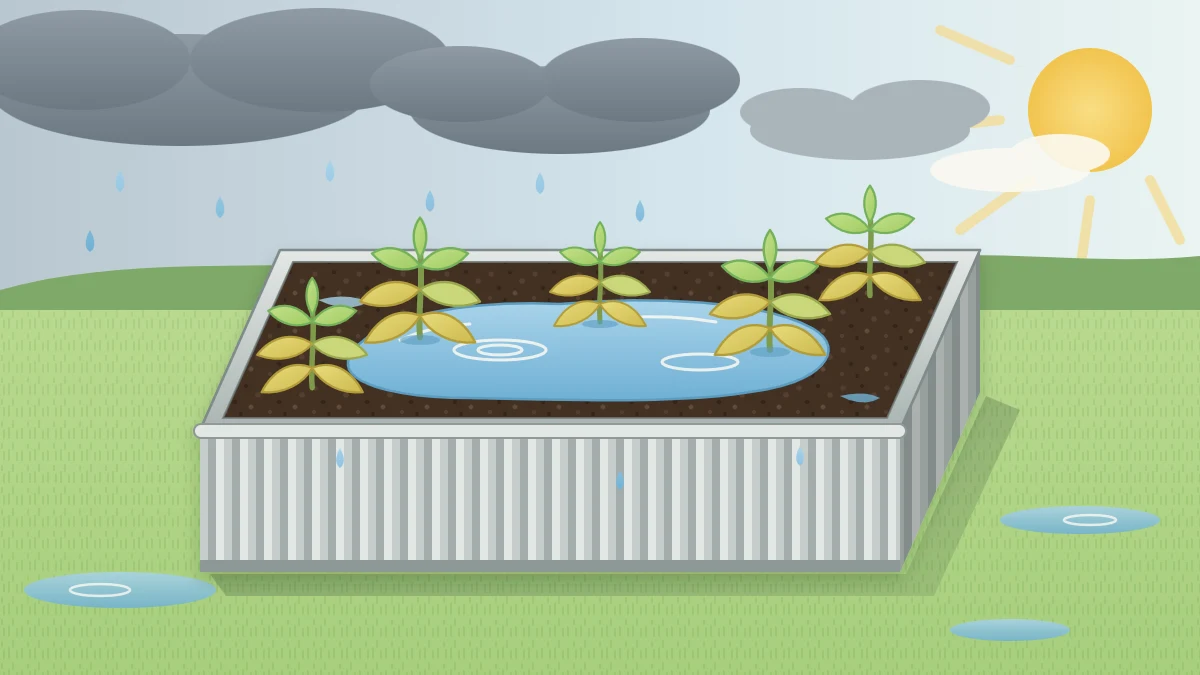
Better drainage is one of the main reasons people build raised beds in the first place. Lifting the soil above ground level gives extra water somewhere to go. Even so, a bed can stay soggy if the ground beneath it, the fill inside it or the spot it sits in works against it.
Good raised bed drainage does not come from a layer of gravel or a sheet of fabric in the bottom. It comes from loose fill, open ground underneath and a sensible site. Here is how to tell whether your bed has a problem and what to try, starting with the least work.
How water should move through a bed
In a bed that drains well, water follows a simple route. It soaks in through the surface instead of running off, moves down through the fill, and leaves at the base, either into the native soil below or out through gaps at the bottom of the frame. As it drains, air is drawn back into the spaces between soil crumbs. Roots need that air as much as they need the water.
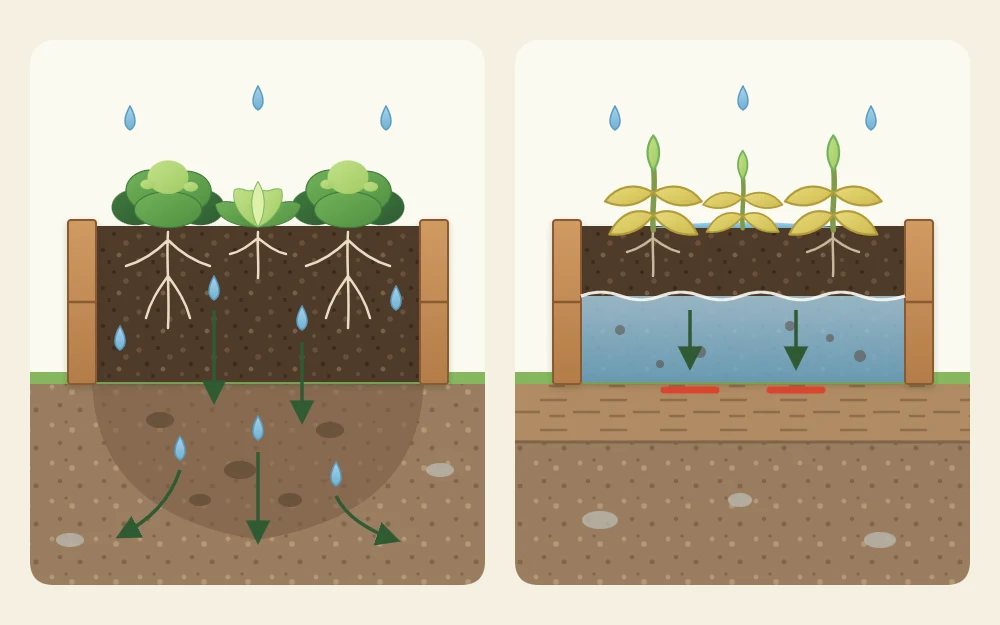
Signs commonly associated with poor drainage
None of these proves a drainage problem on its own, but several together are worth investigating:
- Water standing on the surface for hours after rain or watering.
- Soil that is still wet and sticky several days after the last rain.
- A sour or stagnant smell when you dig down.
- Yellowing lower leaves and plants that stay small.
Yellow leaves and stunted growth have other possible causes too, including cold soil, low nutrients, root damage and simply too little water. Check the soil itself before deciding. The guide to checking soil moisture before you water explains how to tell wet from dry below the surface, since overwatering can look much like poor drainage.
A simple drainage check
A hole test tells you more than guessing does. It works in the bed and, more usefully, in the ground beside or beneath it.
- Dig a hole about a spade’s depth and width.
- Fill it with water and let it drain away completely. This first fill wets the surrounding soil.
- Fill it again and note the time.
- Check back every few hours and see how long the water takes to disappear.
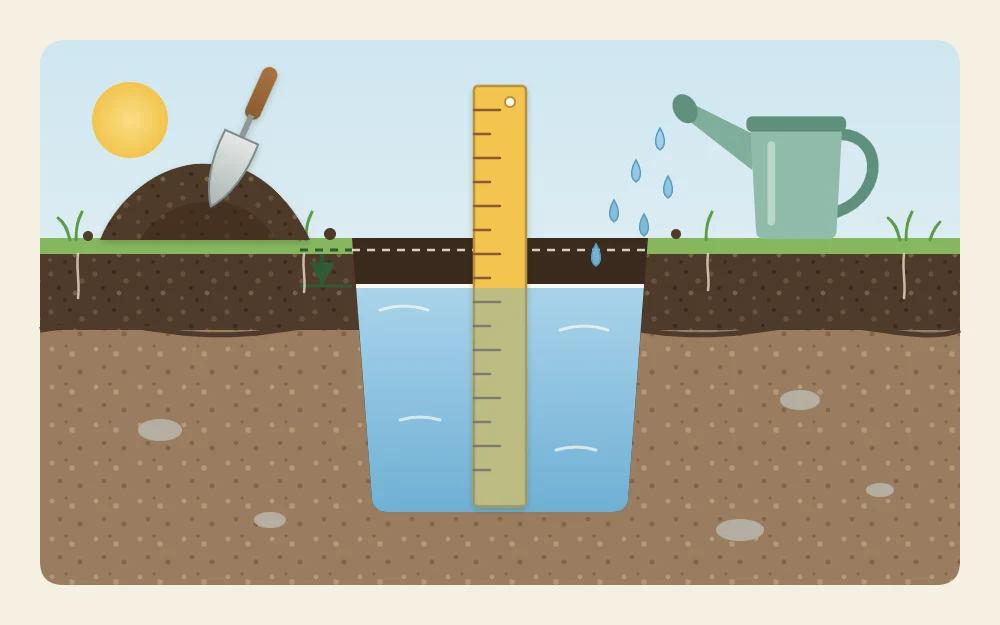
As a rough guide, a hole that empties within a few hours drains freely. One that still holds water the next day points to slow drainage in that spot. Soil that is already saturated after long rain will drain slowly anywhere, so run the test in ordinary weather.
What causes a bed to stay wet
- Compacted or clay ground below. Water passes through the fill and then stops at a dense layer, which is common where the ground was driven or walked on for years.
- A low spot. If the bed sits where puddles collect, water from the surrounding yard runs toward it and the ground beneath stays saturated.
- Fill that is too fine. Heavy clay soil, or a mix with a lot of very fine material, packs down and leaves few air spaces.
- A sealed bottom. A solid base, plastic sheeting under the fill, or a bed sitting flat on paving with no gaps leaves water nowhere to go.
Fixes, from least to most work
Start at the top of this list and move down only if the problem remains.
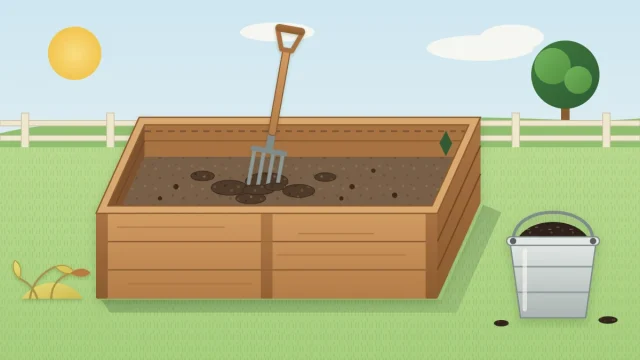
- Loosen the ground under a new bed. Before filling, push a garden fork into the native soil and rock it back to open it up. This lets water and roots pass from the fill into the ground.
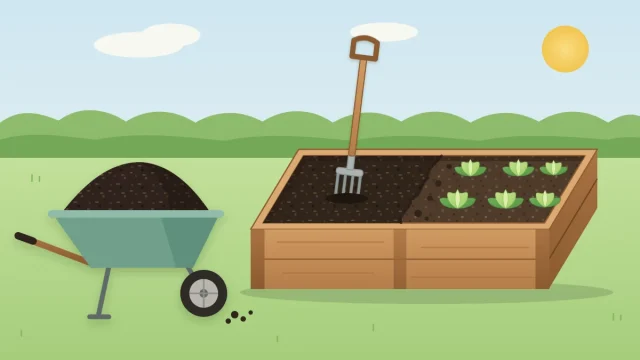
- Add organic matter. Compost helps soil form crumbs with air spaces between them. University of Maryland Extension’s page on organic matter and soil amendments covers the materials. If the fill itself is dense, see the guide to what to fill a raised bed with.
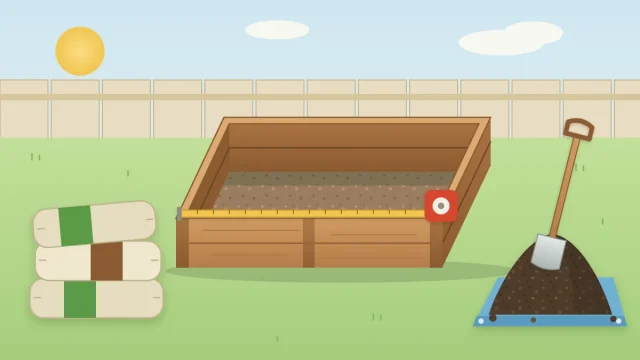
- Raise the bed height. A taller frame puts more of the root zone above the wet layer. Wet soil is very heavy and pushes outward on bed walls, so for a tall bed follow the kit maker’s instructions and get qualified help.
- Lead surface water away. A shallow channel or a regraded path can steer runoff around the bed instead of into it. Check where downspouts empty, too.
- Move the bed. If the spot floods every wet season, relocating is often less work over time than fighting it. The checklist for choosing where a raised bed goes covers what to look for.
Why a gravel layer in the bottom does not help
Putting gravel or stones under the soil sounds logical, but it tends to work against you. Water does not move readily from a fine material into a coarse one. It stays in the soil above the boundary until that soil is saturated, and only then drips into the gravel. The result is a wetter root zone, not a drier one, and less depth for roots.
A bed drains better when the same loose fill runs all the way down and meets loosened ground. Extension services list better drainage among the advantages of raised beds for that reason, as University of Maryland Extension’s guide to growing vegetables in raised beds notes, with the trade-off that the soil dries faster.
Beds on hard surfaces
On a paved patio or driveway there is no soil below to take up water, so everything has to leave at the base. The frame needs gaps or holes along the bottom edge, and they need to stay clear. Lifting the frame slightly on spacers, or leaving small openings between boards and paving, lets water escape instead of pooling inside.
Landscape fabric and hardware cloth: what each is for
Neither material improves drainage, and it helps to know what they do instead.
- Landscape fabric is a weed barrier. Under a bed it can keep persistent weeds from growing up into the fill, but it also stops crop roots from reaching the ground below, and fine soil can clog it over time. Plain cardboard smothers grass and then rots away, leaving the way open.
- Hardware cloth is a metal mesh used to keep burrowing animals such as gophers and voles out. Water and fine roots pass through it freely, though long root crops may be blocked.
Good to know
Do not line the bottom of a bed with solid plastic sheeting. It seals the base and traps water in the root zone.
Frequently asked questions
Should I put gravel in the bottom of a raised bed?
It is not recommended. Water tends to stay in the finer soil above a coarse layer until that soil is saturated, so gravel can leave the root zone wetter and shallower. Loose fill that runs all the way down to loosened ground drains better.
Do raised beds need drainage holes?
A bottomless frame on open soil drains into the ground, so it needs none. A bed on paving or with a solid base is different: water can only leave at the bottom edge, so it needs gaps or holes there, kept clear of packed soil and debris.
Can I put landscape fabric under a raised bed?
You can, but it is a weed barrier and not a drainage aid. It also keeps crop roots from reaching the soil below and may clog with fine particles. Plain cardboard is a common alternative, because it smothers grass and then breaks down.