Growing Lettuce and Salad Greens in Raised Beds
How to keep salad leaves coming from a raised bed: which lettuce types need what room, sowing shallowly, coping with heat and bolting, two ways to harvest and sowing a little at a time.
Salad leaves are among the quickest and most forgiving things you can grow. A short row sown today can be on the table within weeks, and the same plants can be cut more than once.
Growing lettuce in raised beds suits the crop especially well. The roots are shallow, the plants are small, and the fine, loose surface of a bed is easy to sow into. The challenge is not getting lettuce to grow. It is keeping a steady supply coming instead of a glut followed by nothing.
Why salad greens suit raised beds
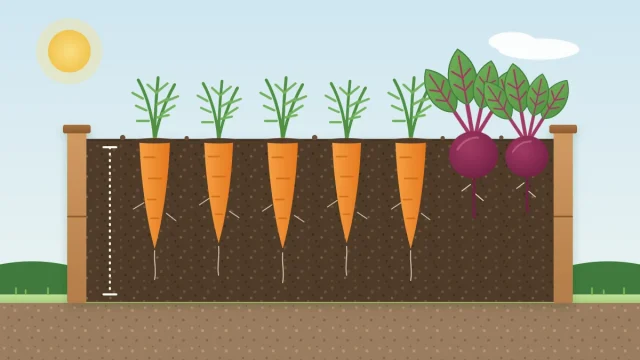
- Shallow roots. Lettuce does not need a deep bed. Even on a hard surface, where the fill is all the roots have, the University of Maryland Extension gives a minimum depth of 8 in (20 cm) for leafy greens.
- Speed. Baby leaves are ready a few weeks after sowing, and full heads follow later. Days to maturity are printed on the packet.
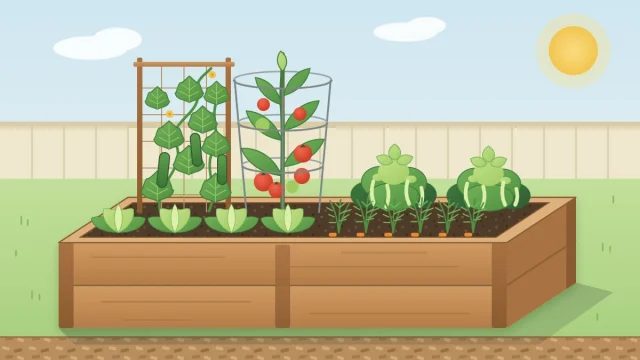
- They fit anywhere. Lettuce fills the edges of a bed, the gaps between slower crops and the space under taller ones.
- Easy reach. A crop you pick every few days belongs where you can get to it without stepping on the soil.
Arugula, spinach, mustard greens and mixed salad blends are grown the same way and can share a row with lettuce.
A cool-season crop: plan around heat
Lettuce grows best in cool weather. Sow it in spring, as soon as the soil can be worked, and again toward the end of summer for a fall crop. Exact dates depend on where you live, so use the frost dates for your area and a local extension planting calendar.
When days turn long and hot, lettuce bolts: the center stretches upward into a flower stalk and the leaves become bitter. Once a plant has bolted it does not go back, so pull it and resow. You can delay bolting in summer in three ways:
- Use part shade. A spot with morning sun and afternoon shade stays cooler. The guide to how much sun a raised bed needs explains which crops tolerate less light.
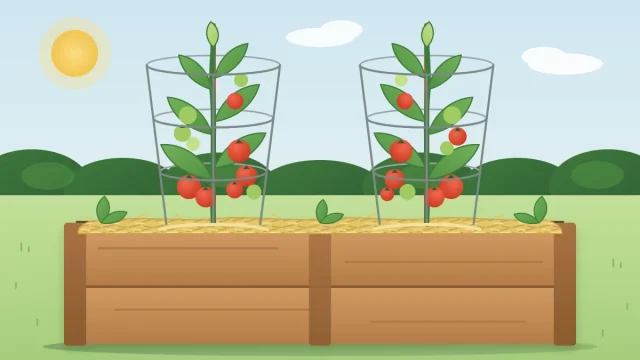
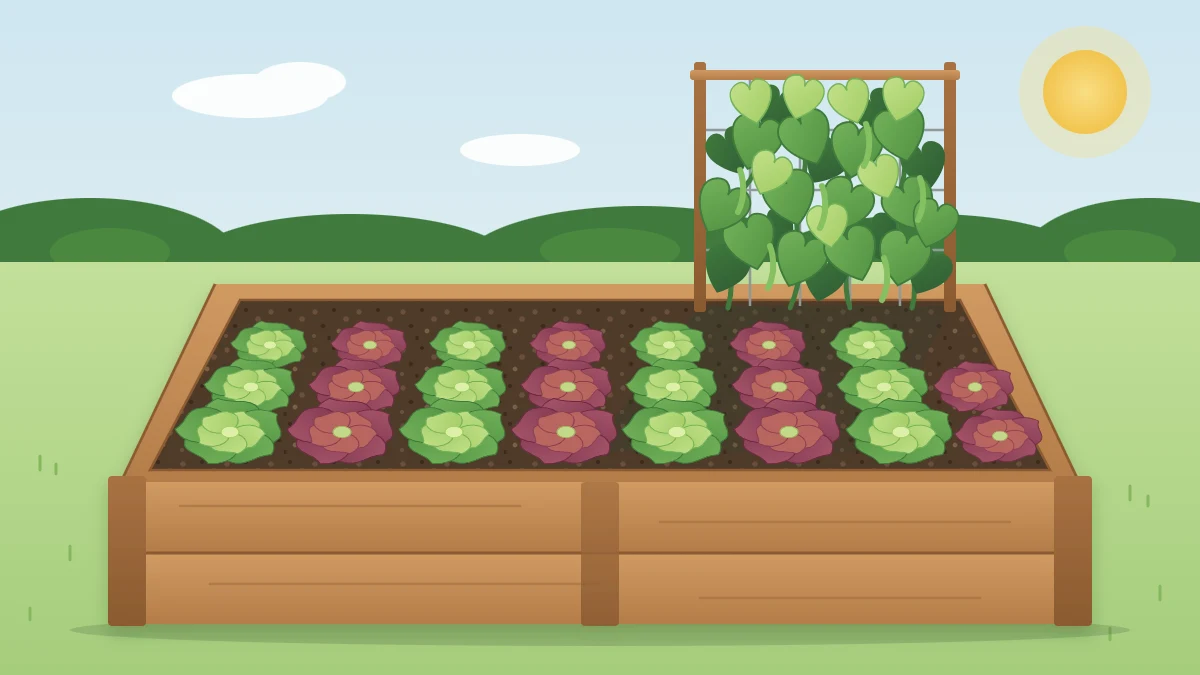
- Borrow shade from taller crops. University of Maryland Extension’s page on succession and companion planting mentions growing lettuce in the shade of taller plants. A row beside trellised beans or staked tomatoes is a practical way to do it.
- Choose heat-tolerant varieties. Packets often say “slow to bolt” or “heat tolerant.” These buy time but do not make lettuce a hot-weather crop.
Types of lettuce and the room each needs
The four main types differ in size and habit, so they do not share one spacing.
| Type | Habit | Room needed |
|---|---|---|
| Loose-leaf | Open cluster of leaves, no head | Least. Can be sown thickly for baby leaves |
| Butterhead | Soft, loose head | Moderate |
| Romaine | Tall, upright head | Moderate, with space to stand upright |
| Crisphead | Tight, firm head | Most. Also the slowest and most heat-sensitive |
Follow the packet for the variety you have. Loose-leaf lettuce meant for baby leaves can be scattered in a band and cut young without thinning. Heading types need thinning or transplanting to the packet distance, because a head cannot form when plants press against each other.
Tip
Thinnings are edible. Pull the extra seedlings when they have a few leaves and add them to a salad.
How to sow
- Rake the surface fine and level, removing clods and old roots.
- Make a shallow furrow, or mark out a band for baby leaves.
- Sow thinly and cover very lightly. Lettuce seed is small and is commonly sown close to the surface, so check the packet for the depth.
- Firm the soil gently with the back of the rake so the seed touches moist soil.
- Water with a fine spray that does not wash the seed away.
Lettuce seed often germinates poorly in hot soil. For late-summer sowings, sow in the cooler part of the day and shade the row until seedlings appear. Transplants are another way around summer heat.
Watering: the one exception
For most crops, the usual advice is to water deeply and avoid light sprinkles. Germinating seed and salad seedlings are the exception. The seed sits near the surface, and the surface is the first part of a bed to dry, so it may need a light watering often until the seedlings are up.
University of Maryland Extension’s guide to caring for a vegetable garden advises against shallow, frequent watering except for fast-growing salad greens. Once plants are established, check the soil with a finger and water when it is dry an inch or two (2.5 to 5 cm) down. Dry spells are commonly associated with bitter leaves and early bolting. The full method is in the guide to watering raised beds.
Harvesting: leaves or whole heads
There are two ways to harvest, and the type of lettuce decides which fits.
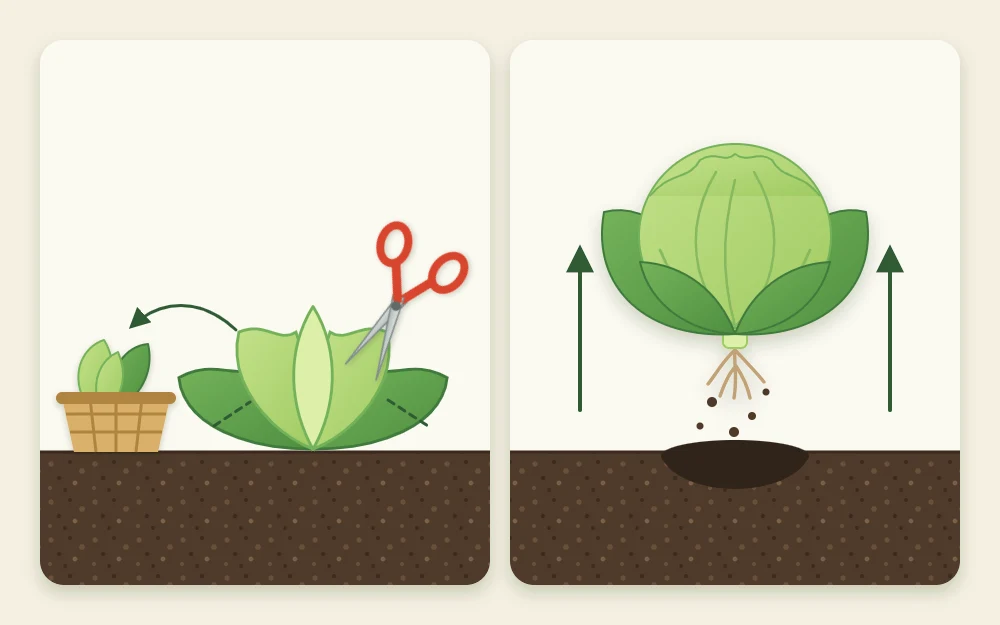
- Cut-and-come-again. Pick the outer leaves and leave the center to keep growing, or cut a whole band of baby leaves a little above the soil and let it regrow. A planting usually gives several cuts before quality drops.
- Whole heads. Let butterhead, romaine and crisphead types fill out, then cut at the base or lift the plant.
Sow a little, often
A whole packet sown at once gives more salad than a household can eat in the two weeks it is at its best. Sow a short row, then another when the first seedlings are well up, and keep going while the weather stays cool. Let the pace follow the crop and the weather, not a fixed number of days.
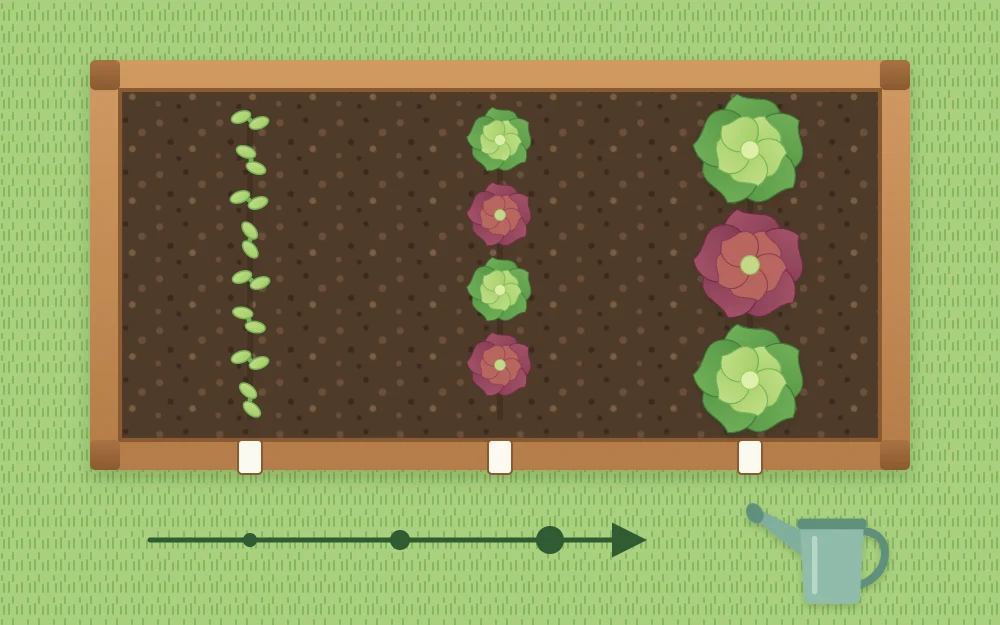
This is the simplest form of succession planting, and lettuce is the ideal crop to learn it with. The guide to succession planting in raised beds shows how to plan sowings and follow-on crops for the whole season.
Slugs and other visitors
Tender leaves attract company. Start with physical measures:
- Slugs and snails. Look for ragged holes and silvery trails. Pick them off in the evening or early morning, clear away boards and debris where they hide, and water in the morning so the surface dries by night.
- Aphids. A firm spray of water knocks them off. Rinse harvested leaves well.
Good to know
If you decide to use any pest control product on a salad crop, check that the label lists both lettuce and the pest, and follow the label exactly, including the waiting time before harvest.
Frequently asked questions
Why is my lettuce bitter and growing tall?
The plant is most likely bolting, which means it is sending up a flower stalk. Bolting is commonly brought on by heat and long days, and dry soil can add to it. The leaves will not sweeten again, so remove the plant and sow a fresh row.
Can lettuce grow in a shady raised bed?
Lettuce tolerates less sun than fruiting crops and often benefits from afternoon shade in warm weather. In deeper shade it still grows, but more slowly and with looser, thinner plants. Loose-leaf types picked young are usually the best fit for a part-shade bed.
How many times can I cut the same lettuce plants?
Loose-leaf lettuce usually regrows for several cuts if you leave the center of the plant intact. Regrowth slows and leaves become tougher or more bitter as the weather warms. When quality drops, pull the plants and replace them with a newer sowing.