Best Vegetables for Raised Beds: 12 Reliable Choices
Twelve dependable vegetables for a first raised bed, with the season, relative space need and starting method for each, plus the crops that take a lot of room and how to decide.
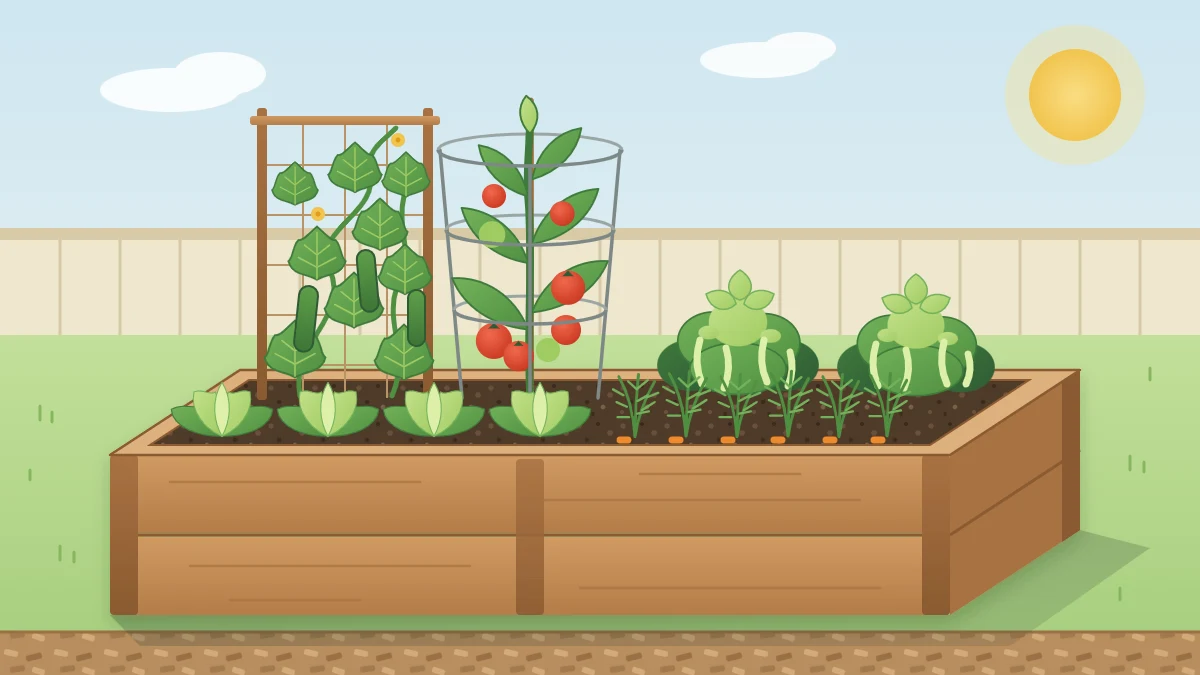
A first raised bed is small, so every crop has to earn its place. The best vegetables for raised beds are the ones that make good use of loose, deep soil, give a worthwhile harvest from a little space and forgive a beginner’s mistakes.
The twelve below are widely grown and dependable. They are not the only options, and no list can tell you what your household likes to eat. Use it as a shortlist, pick four or five, and add more once the first season has shown you how the bed behaves.
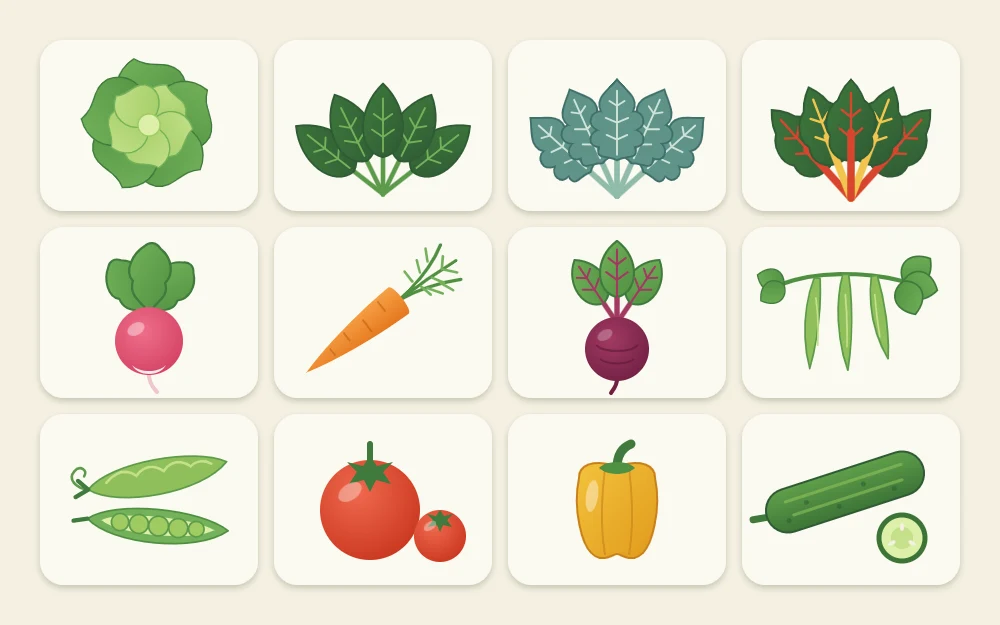
Leafy greens
Greens are the quickest reward a bed can give. They have shallow roots, tolerate a little shade and can be picked a few leaves at a time.
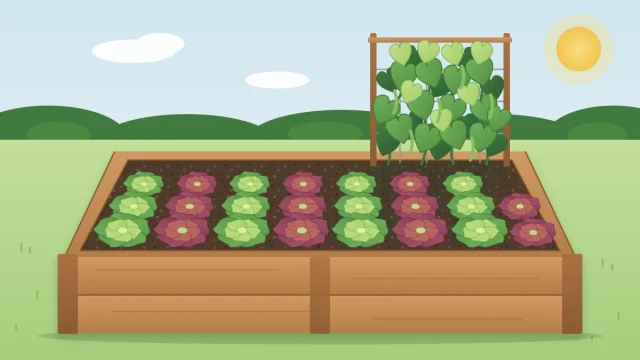
- Leaf lettuce. Cool-season. Ready in weeks, fits in gaps and along edges, and regrows after cutting. Heat makes it bolt and turn bitter. See the guide to growing lettuce and salad greens.
- Spinach. Cool-season and fast. It bolts quickly as days lengthen and warm, so it is a spring and fall crop in most places.
- Kale. Cool-season but tolerant of both heat and frost, so one planting can be picked for months. Plants get large, so give them the room the tag calls for.
- Swiss chard. Handles summer heat better than most greens and keeps producing when outer leaves are cut. Each seed is a cluster, so seedlings need thinning.
Root crops
Stone-free fill that has never been walked on is exactly what roots want, which is why they do so well in beds.
- Radishes. Cool-season and among the fastest crops there are. Sow a short row at a time, because they turn woody and hot if left in the ground.
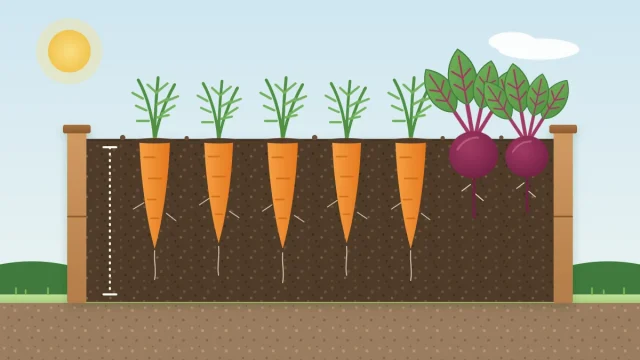
- Carrots. Cool-season. Seed is slow to sprout and the surface has to stay moist until it does. Variety decides how deep the loose soil must be. The guide to growing carrots and other root vegetables has the details.
- Beets. Cool-season, and you get two harvests in one: roots and edible leaves. Like chard, they come up in clusters and need thinning.
Peas and beans
- Peas. Cool-season, sown early. Most types climb, so put a trellis in before or at sowing. They finish as the weather warms, leaving room for a summer crop.
- Bush beans. Warm-season. They need no support, grow quickly once the soil is warm and crop over a few weeks. Sow them only after the danger of frost has passed.
Fruiting crops
These need the most sun and warmth, and they stay in the bed all summer. Extension services commonly give at least six hours of direct sun a day for a vegetable garden, and fruiting crops do better with more.
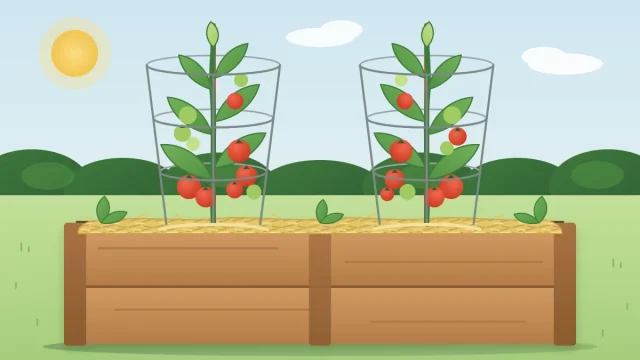
- Tomatoes. Warm-season, set out as transplants after the last frost date. They are the largest plants on this list and need support. How many fit depends on the type, which the guide to growing tomatoes in a raised bed explains.
- Peppers. Warm-season transplants that are slower than tomatoes and more sensitive to cold nights. Plants are compact, so they suit beds well.
- Cucumbers on a trellis. Warm-season. Trained upward, a vining cucumber takes a fraction of the ground it would cover if left to sprawl, and the fruit stays clean and easy to find.
Tip
Put tomatoes, trellised cucumbers and peas on the north side of the bed so they do not shade shorter crops. That applies in the Northern Hemisphere. In the Southern Hemisphere, use the south side.
The twelve at a glance
Space need here is relative, comparing one plant with another on this list. It is not a measurement.
| Crop | Season | Space per plant | How to start |
|---|---|---|---|
| Leaf lettuce | Cool | Small | Direct sow or transplant |
| Spinach | Cool | Small | Direct sow |
| Kale | Cool | Medium | Direct sow or transplant |
| Swiss chard | Cool to warm | Medium | Direct sow or transplant |
| Radishes | Cool | Small | Direct sow |
| Carrots | Cool | Small | Direct sow |
| Beets | Cool | Small | Direct sow |
| Peas | Cool | Small, with trellis | Direct sow |
| Bush beans | Warm | Small to medium | Direct sow |
| Tomatoes | Warm | Large | Transplant |
| Peppers | Warm | Medium | Transplant |
| Cucumbers | Warm | Medium, with trellis | Direct sow or transplant |
How far apart, and how deep?
There is no single figure for this group. A radish and a tomato plant differ in size many times over, and even two varieties of the same crop can need different room. Spacing and sowing depth follow the crop, the variety and its mature size.
The seed packet or plant tag for the variety in your hand comes first. For a wider view, the University of Maine Cooperative Extension planting chart is an example of a table that lists distances and planting depth crop by crop. The guide to plant spacing in raised beds explains how to turn those figures into a planting plan.
Crops that take a lot of room
Some popular vegetables are harder to justify in a small bed:
- Sprawling squash and pumpkins. A single vining plant can cover most of a bed. Bush zucchini is more compact but still large.
- Melons. Long vines and a long, warm season for a handful of fruit.
- Sweet corn. It is wind-pollinated, so it needs to be planted in a block of many plants to fill its ears, and each stalk gives little.
None of these is wrong to grow. The question is what you give up for them. If you have several beds, or a patch of open ground where vines can run, they may be well worth it. In one small bed, the same space planted with greens, roots and a trellised crop usually feeds the household more often.
Match the list to your household and season
Start with what people at your table already eat. A bed full of radishes is no use if nobody likes them. Then check the list against your climate. Cool-season crops go in early and again toward fall, and warm-season crops wait until frost danger has passed and the soil has warmed.
The dates themselves depend on where you live. Find the last and first frost dates for your area and use a local planting calendar from your extension service. University of Maryland Extension’s guide to when to plant vegetables is an example of one, written for Maryland. Your own state’s service will have dates that fit your conditions.
Good to know
Frost dates are averages, not promises. Keep an eye on the forecast after setting out tomatoes, peppers and cucumbers, and be ready to cover them on a cold night.
Frequently asked questions
What is the easiest vegetable to grow in a raised bed?
Radishes, leaf lettuce and bush beans are common first choices. All three are sown directly, grow quickly and need no support. Which is easiest for you depends on the season: radishes and lettuce prefer cool weather, while beans need warm soil.
How many different vegetables should I plant in my first bed?
Four or five is a manageable number for one bed. That is enough variety to learn from without crowding. Choose a mix of quick crops, such as greens and radishes, and one or two long-season plants like a tomato or a pepper.
Can I grow zucchini or squash in a raised bed?
Yes, but plan for the space. Vining squash can cover most of a small bed, and even bush zucchini grows large. Check the mature size on the packet or tag, and decide whether the harvest is worth the room it takes from other crops.