How to Refresh Raised Bed Soil Each Season
A step-by-step way to bring a settled raised bed back up: clear it, loosen the top, add compost or a compost and topsoil blend, rake, water and cover. No need to replace the soil.
At a glance
What you need
- Garden fork
- Rake
- Finished compost
- Topsoil for large top-ups
- Hose or watering can
- Mulch
After a season or two, most raised beds look different from the day they were filled. The soil sits lower in the frame, the surface is a little crusted, and last year’s plants did not grow quite as strongly. This is normal, and it does not mean the soil is worn out.
You do not need to dig everything out and start again. To refresh raised bed soil you clear the bed, loosen the top, replace what has been lost and cover it. The whole job is light work with a fork and a rake, and it can be done in spring, in fall or between crops.
Why the soil level drops
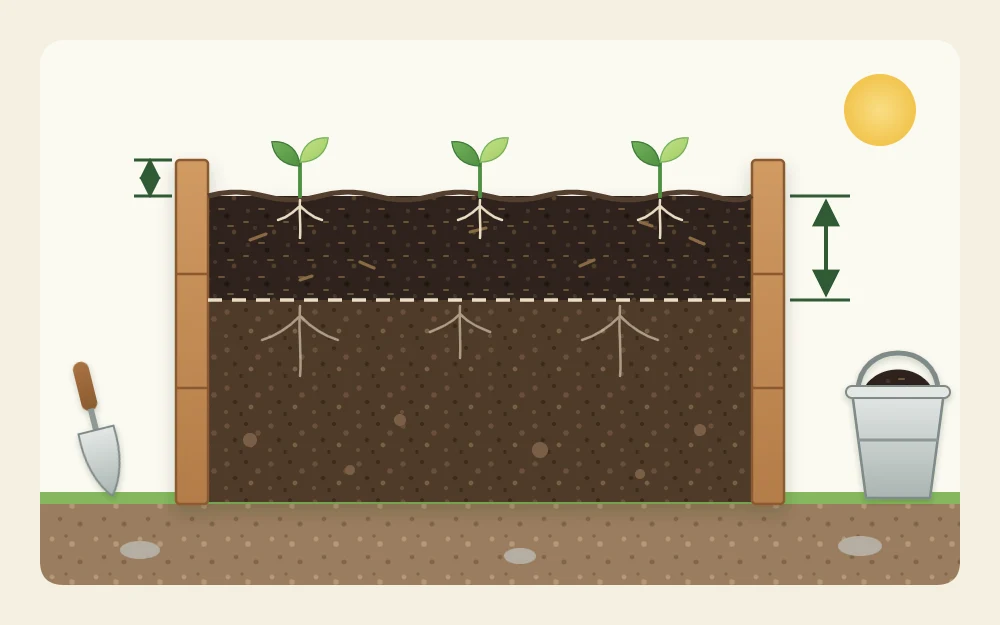
Two things lower the level. First, organic matter keeps decomposing. Compost that made up a large share of the fill on day one is slowly consumed by soil life, and its volume shrinks. Second, loose fill settles under rain, watering and its own weight.
Harvests also carry nutrients out of the bed, and a season of watering can leave the surface compacted. Refreshing puts back organic matter and restores the loose top layer that seeds and transplants need.
What you need
- A garden fork or hand fork
- A rake
- Finished compost
- Topsoil or a compost and topsoil blend, if the level has dropped a long way
- A hose or watering can
- Mulch, if you are not planting right away
Work when the soil is moist but not wet. A squeezed handful should crumble apart instead of holding together in a shiny ball. The guide to getting raised beds ready for spring planting covers the timing and the rest of the seasonal checklist.
Step by step
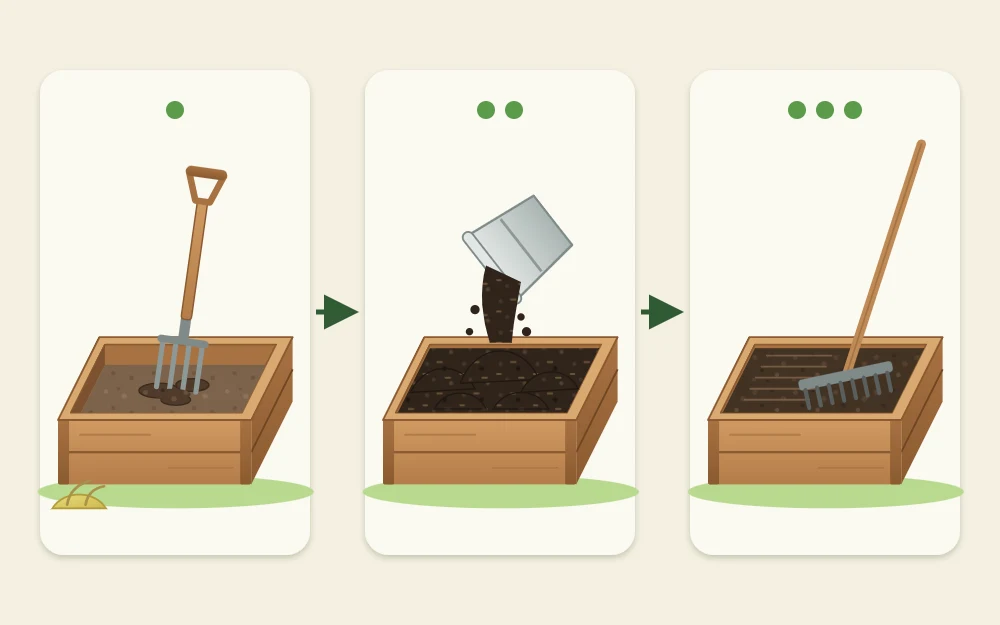
- Clear spent plants. Pull or cut old crops and weeds. Healthy remains can go to the compost pile. Put plants that looked diseased in the trash instead, so the problem is not carried back to the bed later.
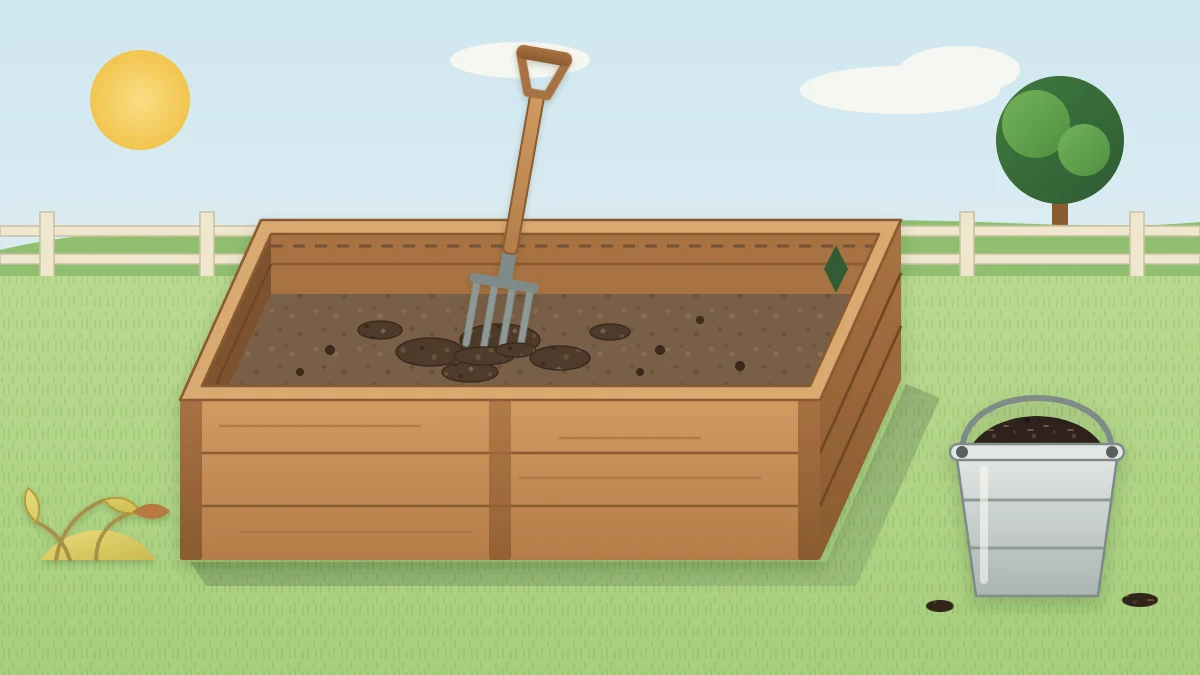
- Loosen the top few inches. Push the fork in and rock it back gently, working across the bed. The aim is to open the surface, not to turn the whole bed over. Deep digging breaks up soil structure and brings buried weed seeds to the light.
- Check the level. See how far the soil sits below the rim. A small drop needs only compost. A large one calls for a blend, as explained below.
- Add compost. Spread it evenly over the bed. University of Maryland Extension’s page on soil to fill raised beds suggests 2 to 4 in (5 to 10 cm) of compost mixed into the top 4 in (10 cm) of an existing garden bed. Fork it in lightly or leave it on the surface for soil life to work in.
- Rake level. Break up clumps and smooth the surface, leaving a little space below the rim so water and mulch stay in the bed.
- Water. A gentle soaking settles the new material and shows up any low spots, which you can fill and rake again.
- Mulch or plant. Bare soil crusts and grows weeds. Plant the bed, or cover it with mulch until you do.
When the level has dropped a lot
If the soil has sunk well below the rim, filling the gap with compost alone is not the best answer. Compost keeps shrinking, so the level drops again quickly, and repeated heavy applications can oversupply some nutrients and salts.
Top up with a blend of compost and topsoil instead. The topsoil adds mineral material that does not decompose, so the bed holds its level longer. Use the same proportions you would choose for a new bed, and mix the new layer into the surface of the old soil with the fork so there is no sharp boundary between the two. The guide to using compost in raised beds explains how much is enough and why more is not better.
Tip
Buy topsoil from a supplier who can tell you what is in it and where it came from. Avoid fill dirt of unknown origin.
What a soil test adds
Compost replaces organic matter, but it does not tell you what the bed’s pH or nutrient levels are. A soil test every few years does. University of Maryland Extension’s page on soil testing explains how to take a sample and what a lab report includes, and your local extension office can point you to a lab in your area.
The same extension service describes a pH of 6.2 to 6.8 as suiting most vegetables and herbs. If a report shows your bed outside the range the lab recommends, or low in a particular nutrient, follow the report. Add fertilizer or lime only as the soil test and the product label direct, and not as a yearly habit.
Rotate while you refresh
The moment a bed is empty is also the moment to decide what goes in next. Growing the same plant family in the same soil year after year lets the pests and diseases tied to that family build up. Changing families costs nothing and works alongside the compost you have just added. The guide to planning crop rotation across your beds shows a simple way to keep track.
When replacing the soil is actually warranted
Full replacement is rarely needed, and it is expensive and heavy work. Two situations can justify it:
- Contamination. For example, soil that a test shows to be high in lead, or a bed where something harmful was spilled or an herbicide-tainted material was added.
- Persistent soil-borne disease. If the same crops fail in the same bed several years running despite rotation and cleanup, a disease that lives in the soil is one possibility among several.
Good to know
Do not replace soil on a guess. Poor growth has many possible causes, including shade, watering, crowding and cold. Ask your local extension office before going to the cost and effort of emptying a bed. They can help identify the problem and may suggest a test.
In nearly every other case, the soil you have is an asset. Each year of compost, roots and soil life tends to make it better than the bagged material you would replace it with.
Frequently asked questions
Do I have to replace raised bed soil every year?
No. The existing soil is kept and improved. Each season you loosen the surface and add compost, or a compost and topsoil blend if the level has fallen a long way. Full replacement is reserved for contamination or a persistent soil-borne disease, ideally after advice from your local extension office.
Why has the soil level in a raised bed sunk?
Organic matter in the fill keeps decomposing and loses volume, and loose soil settles under rain, watering and its own weight. Beds filled with a high share of compost tend to sink the most. It is expected, and topping up puts the level back.
Should I dig the whole bed over when I refresh it?
It is usually better not to. Loosening only the top few inches with a fork opens the surface for planting while leaving soil structure, worm channels and buried weed seeds undisturbed. Raised beds are not walked on, so they seldom become compacted deep down.