How Much Sun Does a Raised Bed Need?
Sun needs explained by crop group, a simple way to log the hours of direct sun on your spot, and what to grow when a raised bed sits in part shade.
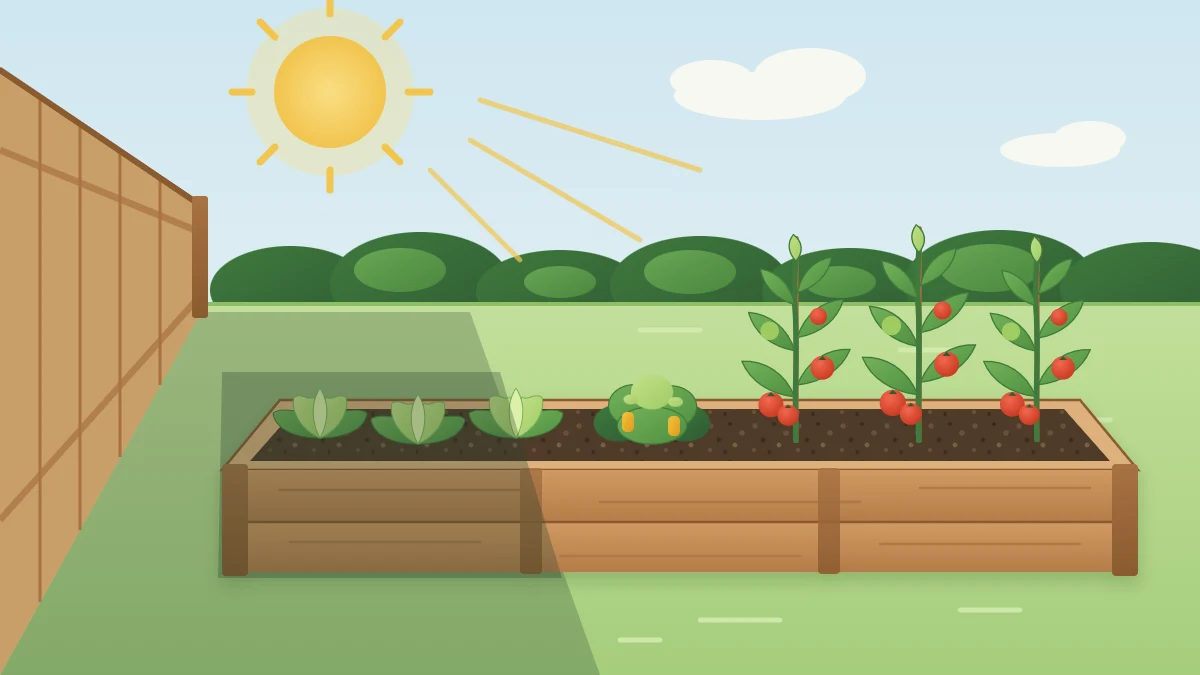
Sunlight is the one thing you cannot add to a raised bed later. Soil can be improved and water can be carried, but a bed in the wrong light stays in the wrong light. So before deciding what to plant, it is worth asking how much sun does a raised bed need, and whether your spot delivers it.
The short answer is that it depends on what you grow. Fruiting crops want the most, leafy crops get by with the least, and roots sit somewhere between. These are tendencies rather than fixed thresholds, and one day of observation tells you more than any guess from the kitchen window.
The usual starting figure: six hours of direct sun
The University of Maryland Extension’s guide to planning a vegetable garden advises a site with at least 6 hours of full sun a day, and ideally more. Other extension services commonly give a similar figure, which is why “six hours” turns up in so many gardening guides.
Two details matter when you apply it. First, the hours are direct sun: light falling straight on the leaves, not the bright shade under a tree or beside a pale wall. Second, the figure is a floor for a mixed vegetable bed, not a target.
Sun is only one part of choosing a spot. Level ground, drainage and a hose within reach count too, and the guide on where to put a raised bed takes them in order.
Sun needs by crop group
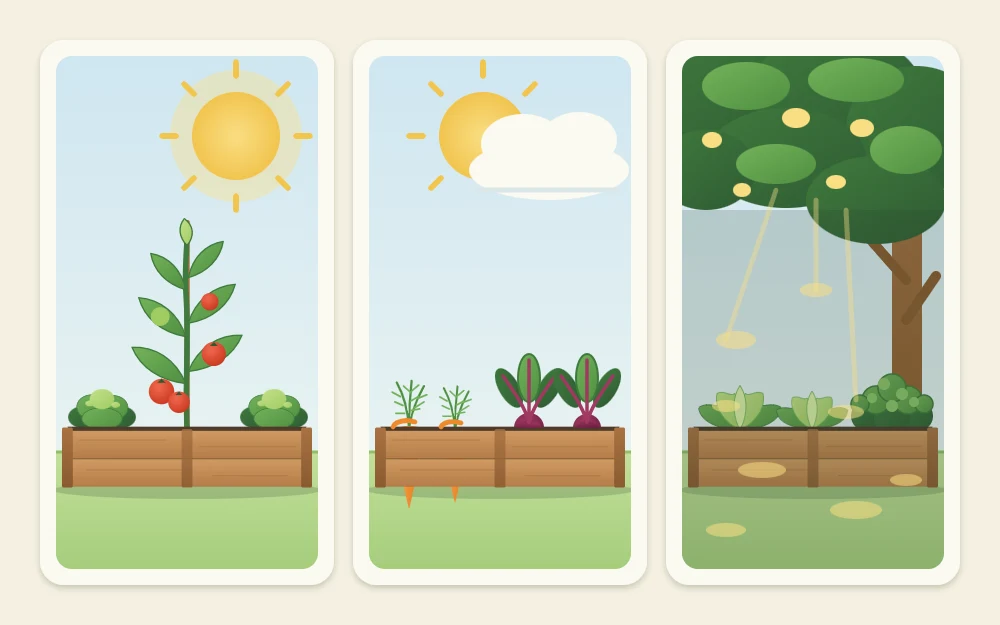
Vegetables do not all ask for the same light. A useful way to think about it: the part you eat tells you roughly how much sun the plant wants. Fruit takes the most energy to make, roots a middling amount, and leaves the least.
| Crop group | Examples | Sun tendency | With less sun |
|---|---|---|---|
| Fruiting crops | Tomatoes, peppers, squash, cucumbers | The sunniest spot you have; more than the 6-hour minimum is better | Fewer flowers and fruit, later ripening |
| Root crops | Carrots, beets, radishes | Usually in between; often manage with somewhat less than fruiting crops | Slower growth and smaller roots |
| Leafy greens | Lettuce, spinach, kale, Swiss chard | Tolerate less; may welcome afternoon shade in hot summers | Looser, slower plants that are still worth harvesting |
| Leafy herbs | Parsley, cilantro, mint | Many tolerate part shade | Thinner growth and a lighter harvest |
Read the table as tendencies. Variety, climate and season all shift the picture, and the seed packet or plant tag for the variety in hand is the better guide to its light needs.
How to measure the sun on your spot
Guessing is unreliable, because people remember the yard at the time of day they are usually in it. A sun log takes one clear day and settles the question.
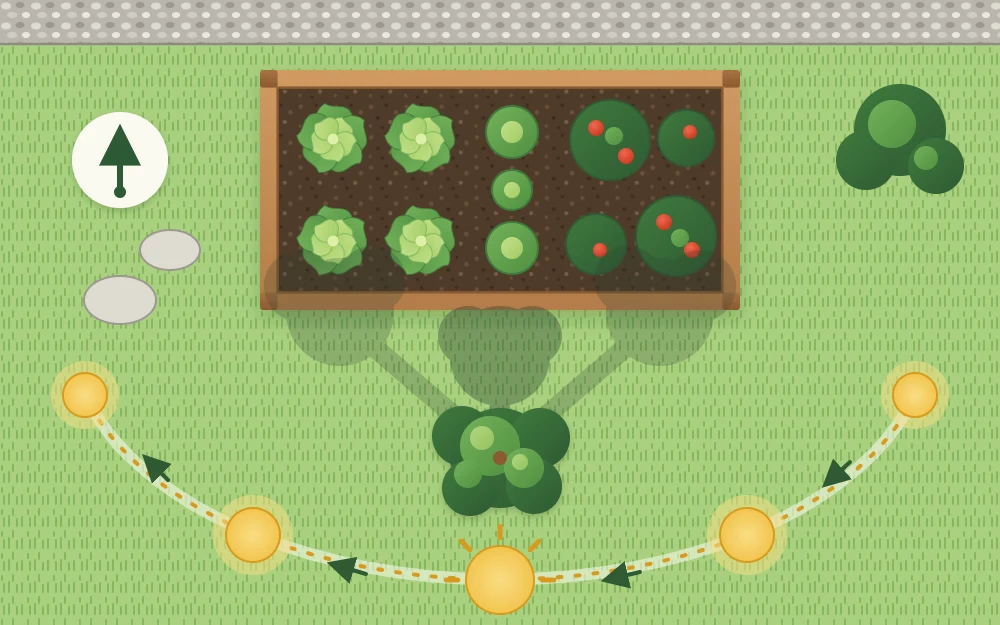
- Mark the outline of the planned bed with string, stakes or a few stones.
- Starting soon after sunrise, look at the spot every hour or two and note whether it is in direct sun, part shade or full shade. If the bed is long, note each end separately.
- Write down what casts each shadow: a tree, a fence, the house, a neighbor’s garage.
- At the end of the day, add up the hours of direct sun.
- Repeat in another season if you can. The sun rides lower in spring and fall than in midsummer, so shadows are longer, and a deciduous tree that lets light through in early spring casts solid shade once it leafs out.
Tip
If you can log only one day, pick one close to the season you plan to grow in. A midsummer log flatters a spot that will carry spring lettuce and fall greens under much longer shadows.
Morning sun versus afternoon sun
Hours are not all equal. Morning sun is cooler and dries dew off the leaves early in the day. Afternoon sun is hotter and more intense.
In a cool or short-summer climate, afternoon sun is welcome warmth for tomatoes and peppers. In a hot-summer climate, the same exposure can stress leafy greens and push cool-season crops to bolt, so a bed with morning sun and light afternoon shade may suit them better. A bed with sun at both ends of the day gives you the most options.
Keep tall crops from shading the rest
Shade can come from inside the bed as well as from outside it. A row of staked tomatoes or a trellis of pole beans casts a real shadow by midsummer.
The University of Maryland Extension advises placing taller crops on the north and west sides of a bed so they do not shade shorter ones. That direction assumes the Northern Hemisphere, where the midday sun sits in the southern sky; gardeners in the Southern Hemisphere reverse it.
What to grow in a part-shade bed
A spot with roughly three to five hours of direct sun is commonly described as part shade. It is not a lost cause, but it calls for honest expectations.
- Leafy greens are the best bet. Lettuce, spinach, arugula, kale and Swiss chard grow more slowly but often stay tender longer into warm weather. The guide to growing lettuce and salad greens in raised beds has the details.
- Leafy herbs such as parsley and cilantro usually cope well. Mint does too, kept in its own pot so it cannot spread.
- Roots such as radishes and beets are worth trying if you accept smaller roots and a longer wait.
- Fruiting crops are the poor choice. A tomato in part shade commonly grows tall and leafy and sets little fruit.
Expect slower growth, later harvests and soil that stays moist longer, so check it with a finger before you water. For a wider list sorted by season and space, see the best vegetables for raised beds.
If the spot falls short
You have a few options before giving up on a site.
- Shift the bed. Shadows have sharp edges, and moving the outline a few feet can add an hour or two of sun.
- Let in more light. Thinning low branches on your own trees helps; for large limbs, ask a qualified arborist.
- Match the crops to the light. Plant for the sun you have rather than the sun you wish for.
- Look elsewhere in the yard. If the only sunny ground is the front yard or a strip beside the driveway, that may simply be where the vegetables belong.
Frequently asked questions
Can a raised bed get too much sun?
Fruiting crops such as tomatoes and peppers rarely suffer from long hours of sun if the soil stays moist. Leafy greens and other cool-season crops can struggle in hot afternoon sun, when they tend to wilt and bolt. Mulch, a finger check of the soil and some afternoon shade for the greens usually help.
Is four hours of sun enough for a raised bed?
It can be enough for lettuce, spinach, arugula, kale and leafy herbs such as parsley, although they grow more slowly than in full sun. It is usually too little for tomatoes, peppers and squash, which tend to produce few fruit. Choose crops for the light you actually have.
Does sun through tree leaves count as direct sun?
Dappled light under an open tree canopy is weaker than direct sun, so count it as part shade when you add up your hours. Trees also compete for water and nutrients through their roots. If a bed must sit near a tree, plant leafy greens and expect slower growth.