Where to Put a Raised Bed: Sun, Water and Level Ground
A site checklist for a raised bed: sun, level ground, drainage, hose reach, distance from trees, air movement and what lies underneath, plus a one-day test before you commit.

A raised bed is hard to move once it is filled, so the spot deserves more thought than the frame. Deciding where to put a raised bed comes down to a handful of checks you can do with your eyes, a hose and a level before any soil arrives.
Work through them in the order below. Sun comes first because it cannot be fixed afterward; most of the others can be improved a little if the sunniest spot is not ideal in every way.
Start with the sun
Most vegetables need a lot of direct light. The University of Maryland Extension’s guide to planning a vegetable garden gives at least 6 hours of full sun a day, and ideally more. Fruiting crops such as tomatoes, peppers and squash sit at the demanding end, while leafy greens put up with less.
Do not guess from one glance at noon. Shadows from the house, a fence or a neighbor’s tree move through the day and change with the season. The guide to how much sun a raised bed needs explains how to track light on a spot and what to grow where it falls short.
Look for level ground
A bed that sits level holds water evenly. On a tilted bed, water runs to the low end, where the soil stays wet while the high end dries out, and fill can wash over the lower edge in heavy rain.
Flat ground is the easy answer. On a gentle slope, the usual approach is to cut a small level step, a terrace, across the slope and set the bed on it with its long side running along the hill rather than down it.

Good to know
A steep slope is a different job. The downhill wall of a bed there holds back a great deal of heavy, wet soil, so follow the kit maker’s instructions and get qualified help instead of improvising.
Check where the water goes
Walk the yard after a good rain. Any place where puddles linger for hours is a place where water will also sit under a bed. Raising the soil helps, but a bed in the lowest corner of the yard still collects runoff from everything above it.
Also look up. A spot under a roof edge or beside a downspout gets hammered in storms. If the only sunny place is on the damp side, read about raised bed drainage before you commit, because some causes are easy to fix and others are a reason to choose a different spot.
Stay within reach of a hose
Raised beds dry out faster than ground soil, so in warm weather you will be checking and watering often. If that means hauling cans across the yard, it will get skipped on exactly the days it matters most.
Unroll your hose and see where it actually reaches, with a little slack to walk around the bed. A spot the hose reaches comfortably beats a slightly sunnier one that it does not.
Keep your distance from trees and large shrubs
Trees cause two problems. The first is shade, which grows every year as the tree does and is heavier in summer when the leaves are out. The second is roots: tree and shrub roots travel well beyond the branches and will grow up into a bed of loose, watered, fertile soil, taking moisture and nutrients from your crops.
There is no single safe distance, because it depends on the species and its size. As a rough guide, stay outside the spread of the branches and farther if you can, and favor the side of the yard where the tree’s shadow does not fall.
Think about air and about being seen
Leaves that dry quickly after rain or dew tend to have fewer disease problems, so a spot with some air movement is better than a still corner boxed in by walls and hedges. A very windy, exposed site is not ideal either, since it dries the soil and batters tall plants. Something in between is what you are after.
Then consider where you will see the bed. One that is visible from the kitchen window or passed on the way to the car gets looked at daily. You notice dry soil, ripe beans and the first signs of trouble while they are still small jobs.
Consider what is under the bed
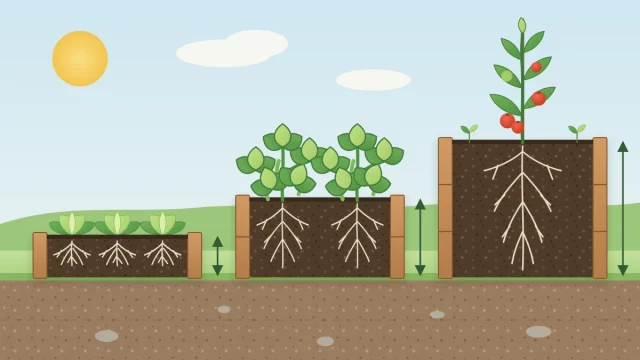
What the bed sits on decides how far roots can go.
- Soil or lawn. This is the most useful base. Roots pass below the frame into the native soil and water drains downward, so the bed behaves as if it were deeper than it is. Grass can be smothered under plain cardboard and the fill.
- A hard surface. On a patio or driveway the fill is all the plants get, so the bed has to be deeper and it needs a way for water to escape at the base.
If the ground is hard and compacted, loosening it with a garden fork before the bed goes down helps roots and water move from the fill into the soil beneath.
Good to know
Soil close to older painted buildings or beside busy roads may contain lead. Have the underlying soil tested before you grow food there. The University of Maryland Extension’s page on lead in garden soils explains what to test for and what the results mean.
Watch the yard for a day before you decide
Pick two or three candidate spots and mark each with stakes or a piece of cardboard the size of the bed. Then, on a clear day, look at them every hour or two from morning to evening and note which are in sun and which are in shade.
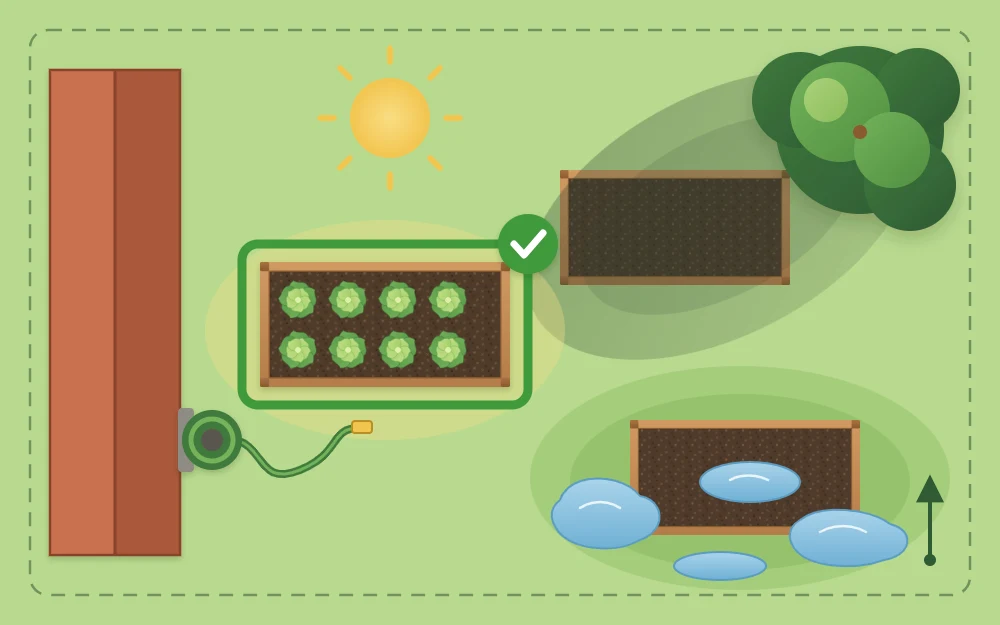
Run through the rest of the list for each one:
- Does it get sun for most of the day?
- Is the ground level, or easy to level?
- Does water drain away after rain?
- Does the hose reach?
- Is it clear of tree shade and roots?
- Will you walk past it or see it most days?
Rarely does one spot win on every count. Give sun and drainage the most weight, since those are the hardest to change. If you are planning more than one bed, the guide to planning a raised bed garden layout on paper shows how to fit beds and paths into the space you have chosen.
Frequently asked questions
Can I put a raised bed directly on grass?
Yes. Lawn over soil is a good base because roots can grow down past the frame. Many gardeners lay plain cardboard or overlapping newspaper over the grass to smother it and then add the fill on top. Loosen the ground first if it is hard and compacted.
How close to a tree can a raised bed be?
There is no single distance, because it depends on the kind of tree and how big it is. Roots spread well past the branches and shade grows each year. Staying outside the spread of the branches, and farther where possible, is a sensible rough guide.
Can a raised bed go on a slope?
On a gentle slope, yes: cut a small level terrace and set the bed on it so that it sits level. On a steep slope the downhill wall holds back a lot of heavy wet soil, so follow the kit maker's instructions and get qualified help.