Crop Rotation in Raised Beds: A Simple Way to Plan It
Why related crops should move to different soil each year, which vegetables belong to which plant family, a simple scheme for three or four beds, and realistic options when you have only one or two.
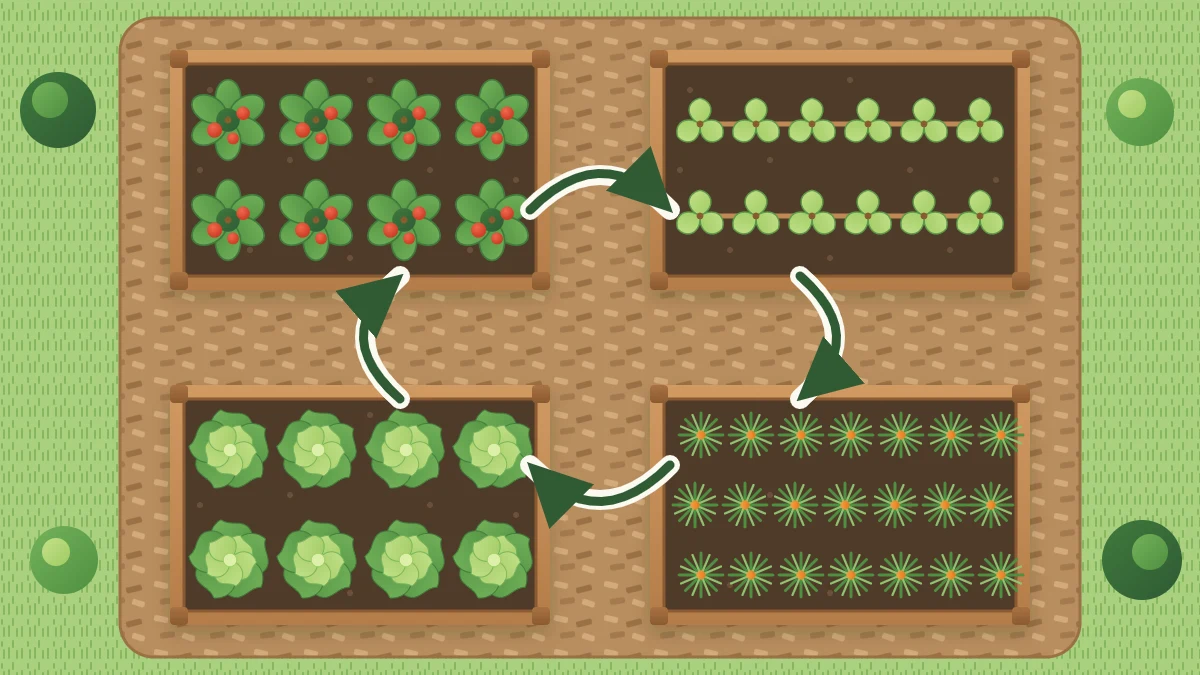
If you have heard that tomatoes should not go in the same spot year after year, you have heard the short version of crop rotation. Crop rotation in raised beds works the same way as in a field, only on a smaller map: each year, related crops move to soil where their relatives did not grow the year before.
It costs nothing and needs only a sketch, and it is worth understanding even if your garden is too small to do it perfectly.
What crop rotation means
The University of Maryland Extension’s page on succession planting, companion planting and rotation describes crop rotation as “moving crop families to different garden locations each growing season”. There are two reasons to bother.
The first is pests and diseases. Some of them live in the soil or in crop debris and are tied to one plant family. Grow that family in the same soil every year and they find a host every year, so their numbers can build. Move the family and the cycle is interrupted.
The second is nutrients. Crops draw on the soil differently. Large fruiting and leafy crops are often heavy feeders, root crops forage at different depths, and peas and beans host bacteria on their roots that take nitrogen from the air. Varying what grows in a spot spreads the demand.
Rotation lowers risk. It does not remove it.
Rotate by plant family, not by crop
Replacing tomatoes with peppers is not rotation. Both are nightshades and share many of the same problems. What moves is the whole family, so the first step is knowing who is related to whom.
| Plant family | Common members |
|---|---|
| Nightshades | Tomato, pepper, eggplant, potato |
| Brassicas (cabbage family) | Cabbage, broccoli, kale, radish, arugula |
| Legumes | Peas, beans |
| Cucurbits | Cucumber, zucchini and other squash, melon |
| Alliums | Onion, garlic, leek |
| Carrot family | Carrot, parsley, dill, cilantro |
| Beet family | Beet, Swiss chard, spinach |
| Lettuce family | Lettuce |
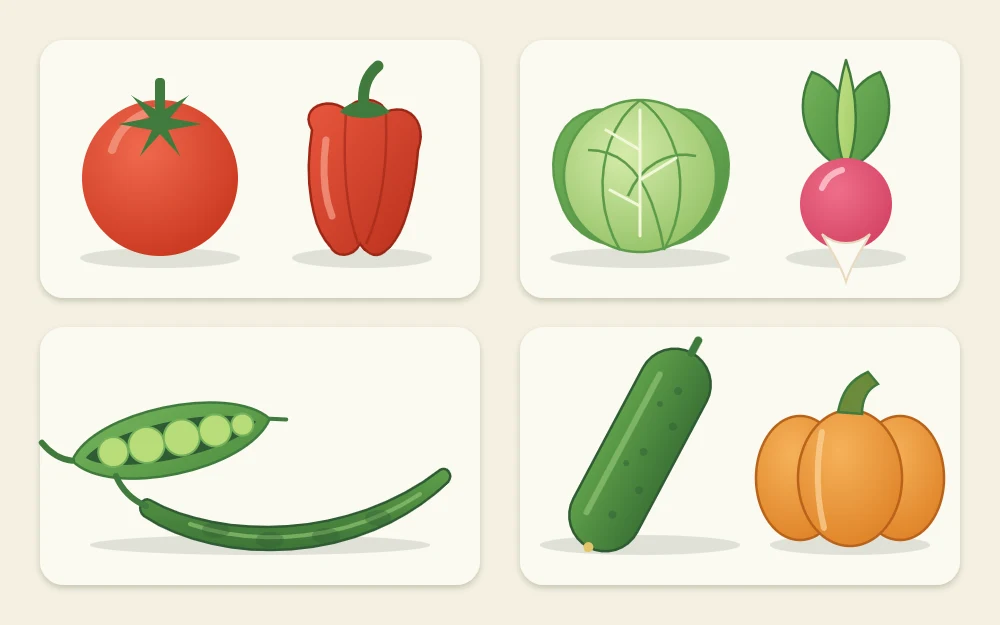
A few entries surprise people. Radishes and arugula travel with the cabbage family. Spinach belongs with beets and chard, not with lettuce. Potatoes count as nightshades, so a bed of potatoes does not give the soil a rest from tomatoes.
A simple scheme for three or four beds
If you numbered the beds when you planned the layout, rotation is mostly bookkeeping. Sort your crops into as many groups as you have beds. With four beds, one workable grouping is:
- Bed 1: nightshades.
- Bed 2: brassicas.
- Bed 3: legumes.
- Bed 4: the rest, such as cucurbits, alliums, the carrot family and salad greens.
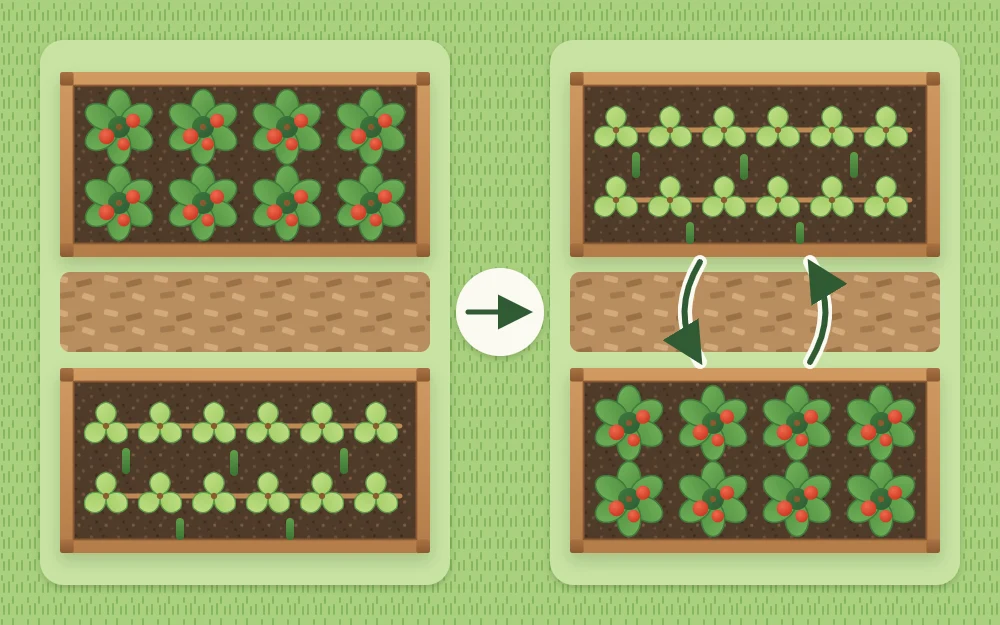
Each year, every group moves one bed along: what grew in bed 1 goes to bed 2, and the group from bed 4 comes around to bed 1. A family then returns to its starting soil in the fifth season. With three beds, merge two groups and the cycle shortens by a year.
The exact order matters less than keeping to it. Real beds are also rarely one family each. If a bed holds tomatoes at one end and beans at the other, treat each end as its own plot and rotate the blocks instead of whole beds.
What to do with only one or two beds
With a single bed you cannot move a family far, and it is better to say so. You still have options:
- Rotate between halves or ends. Swap the tomato end and the bean end each year. It is a short move, but it is not the same soil.
- Use containers some years. Grow the family that has had trouble in large pots of fresh soil mix for a season or two and give the bed to something unrelated.
- Lean on resistant varieties. Seed packets and plant tags often list the diseases a variety resists.
- Clean up thoroughly. Remove spent plants and fallen fruit at the end of the season. Put diseased material in the trash, not the compost.
- Skip a family. A year or two without it is the simplest rotation there is.
How long a gap is enough?
Sources differ, and so do the problems being managed. Gaps of three or four years before a family returns to the same soil are commonly suggested, and some persistent soil-borne diseases are reported to outlast that. Longer gaps help more. A one-year break is better than none.
Some troubles are untouched by rotation at any length: diseases that arrive on the wind and insects that fly will find a crop a few feet from where it grew last year.
Keep a sketch each year
Nobody remembers in spring where the peppers were two summers ago. Draw each bed at the end of the season, or take a picture and note the families on it. Add what went wrong and where.
Record second crops too. With succession planting, one spot may carry two crops in a year, and both count. Where you can, follow a crop with one from another family. The Maryland page gives Swiss chard after spring peas as an example, which is also a change of family.
Honest limits in a small garden
Beds in a home garden sit a few steps apart. Soil travels between them on tools, boots and transplants, and roots and water do not respect a frame. Rotation there is one useful habit among several, not a cure.
The others matter as much: giving plants room for air to move, clearing debris, and refreshing the soil with compost between seasons so that no family leaves the bed depleted.
Good to know
If one family keeps failing in the same bed, do not guess at the cause from a single symptom. Wilting, yellowing and stunting each have several possible explanations. Your local extension office can help identify the problem and tell you whether a longer break or a different step is called for.
Frequently asked questions
Can I plant tomatoes in the same raised bed every year?
You can, and many gardeners with one bed do, but the risk of soil-borne tomato problems building up rises over time. Moving the whole nightshade family elsewhere for a few seasons is the usual advice. If that is not possible, switch ends of the bed, choose resistant varieties and clear all debris in fall.
Do peppers count as a different crop from tomatoes for rotation?
No. Peppers, tomatoes, eggplant and potatoes all belong to the nightshade family and share many pests and diseases. Rotation works by family, so following tomatoes with peppers leaves the soil hosting the same group. Follow nightshades with an unrelated family such as legumes, brassicas or the carrot family instead.
Is crop rotation worth doing in a very small garden?
It is worth doing as far as you can, with modest expectations. Moving a family a few feet helps less than moving it across a large plot, because soil and pests travel short distances easily. Combine it with cleanup, resistant varieties, good airflow and an occasional year off for a family that has struggled.