Watering Raised Beds: How to Tell When and How Much
Raised beds dry faster than the ground, and no timetable fits them all. Learn what changes a bed's water needs, how to check the soil with a finger, and how to water so it reaches the roots.
Watering raised beds is less about a timetable and more about a habit: look, feel the soil, then decide. A raised bed drains freely and warms quickly, which plants like, but the same qualities mean it dries sooner than the ground around it.
That is why a rule borrowed from a neighbor so often disappoints. This guide explains what changes how thirsty a bed is, how to check the soil in a few seconds, and how to apply water so that it reaches the roots.
Why raised beds dry out faster
A raised bed holds its soil above ground level, so sun and wind reach the sides of the frame as well as the surface. The fill is usually looser than native soil and is never walked on, so water moves down through it readily. Both are good for roots. The University of Maryland Extension lists the other side of it among the drawbacks of raised beds: the soil dries faster and needs more monitoring and irrigation.
How much faster varies a great deal. A low bed over open native soil behaves much like the ground around it, because roots and moisture pass between the two. A tall bed, a narrow bed or a bed on a hard surface has only its own fill to draw on.
What decides how much water a bed needs
No fixed timetable works, because six things keep changing the answer:
- Weather. Heat, wind and strong sun pull water out of soil and leaves. A cool, cloudy week can mean no watering at all.
- Crop. Shallow-rooted lettuce and other salad greens feel a dry surface quickly. Established tomatoes and squash reach deeper soil but use a lot of water once they are large.
- Growth stage. Seeds and new transplants have few roots and little margin. Plants that are flowering or filling fruit, pods or roots need a steady supply.
- Soil. A soil mix rich in organic matter holds more water than a sandy or very coarse one.
- Mulch. Covered soil loses far less water to evaporation than bare soil.
- Bed depth. A shallow layer of fill holds less water in reserve than a deep one.
About an inch a week: an average, not a schedule
The figure you will meet most often comes from extension services. The University of New Hampshire Extension’s guide to raised beds in small spaces says most vegetable crops need about an inch (2.5 cm) of rain or irrigation a week. Read that as a rough planning average for rain and irrigation combined. It tells you roughly how much a bed uses over a typical stretch of the season; it does not tell you which day to turn on the hose.
A simple rain gauge near the bed makes the figure useful. After a good soaking rain you may have nothing to add. After a hot, dry, windy spell the bed may want more than the average.
Check the soil with a finger
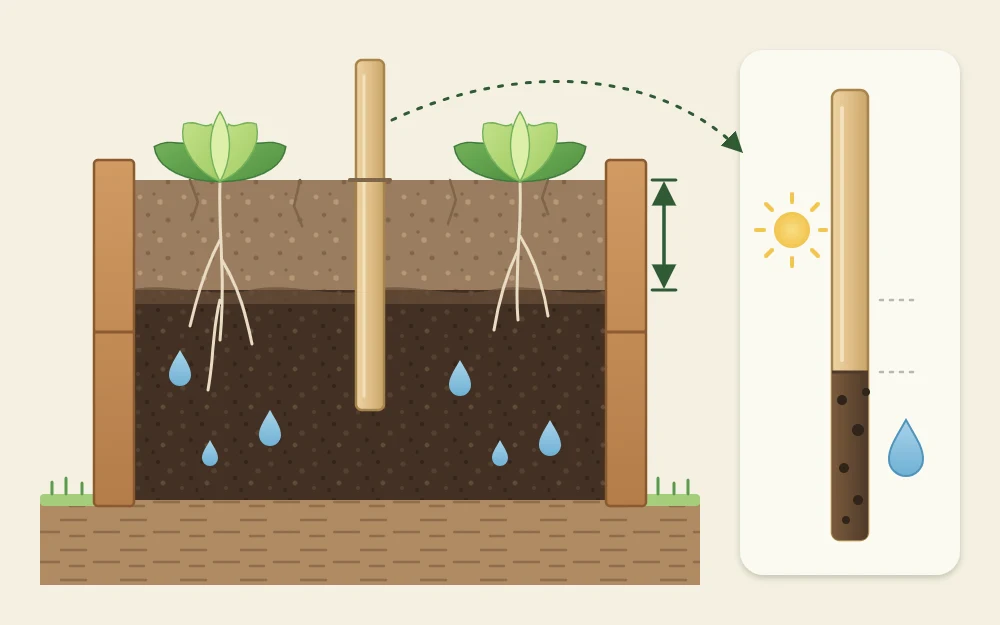
Push a finger into the soil between plants, a couple of inches (about 5 cm) down. The surface can look pale and dusty while the root zone is still moist, and after a light shower it can look wet while the soil underneath is dry. The same University of New Hampshire guide suggests watering if the soil is still dry an inch or two down.
- Cool and moist, clinging to your finger: wait, and check again tomorrow.
- Dry and crumbly at that depth: water now.
- Wet and sticky, or sour-smelling: hold off and look at how the bed drains.
Check in more than one spot. Edges and corners beside the frame usually dry first, and the soil under a large leafy plant dries faster than an empty patch. A wooden dowel pushed into the soil does the same job.
How to water so it reaches the roots
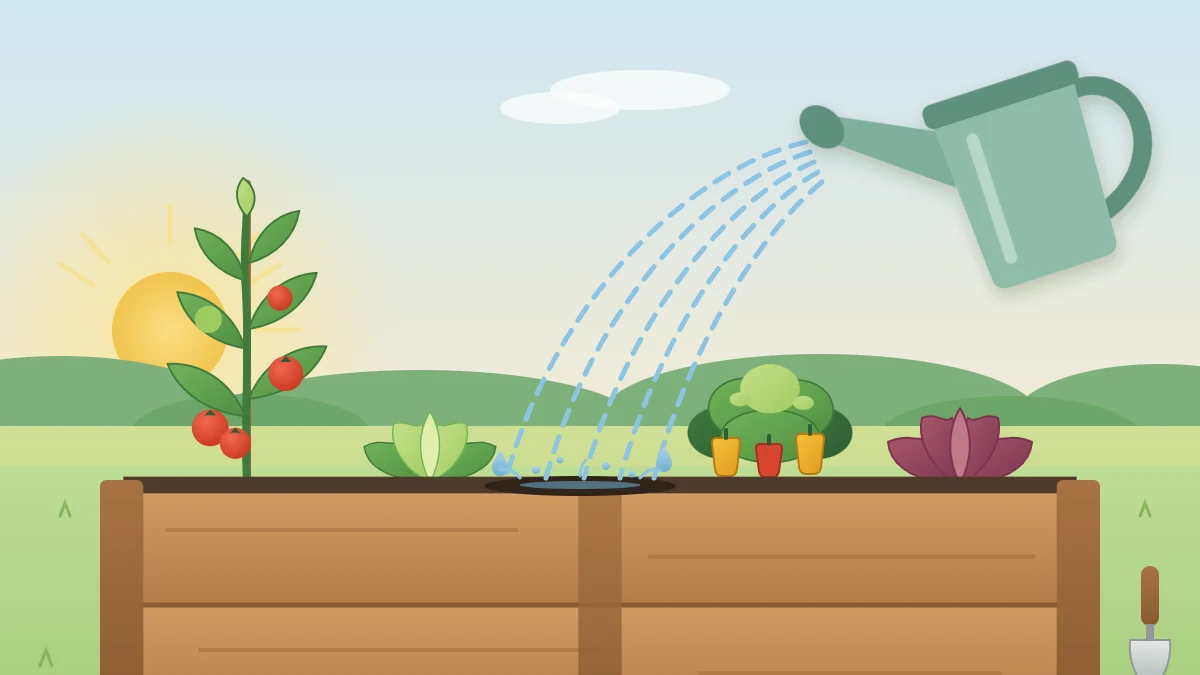
- Water the soil, not the leaves. Aim at the base of the plants. Foliage that stays wet for long periods is commonly associated with leaf diseases, and water on leaves does little for roots.
- Water deeply. The University of Maryland Extension’s guide to caring for a vegetable garden advises against shallow, frequent watering, with fast-growing salad greens as the exception. A long, slow soak wets the whole root zone; a quick sprinkle wets only the top.
- Choose the morning when possible. The same guide recommends it. Leaves dry quickly and less water is lost to midday heat. If plants are wilting over dry soil in the evening, water then rather than waiting.
Seedbeds are the exception to deep watering. Freshly sown seed and tiny seedlings live in the top inch of soil, so keep that surface moist with a gentle, light shower as often as it dries, until the plants are up and rooted.
When water matters most
The University of Maryland Extension singles out three moments: the first weeks of a plant’s life, right after transplanting, and while the edible part develops. A lapse then costs more than a lapse at other times. Uneven moisture while fruit and roots are filling is commonly associated with cracked tomatoes and misshapen roots, although those troubles have other possible causes too.
Soaker hoses, drip lines and mulch
A soaker hose or drip line laid along the rows delivers water slowly at soil level, which is exactly what the points above ask for. Lay it before plants fill in, and judge the running time by checking the soil afterward, not by the clock. A timer is a convenience; it still has to be adjusted as the weather and the plants change.

Whatever you water with, cover the soil. A layer of organic material slows evaporation and evens out the swings between soaked and dry. The guide to mulching raised beds covers materials and depth.
Too little or too much: the signs overlap
Wilting often goes with dry soil, but it is also seen with waterlogged roots, midday heat and root damage. Yellowing lower leaves are commonly linked to soil that stays too wet, and to several other things. So check the soil before you react: a wilted plant in wet soil needs less water, not more.
If the bed stays soggy for days after rain, the problem is probably not your watering. See the guide to raised bed drainage. Watering by the calendar is one of several common raised bed mistakes that are easy to correct once you have noticed them.
Frequently asked questions
How often should I water a raised bed?
There is no fixed interval that suits all beds. Need changes with the weather, the crop, its growth stage, the soil mix, mulch and bed depth. Check the soil a couple of inches down instead. In hot, windy weather that check may be worth doing daily; in a cool, wet spell the bed may need nothing for a long while.
Is it better to water raised beds in the morning or the evening?
Morning is generally preferred, and the University of Maryland Extension recommends it when possible. Leaves dry quickly and less water evaporates before plants can use it. That said, a plant wilting over dry soil late in the day should be watered then, at soil level, instead of being left until the next morning.
Can you overwater a raised bed?
Yes. Raised beds drain well, but soil kept constantly wet leaves roots short of air, and the plant may wilt or yellow in a way that looks like drought. Feel the soil before adding water. If it is wet and sticky a couple of inches down, wait. If it stays that way for days, look into drainage.