Growing Basil in Raised Beds: Warmth, Pinching and Harvest
Basil needs warm soil, steady moisture and regular cutting. Learn when to plant it in a raised bed, how to pinch for bushy growth, how to harvest and what to check when it struggles.
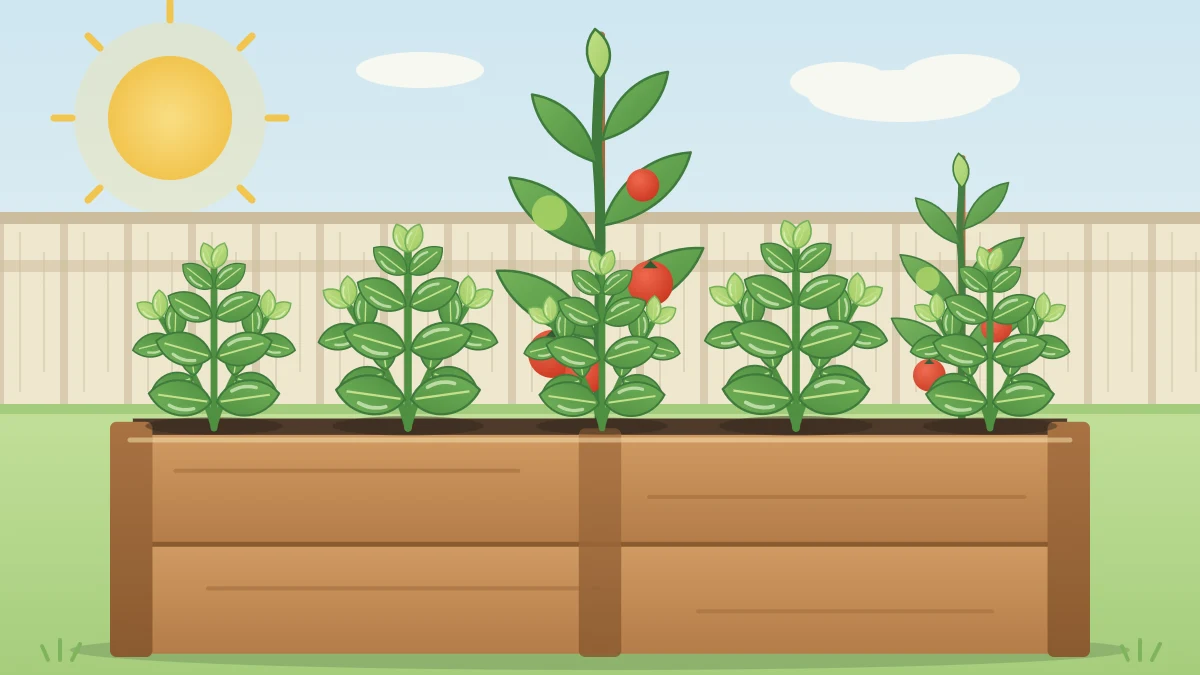
Basil is generous when it is warm and well fed, and stubborn when it is cold. Growing basil in raised beds plays to its strengths: the soil warms early, drains freely and can be enriched with compost exactly where the plants stand.
What turns a single leggy stem into a bushy, productive plant is mostly how you cut it. This guide covers when to plant, where to put it, how to pinch and harvest, and what to check when a plant looks unhappy.
Wait for real warmth
Basil is a tender warm-season annual. Frost kills it, and cool weather well above freezing is enough to stall it and mark the leaves. There is nothing to gain from planting early: a transplant set out into cold soil often sits still while one planted later into warm soil overtakes it.
Plant only after frost danger has passed for your area and the soil has warmed, with nights reliably mild. Your local extension planting calendar gives the usual window.
Good to know
A late cold night can damage basil even without frost. If one is forecast after planting, cover the plants overnight with a light fabric or an upturned bucket and remove it in the morning.
Sun, soil and moisture
Give basil full sun in most climates. Where summers are very hot, a little afternoon shade is tolerated and can reduce wilting at midday.
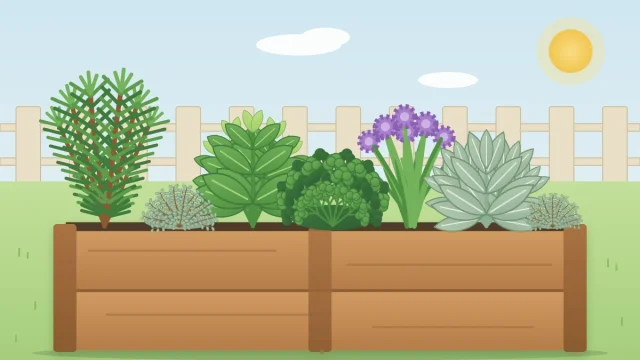
Unlike the woody Mediterranean herbs, basil wants soil on the richer, moister side. Mix finished compost into the planting area and keep the soil evenly moist, neither soggy nor dry for long. Since its needs are so different from those of rosemary or thyme, it is worth reading how the herbs that suit raised beds fall into groups before deciding on neighbors.
Raised beds dry faster than open ground, and basil’s soft leaves show it quickly. Push a finger a couple of inches (about 5 cm) into the soil and water at the base of the plants when it feels dry at that depth. The guide to watering raised beds explains the method in full. A layer of mulch, applied once the soil is warm, slows drying.
Space by variety
Basil varieties range from compact, small-leaved globes to large-leaved plants that become knee-high bushes. They need very different amounts of room, so follow the spacing on the plant tag or seed packet for the variety you have.
As a general picture, compact types are commonly set several inches apart, while large-leaved types are typically given about a foot (30 cm) or more. Leaving space matters for more than size: air moving between plants helps leaves dry after rain, which matters for the leaf diseases described below.
Pinch early for a bushy plant
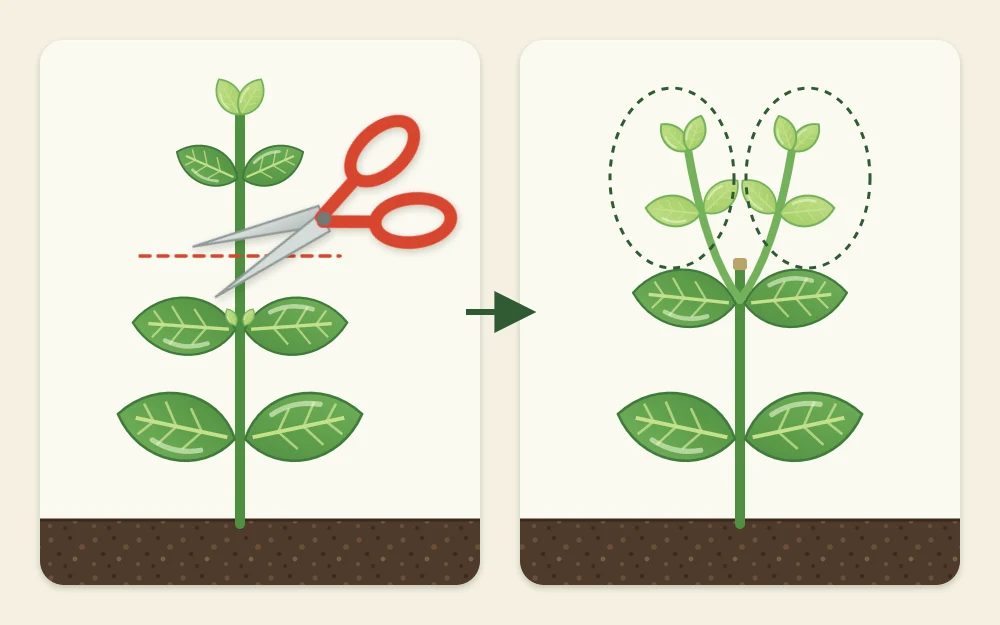
Left alone, a basil seedling grows one tall stem, flowers and winds down. Pinching redirects it. Basil leaves grow in opposite pairs, and in the angle above each leaf sits a tiny side shoot. Remove the tip above a leaf pair and those two shoots grow out, so one stem becomes two.
- Wait until the plant has several pairs of true leaves and is growing strongly.
- Find the growing tip at the top of the main stem.
- Cut or pinch it off just above a pair of leaves, leaving that pair and its side shoots intact.
- When the two new stems have grown a few leaf pairs of their own, pinch each of them the same way.
Remove flower buds
Once basil flowers and sets seed, leaf production slows and the leaves become smaller and, to many tastes, harsher. Flower buds appear at the stem tips as tight, stacked clusters.
Pinch them off as you see them, cutting back to a leaf pair as before. In hot weather plants are persistent about flowering, so look them over whenever you pick.
Harvest stems, not single leaves
Harvesting is simply pinching on a larger scale. Cut a stem back to just above a leaf pair lower down, and the plant branches again from that point. Stripping individual leaves and leaving bare stalks gives the plant less to regrow from.
- Begin with light cuts as soon as the plant has branched.
- Take from the top of the plant, working around it so it keeps an even shape.
- Leave at least a couple of leaf pairs on every stem you cut.
- Avoid removing more than about a third of the plant at one time.
Basil beside tomatoes
Basil and tomatoes are a familiar pairing in the garden as well as the kitchen. The University of Maryland Extension notes that basil is commonly interplanted with tomatoes in its guide to succession and companion planting.
The practical reasons are sound. Both are warm-season crops planted at about the same time, both like full sun, compost-rich soil and steady moisture, and you often want to pick them together. Benefits beyond that convenience are not well established, so plant them together because it suits the bed, not in expectation of anything more.
Set basil on the sunny side of the tomatoes, with enough distance that the larger plants do not shade or smother it as they grow. If you are planning both, the guide to growing tomatoes in raised beds covers how much room each tomato type takes.
Common troubles and the end of the season
Most basil problems have more than one possible cause, so look at the conditions before deciding what to do.
- Dark or blackened patches after a cool night are often cold damage. Affected leaves do not recover, but the plant commonly grows on when warmth returns.
- Wilting can follow dry soil, waterlogged soil, midday heat, recent transplanting or a root or stem disease. Check the soil moisture first.
- Yellowing leaves with a gray, fuzzy growth underneath are commonly associated with basil downy mildew. Spots and blotches can have other causes too. Your local extension office can help identify a sample.
For leaf diseases, physical measures come first: give plants room, water the soil instead of the foliage, remove badly affected plants and do not compost them. Some varieties are sold as resistant to downy mildew and are worth choosing where it has been a problem.
Tip
Watch the forecast in fall. Basil turns black at the first frost, so cut the whole plant the day before and freeze or dry what you cannot use fresh.
Frequently asked questions
When can I plant basil in a raised bed?
Plant after frost danger has passed for your area and the soil has warmed, with nights staying mild. Basil is damaged by cold well above freezing, and early planting rarely gains time. Check your local extension planting calendar for the usual window, and harden off transplants for about a week first.
Why is my basil tall and thin with few leaves?
Often it has not been pinched, so it has put its energy into one stem. Too little sun and crowding are other possibilities. Cut the tip just above a pair of leaves to make side shoots grow, repeat on the new stems, and thin crowded seedlings so each plant has light and air.
Should I let basil flower?
For the most leaves, no. After flowering, leaf growth slows and the leaves tend to get smaller. Pinch out the bud clusters at the stem tips whenever you see them, cutting back to a leaf pair. Late in the season, leaving one plant to bloom does no harm and bees visit the flowers.