Preparing Raised Beds for Winter: Clear, Cover and Protect
An end-of-season routine for raised beds: harvest and clear, decide what stays, add compost, cover the soil with mulch or a cover crop, store hoses, and record what grew where.
At a glance
What you need
- Pruners or garden shears
- Garden fork
- Rake
- Finished compost
- Shredded leaves or straw
- Cover crop seed (optional)
Preparing raised beds for winter takes an afternoon in fall and saves several in spring. The aim is simple: clear out what is finished, feed the soil, and do not leave it bare.
How much of this applies depends on your climate. Where winters are cold, the bed rests under cover. Where they are mild, it may keep producing, and the same steps are spread through the season instead.
Why not leave the soil bare
Bare soil has a hard winter. Rain pounds the surface into a crust and carries fine particles away. Water moving down through the bed takes soluble nutrients with it, out of reach of next year’s roots. Weeds germinate in the open ground in fall and again at the first mild spell.
A covered bed comes through winter looser, with fewer weeds, and with its organic matter added to instead of washed out.
Harvest and clear the bed
- Harvest what remains. Tender crops such as tomatoes, peppers, beans and basil are killed by frost, so bring them in before the first fall frost for your area.
- Remove spent plants. Compost the healthy ones. Put plants that were diseased or heavily infested in the trash, along with fallen fruit and leaves from around them.
- Pull weeds before they seed. One weed left to drop seed in fall becomes many in spring.
- Take down supports. Brush the soil off stakes, cages and trellis netting and store them dry.
Thorough cleanup is one of the physical measures that reduce pest and disease carryover, because many problems spend the winter in debris.
Decide what stays
Not everything has to come out. Kale, leeks, parsnips and some other cold-hardy crops stand through frost, and in many areas carrots can be left in the soil under a thick mulch and lifted as needed. Whether that works depends on how cold and how wet your winters are, so check with your local extension service for what overwinters where you live.
Perennial herbs such as thyme, sage and chives stay in place. Their hardiness varies by herb and climate. Fall is also when garlic is planted in many regions, so a cleared corner may not stay empty.
Add compost
With the bed clear, spread a layer of finished compost over the soil. There is no need to dig it in deeply. Winter weather and soil life will carry it down, and it will be ready for roots in spring.
If you use manure, use only fully composted manure, never fresh. Leave fertilizer and lime until a soil test says they are needed, and then apply only what the test and the product label call for. Fall is a convenient time to send a sample, since the results arrive well before planting.
Cover the soil
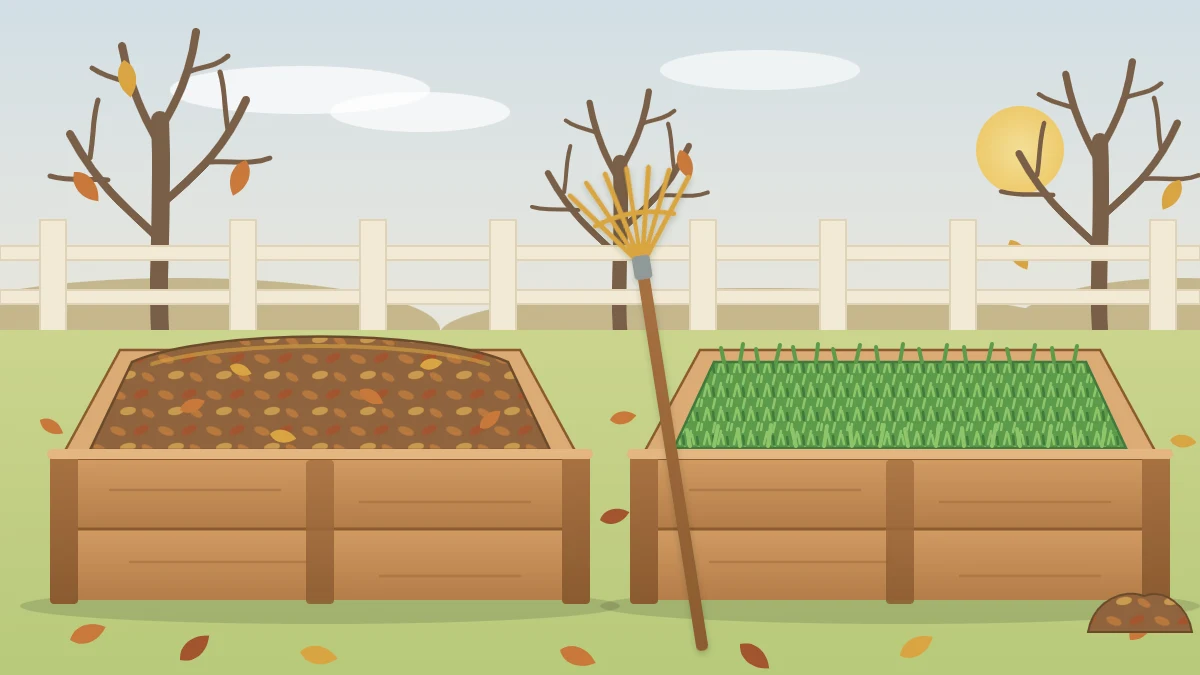
There are two ways to do it: a mulch or a living cover.
A winter mulch
Oregon State University Extension’s raised bed gardening publication suggests covering beds with about 2 in (5 cm) of leaves or other organic material each winter, and the University of Maryland Extension likewise recommends covering the soil with shredded leaves or another mulch in fall.
Shred leaves first by running a mower over them. Whole leaves mat into a layer that sheds water. Straw works too. The guide to mulching raised beds compares the materials.
A cover crop
A cover crop is a planting grown to protect and feed the soil instead of to be eaten. It has to be sown early enough to establish before the cold stops growth, and the right timing depends on the species and on your first frost date. The University of Maryland Extension’s page on cover crops for gardens describes the options. In spring, cut it down before it sets seed.

Tip
On a windy site, dampen leaf mulch after spreading it, or lay a few twiggy branches or a piece of netting on top to hold it until it settles.
Put away hoses and drip lines
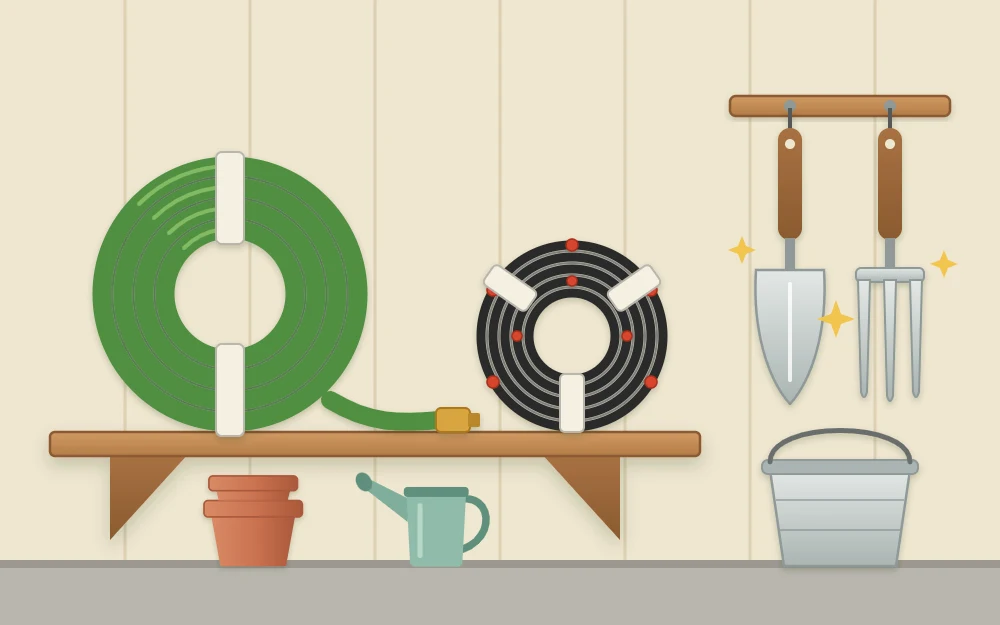
Water left in hoses, drip lines, timers and fittings can freeze, expand and split them. Before freezing weather arrives, disconnect everything, drain it, coil it loosely and store it under cover. Follow the maker’s instructions for any timer or filter.
Clean hand tools at the same time. Soil scraped off and a dry place to hang are most of what a trowel and fork need.
Check the frame and record what grew where
An empty bed shows its frame clearly. Look for loose boards, corners that have opened and sides that bow outward. Make small repairs as the kit maker’s instructions describe, and for a tall bed that is leaning or bulging, get qualified help: wet winter soil is very heavy and presses hard on the walls.
Then, before you forget, sketch each bed and write in what grew where this year. Next season’s crop rotation depends on that record, and so does any note about which variety did well or which corner stayed too wet.
In mild-winter areas
Where hard freezes are rare, fall is a second planting season, not an ending. Cool-season crops such as lettuce, spinach, kale, peas and radishes can follow the summer crops, and the bed may never be empty.
The routine still applies, one patch at a time. Clear each finished crop, add compost, replant or mulch the space, and keep a cover handy for the occasional frost. Watering gear stays out but still deserves a check. A rotation record matters even more when a bed carries two or three crops a year.
Wherever you garden, the last step is the same. Once the soil is workable again, preparing raised beds for spring begins with raking this winter cover aside.
Frequently asked questions
Should raised beds be covered in winter?
Yes, cover the soil, though not necessarily with a sheet or lid. A layer of shredded leaves or straw, or a cover crop sown in time to establish, protects the surface from pounding rain, limits weeds and adds organic matter. Extension services in both Oregon and Maryland recommend an organic cover over winter.
Can I leave old plants in the raised bed over winter?
Healthy cold-hardy crops can stay if your climate allows. Spent summer plants are better removed, because pests and diseases often overwinter in debris. Compost healthy material and put anything diseased in the trash. Some gardeners cut healthy plants off at soil level and leave the roots to decompose in place.
When should I sow a cover crop in a raised bed?
Early enough for it to germinate and put on growth before cold weather stops it. The date depends on the species and on the first fall frost date where you live, so check the seed supplier's guidance and your local extension service. If you have missed the window, use a leaf or straw mulch instead.