
Why Eco-Conscious Yogis Are Switching to Sustainable Cork Yoga Blocks
Sustainable cork yoga blocks are natural, renewable yoga props harvested from cork oak tree bark — and they’re widely considered the best eco-friendly alternative to foam blocks.
Quick answer — here’s what makes them worth buying:
- Grip: Non-slip surface that actually improves when wet or sweaty
- Support: Dense, firm material holds up in challenging poses without compressing
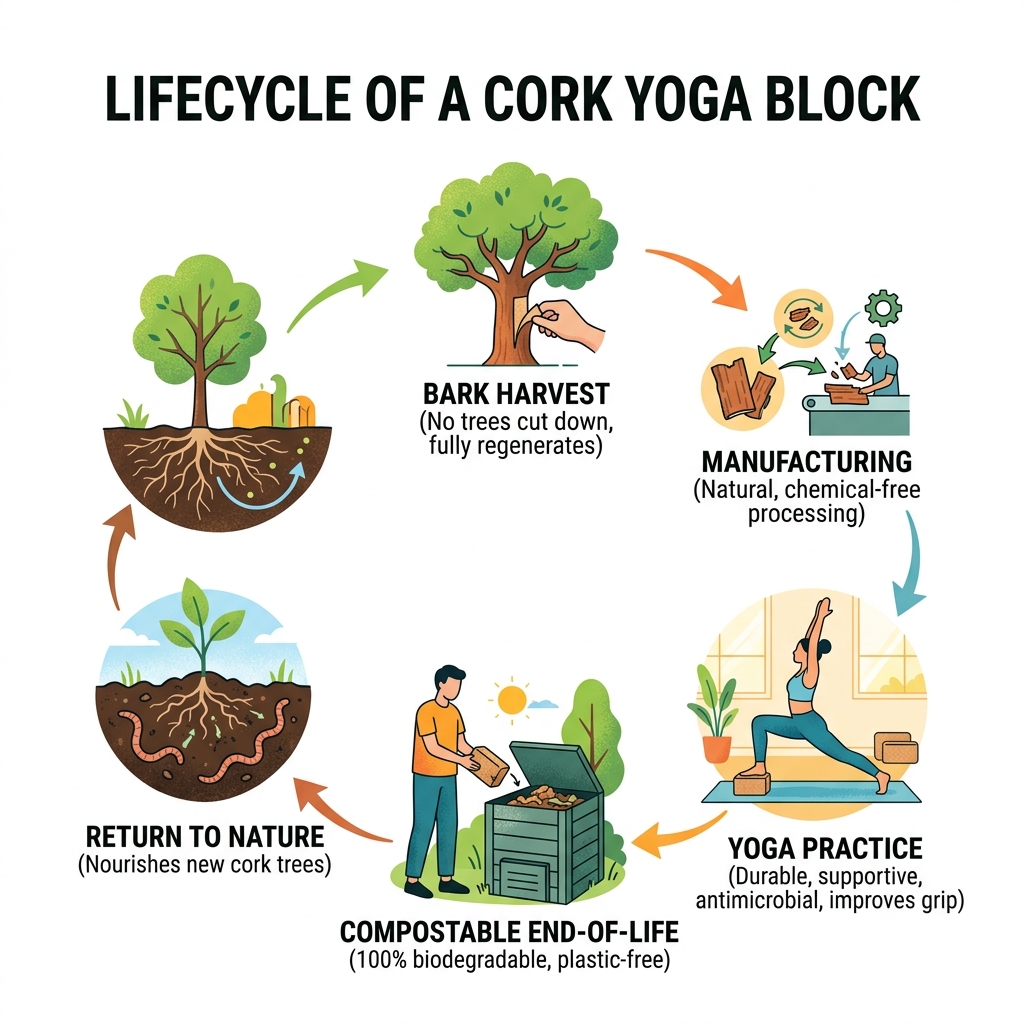
- Eco-friendly: Bark is harvested without cutting down trees and fully regenerates
- Hygiene: Naturally antimicrobial — resists odor and moisture buildup
- Biodegradable: 100% natural, plastic-free, and compostable at end of life
- Typical price: $20–$40 for a single block or pair, often bundled with a strap
Foam blocks are everywhere in yoga studios. They’re cheap, light, and get the job done — for a while. But they compress over time, hold onto bacteria, and end up in a landfill.
Cork is different. It’s a living material that comes from the bark of cork oak trees, which regrow their bark after each harvest. No trees are cut down. No toxic chemicals are used. And when the block is done, it breaks down naturally.
The result? A yoga prop that actually aligns with the values most eco-conscious practitioners already hold.
Why Sustainable Cork Yoga Blocks Outperform Foam
When we first start our yoga journey, most of us reach for those colorful foam blocks. They’re soft, lightweight, and easy to find. However, as our practice deepens, we often find that foam has a “squish factor” that can lead to instability. This is where sustainable cork yoga blocks truly shine.
Unlike foam, which can compress or wobble under significant weight, cork is incredibly dense. This high density provides a firm, reliable base that doesn’t budge. Whether you are leaning your full weight into a side angle pose or using the block for a supported bridge, cork offers a level of security that foam simply cannot match.
Furthermore, cork has a natural texture that provides a superior non-slip surface. While foam blocks can become slippery once your hands start to sweat, cork actually becomes grippier when moist. This makes it an excellent choice for hot yoga or particularly intense Vinyasa flows. If you are interested in reducing your footprint even further, you might also want to look at our guide on reducing plastic use in outdoor gear.
| Feature | Cork Yoga Blocks | Foam Yoga Blocks |
|---|---|---|
| Material | 100% Natural Bark | Synthetic Plastic (EVA) |
| Grip | Increases with moisture | Decreases with moisture |
| Durability | Lasts for years; won’t chip | Can flake, dent, or compress |
| Weight | Heavier (1.5 – 2.2 lbs) | Very light (approx. 0.5 lbs) |
| Sustainability | Renewable & Biodegradable | Petroleum-based & Landfill-bound |
| Firmness | High (Solid Support) | Medium to Soft (Squishy) |
The Antimicrobial Advantage of Sustainable Cork Yoga Blocks
One of the most overlooked benefits of choosing sustainable cork yoga blocks is their inherent hygiene. Cork contains a natural waxy substance called suberin. This substance makes the material naturally antimicrobial and resistant to moisture, mold, and mildew.
In a studio setting where props are shared, or even in a home practice where you’re working up a sweat, hygiene is paramount. Foam blocks are essentially porous sponges; they soak up sweat and harbor bacteria over time, often leading to that “old gym” smell that is anything but zen. Cork, on the other hand, resists these odors. This natural hygiene is a huge plus for those of us who prioritize environmentally friendly hiking gear and non-toxic living. Because cork is naturally resistant to pests and rot, no harsh chemicals or pesticides are needed during the manufacturing process.
Stability and Grounding in Challenging Poses
If you’ve ever felt a foam block “topple” during a Half Moon pose (Ardha Chandrasana), you know how distracting it can be. The weight of sustainable cork yoga blocks—typically ranging from 1.5 to 2.2 pounds—provides a grounding sensation that helps you feel more connected to the floor.
This extra weight acts as an anchor. When you place a cork block on the mat, it stays there. Most high-quality cork blocks also feature contoured or rounded edges. These aren’t just for aesthetics; they make the block much more comfortable to grip and provide better support when placed under your back or sacrum. This solid construction is essential for maintaining proper alignment and building the confidence needed to explore more advanced inversions and balance postures.
From Forest to Floor: The Eco-Friendly Lifecycle of Cork
The story of a cork block begins in the Mediterranean, primarily in Portugal and Spain. The cork oak tree is a fascinating species. Unlike most timber products that require the tree to be felled, cork is harvested by gently stripping the outer bark.
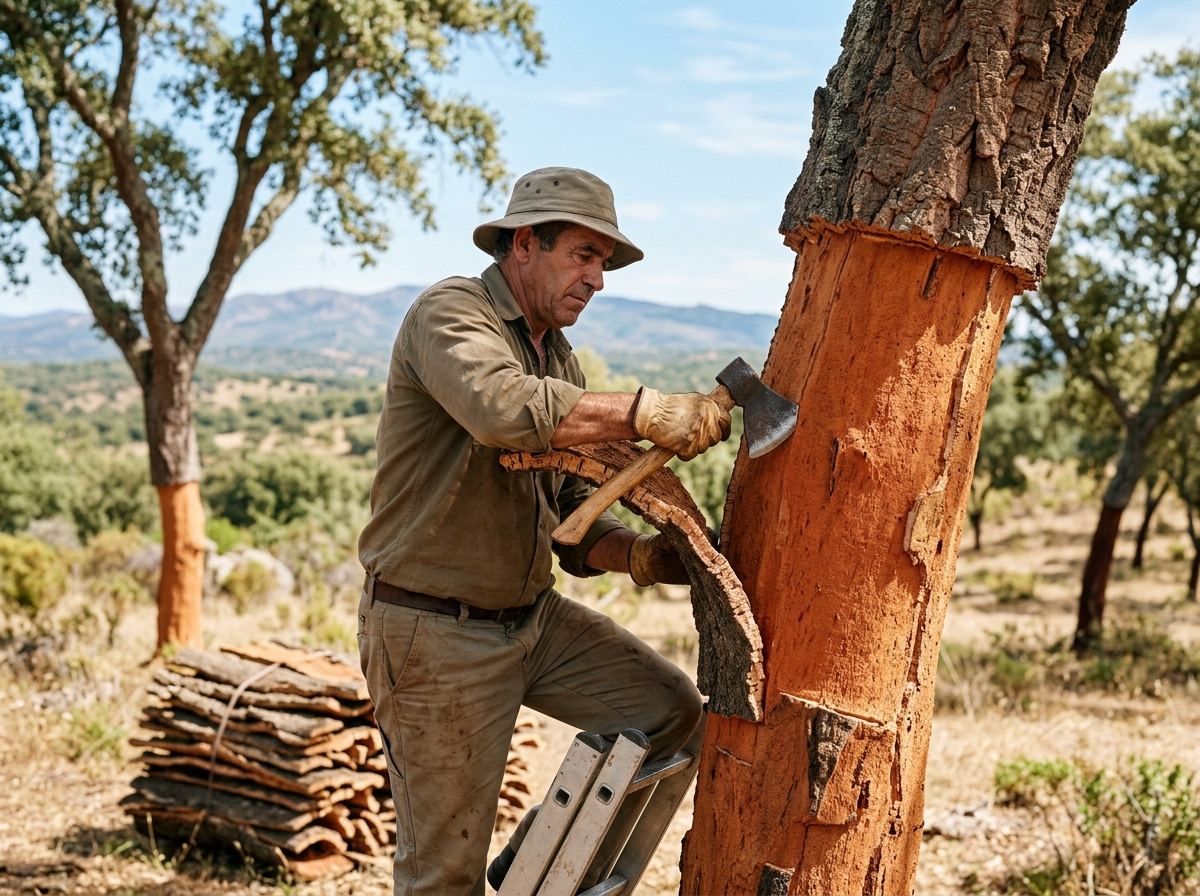
This process is highly regulated and incredibly sustainable. A cork oak tree must be about 25 years old before its first harvest, and then it can be harvested every nine to twelve years. The tree lives for over 200 years, meaning a single tree can provide bark for generations of yogis. Even better, a harvested cork oak tree absorbs up to five times more carbon dioxide than an unharvested one as it works to regenerate its bark. For those of us looking for sustainable backpacking gear ideas, cork is the gold standard of renewable materials.
Ethical Sourcing and Plastic-Free Manufacturing
The production of sustainable cork yoga blocks is often a lesson in zero-waste manufacturing. For instance, many sustainable manufacturers use the “dust” and leftovers from premium champagne cork production to create their blocks. This ensures that every part of the harvested bark is utilized.
Furthermore, the harvesting process itself is often an ancient craft passed down through families of cork farmers. This supports local economies and protects the vast cork oak forests, which are vital biodiversity hotspots. When you choose a cork block, you are often supporting a plastic-free supply chain. From the forest to the factory to the packaging—which is frequently made from recycled paper—the goal is minimizing waste during outdoor adventures and indoor practices alike.
Biodegradability and Environmental Impact
At the end of its long life—and cork blocks can easily last a decade or more—a cork block doesn’t have to sit in a landfill for 500 years like its plastic counterparts. Because it is a 100% natural plant material, it is fully biodegradable and compostable.
Some companies go even further with their environmental missions. For example, some eco-focused brands have an initiative where one tree is planted for every block sold. This creates a “net positive” impact on the planet. By choosing sustainable cork yoga blocks, we are participating in a circular economy that respects the earth’s natural rhythms.
Key Features and Specifications for Every Yogi
When shopping for sustainable cork yoga blocks, you’ll notice a few standard specifications. Understanding these will help you choose the right prop for your specific body type and style of yoga.
- Standard Dimensions: The most common size is 9″ x 6″ x 4″ (or roughly 23cm x 15cm x 10cm). This size is versatile because it offers three different heights depending on which side you face up.
- Weight: This is where brands vary. A high-density cork block is quite firm, weighing about 2.2 lbs (1 kg), providing maximum stability. Other models are slightly lighter at 1.5 lbs, which might be preferable if you’re carrying them to a studio.
- Texture: Look for “fine-grain” cork. This tends to be smoother and more durable, preventing the block from “chipping” over time.
- Certifications: Some premium blocks carry ISO 9001 or SA 8000 certifications, ensuring quality management and ethical social standards in the workplace.
If you’re planning on taking your practice outdoors or even on a camping trip, these durable blocks are as rugged as any guide to eco-friendly solar camping gear you might own.
Standard vs. Lean Sustainable Cork Yoga Blocks
While the 4-inch width is standard, many brands now offer a “Lean” or “Travel” version. These are typically around 3 inches thick.
Who should choose a Lean block?
- Small Hands: If you find it difficult to wrap your hand securely around a 4-inch block, the lean version offers a much more secure grip.
- Travelers: If you are tight on suitcase space but refuse to practice without props, the lean version cuts the weight and bulk significantly.
- Restorative Yoga: Sometimes a lower height is needed for subtle support under the knees or neck where a standard block might feel too aggressive.
Block Pairs and Enhanced Alignment
While you can certainly start with one, most practitioners find that a pair of sustainable cork yoga blocks is necessary for a balanced practice. Having two blocks allows for symmetry in poses like:
- Downward Facing Dog: Placing blocks under the hands can relieve wrist pressure.
- Lizard Pose: One block under each forearm helps bring the floor closer while maintaining a flat back.
- Supported Fish Pose: One block under the shoulder blades and one under the head for a heart-opening release.
Some sets even come with a 10ft cotton stretch strap, providing a complete eco-friendly kit for improving flexibility and alignment.
Maintenance and Longevity of Your Eco-Friendly Props
One of the reasons we love cork is that it is incredibly low-maintenance. However, a little care goes a long way in ensuring your sustainable cork yoga blocks stay in top shape for years. Unlike high-tech eco-conscious gadgets for camping trips, cork doesn’t need much more than a bit of water and air.
Cleaning Best Practices for Natural Cork
Because cork is naturally antimicrobial, you don’t need to scrub it after every session. A simple wipe-down is usually enough.
- Routine Clean: Use a damp cloth to wipe away surface dust or sweat.
- Deep Clean: If the block starts to look a bit dingy, use a mixture of water and a mild, organic soap. Avoid harsh chemicals, bleach, or alcohol-based cleaners, as these can dry out the natural suberin in the cork and cause it to become brittle.
- Drying: This is the most important step. Always allow your blocks to air dry completely before putting them away. Cork is moisture-resistant, but “trapping” moisture against the block in a dark bag or cupboard isn’t ideal for any material.
Storing Your Blocks to Prevent Wear
To maximize the life of your props, store them in a cool, dry place. While cork is a product of the sun-drenched Mediterranean, prolonged exposure to direct sunlight in a window can eventually fade the color and dry out the material.
If you have multiple blocks, they stack beautifully. Unlike foam, which can “dent” if something heavy is left on top of it, cork is crush-resistant. It can support up to 150kg (over 300 lbs) without losing its shape. This durability is similar to how we recommend reducing battery waste when camping—by choosing high-quality, long-lasting items, we reduce the need for frequent replacements.
Frequently Asked Questions about Cork Yoga Props
How do I clean sustainable cork yoga blocks?
Wipe them down with a damp cloth and a drop of mild, eco-friendly soap. Never soak them in water or put them in the washing machine. Always let them air dry completely in a well-ventilated area.
Are cork yoga blocks too heavy for travel?
They are heavier than foam (about 1.5 to 2 lbs compared to 0.5 lbs). If weight is a major concern, look for “Lean” or “Slim” versions which are lighter. However, many yogis find the added stability worth the extra pound in their luggage.
Do cork yoga blocks have a chemical smell?
No! Unlike many foam or PVC-based props that require “off-gassing” when first opened, natural cork has a very faint, pleasant, earthy scent—or no smell at all. They are 100% non-toxic and safe for those with sensitive respiratory systems.
Conclusion
At Rico Compouco, we believe that the tools we use for our wellness should be as kind to the planet as they are to our bodies. Sustainable cork yoga blocks represent a perfect marriage of “spiritual luxury” and ethical manufacturing.
While the initial price point of $20 to $40 might be higher than a cheap foam block from a big-box store, the long-term value is undeniable. You are investing in a prop that won’t flake, won’t smell, and won’t need to be replaced for years. More importantly, you’re supporting a harvesting process that actually helps the environment by sequestering carbon and protecting vital ecosystems.
Whether you are a beginner looking for your first set of props or a seasoned pro seeking more stability in your inversions, cork is the ultimate “Zen Master” of the yoga world.
Ready to elevate your practice? Explore more eco-friendly tips and gear at https://ricocompouco.com/.
