
The Grid-Independent Light You’ll Actually Want in Your Emergency Kit
A hand crank solar powered flashlight is a self-charging light source that runs on two renewable inputs — sunlight and manual cranking — so you never need to hunt for batteries again.
Here’s a quick breakdown of what you need to know:
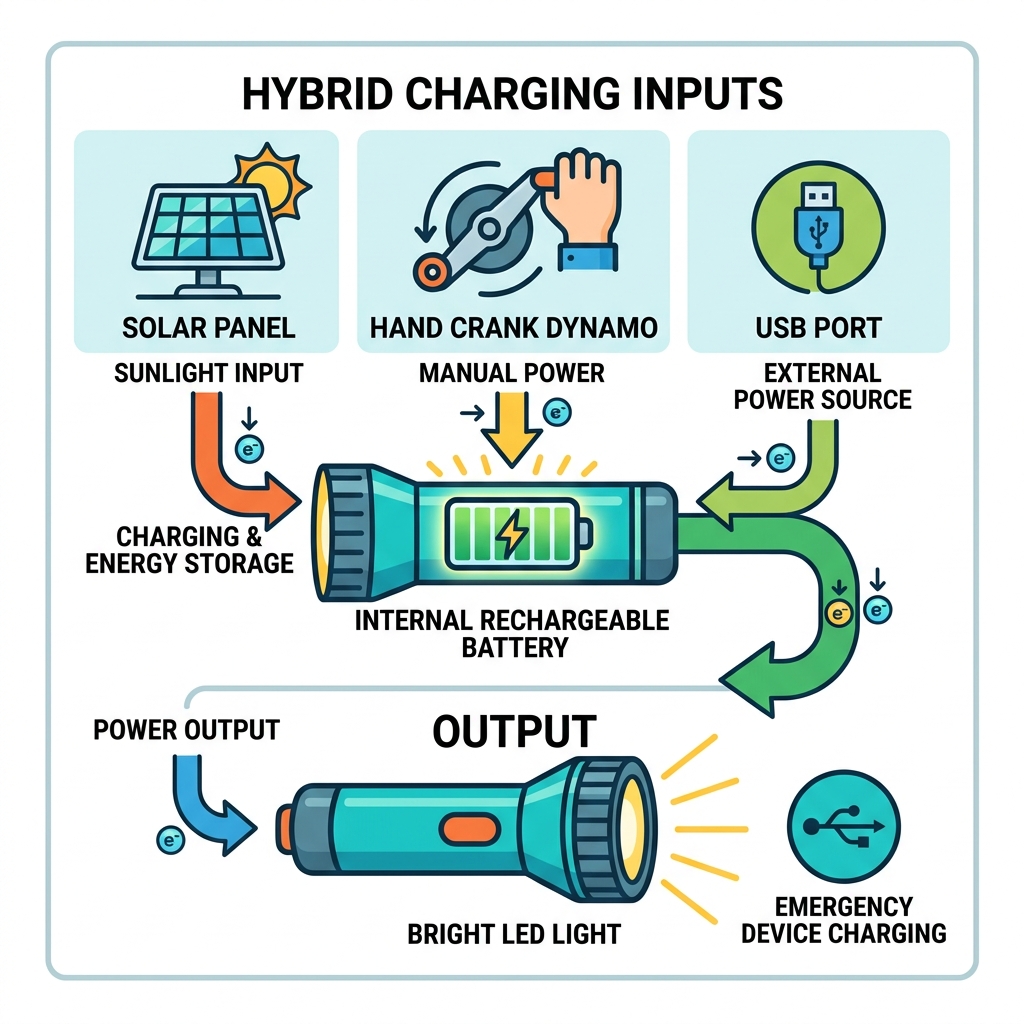
- What it is: A flashlight with a built-in solar panel and a hand crank dynamo generator that charges an internal rechargeable battery
- How it charges: Solar panel in daylight, hand crank in the dark, or USB when available
- How efficient is cranking: About 1 minute of cranking at 2 turns per second gives you up to 8–10 minutes of light
- Who it’s for: Campers, hikers, preppers, and anyone tired of dead batteries during a blackout
- Key extras: Many models double as emergency power banks to charge phones and small devices
If you’ve ever been caught in a power outage with a dead flashlight — or dug through a drawer looking for AA batteries that were already drained — you already understand the problem this solves.
These flashlights are built around a simple idea: you should always be able to make light, whether the sun is out or not. With over 500 models now available and top-rated options trusted by tens of thousands of customers, the category has matured well beyond basic novelty gear.
In this guide, we’ll cover exactly how they work, what to look for, and how to get the most out of one.
How a Hand Crank Solar Powered Flashlight Works
To understand why a hand crank solar powered flashlight is so reliable, we have to look under the hood. These devices are essentially miniature power plants. They rely on three main components to ensure you are never left in the dark: photovoltaic cells, a dynamo generator, and an internal rechargeable battery.
Photovoltaic Cells and Solar Energy
The solar panel on top of the flashlight is made of photovoltaic cells—often crystalline silicon or amorphous silicon. When photons from sunlight (or even strong artificial light) hit these cells, they knock electrons loose, creating an electrical current. Amorphous silicon panels are particularly clever because they can function even in low-light conditions, with a load voltage of ≥0.1V. This means your flashlight can “trickle charge” just by sitting on a windowsill during a cloudy day.
The Dynamo Generator
The “hand crank” part of the name refers to a built-in dynamo. When you turn the handle, you are physically spinning a set of gears connected to a small electric motor. This mechanical energy is converted into electrical energy. Most high-quality cranks are designed to be spun at about 2 revolutions per second. This motion generates a current (often around 5V/80mA) that flows directly into the battery.
Energy Storage: NiMH vs. LiPo
Once the energy is generated, it needs a place to stay. Most modern hand crank solar powered flashlights use either Nickel-Metal Hydride (NiMH) or Lithium-ion Polymer (LiPo) batteries.
- NiMH batteries are common in budget-friendly models; they are stable and have a low power consumption rate.
- LiPo batteries (like the 1500mAh versions found in premium emergency radios) offer higher energy density and can often be recharged via USB-C for faster preparation.
For those looking to integrate these into a larger setup, checking out a step-by-step guide for solar lantern setup can help you understand how these small-scale systems mirror larger solar lighting arrays.
Key Benefits of Using a Hand Crank Solar Powered Flashlight
Why choose a hybrid flashlight over a standard LED torch? The benefits go far beyond just saving a few dollars on AA batteries.
- Battery-Free Operation: The most obvious win. In a long-term emergency, alkaline batteries eventually leak or lose their charge. A hand crank solar powered flashlight is ready whenever you are, provided you have a functioning arm to turn the crank.
- Eco-Friendly Design: By eliminating disposable batteries, we reduce the amount of toxic chemicals and heavy metals entering landfills. It’s a sustainable choice that aligns perfectly with other eco-friendly solar lighting solutions.
- Cost-Effectiveness: While the upfront cost might be slightly higher than a plastic $5 grocery store flashlight, you’ll never spend another cent on power for it. With motor lifespans reaching 100,000 hours, these are “buy it once” tools.
- Reliability During Blackouts: When the grid goes down, you don’t want to be rationing your light. Knowing you can generate more power manually provides immense peace of mind.
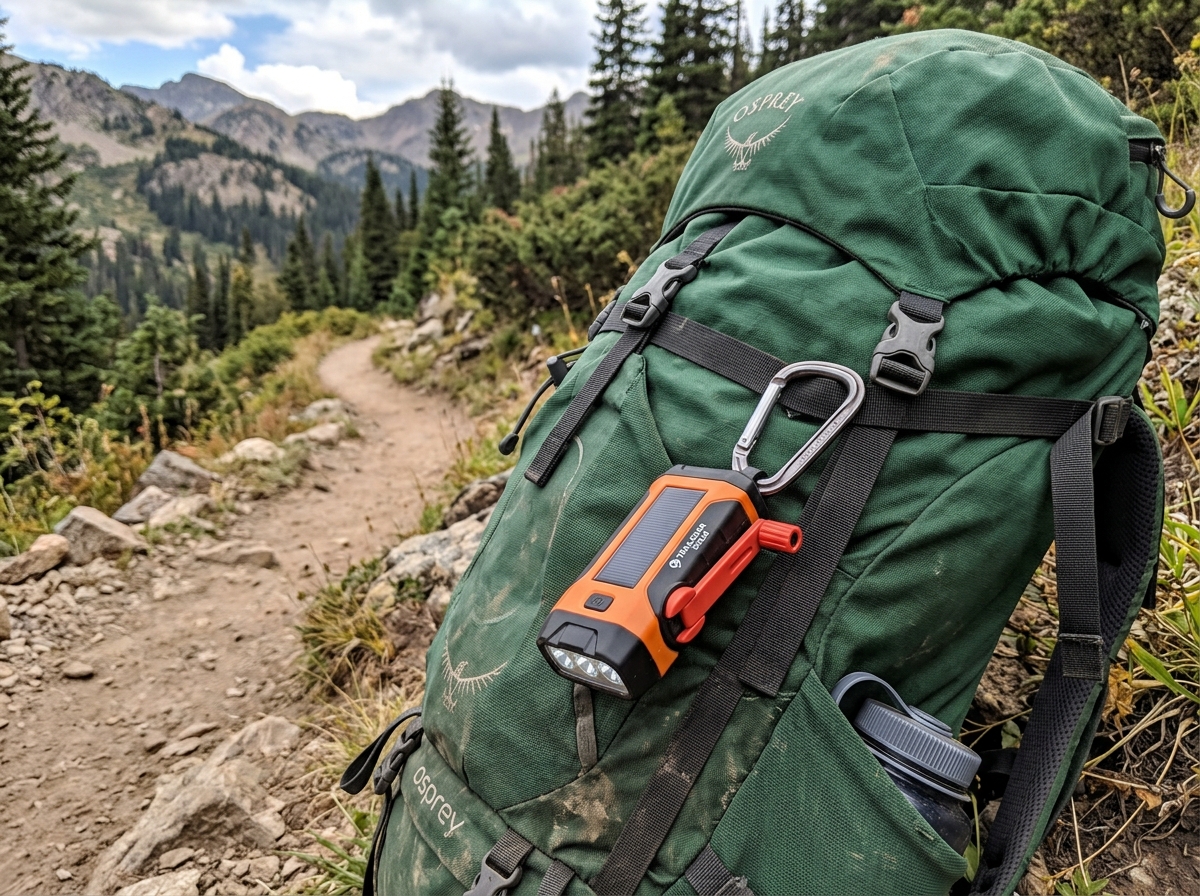
Reliability of the Hand Crank Solar Powered Flashlight in Emergencies
In true survival scenarios, the “no-sun” condition is a real threat. Storms, heavy canopy in a forest, or being trapped indoors can render a purely solar light useless. This is where the mechanical energy of the crank shines.
Research shows that the mechanical efficiency of these devices is impressive. For instance, some models provide 20 minutes of light per minute of cranking, while more compact versions offer about 8 to 10 minutes of light for that same minute of effort. This ensures that even in total darkness, you are only sixty seconds away from a usable beam of light.
Essential Features to Look For
Not all flashlights are created equal. If you are shopping for a hand crank solar powered flashlight, we recommend focusing on these technical specifications:
- LED Brightness: Look for high-brightness LEDs. A common standard is 3 LEDs with a brightness of roughly 10,000 MCD (Millicandela). While 8 to 15 lumens might sound low compared to tactical flashlights, it is more than enough for navigating a dark house or a campsite.
- Durability and Waterproofing: Emergencies are rarely dry and tidy. Look for an IPX6 rating, which means the device can handle heavy rain or powerful jets of water. Some specialized models are even rated to be submerged up to 45 feet!
- Ergonomics: You might be cranking this device for several minutes at a time. An ergonomic, anti-slip grip is essential to prevent hand fatigue, especially in wet conditions.
- Attachment Points: A built-in carabiner or clip is a “must-have” for hikers. It allows the solar panel to face upward and charge while you walk, as discussed in our guide on LED-the-way-best-solar-powered-headlamps-for-hikers-in-2026.
Charging Efficiency Comparison Table
| Charging Method | Input Specs | Time for Full Charge | Light Output Provided |
|---|---|---|---|
| USB-C / Micro USB | 5V / 800mA | 1–2 Hours | ~120 Minutes |
| Solar Panel | 5V / 60mA | 40 Hours (Strong Sun) | 120 Minutes per hour of sun |
| Hand Crank | 5V / 80mA | N/A (Manual) | 8–10 Min per 1 min crank |
Understanding Battery Capacity in a Hand Crank Solar Powered Flashlight
Battery capacity is measured in milliamp-hours (mAh). A standard compact hand crank solar powered flashlight usually features a 500mAh battery. While this is enough for about 120 minutes of continuous lighting, it also allows for “emergency power bank” functionality.
Larger survival units may pack up to 1500mAh or even 3000mAh. These larger capacities are vital if you plan to use the USB output to give your smartphone a “life-line” charge—just enough to send a text or make a quick emergency call.
Best Use Cases and Maintenance Tips
Where does this tool belong in your life?
- Camping and Backpacking: It’s the perfect backup. If your main headlamp dies, you have a renewable source of light that doesn’t add much weight (usually around 118g to 175g).
- Roadside Emergencies: Keep one in your glove box. Unlike standard flashlights, it won’t be dead when you finally need it three years from now to change a flat tire at night.
- Mountaineering: The carabiner clip makes it easy to attach to gear, ensuring it stays charged via the sun while you climb.
For more on outdoor lighting, see our list of the best solar lights for illuminating your camping experience.
Maintenance for Long-Term Reliability
Even though these are rugged devices, a little care goes a long way:
- Clean the Solar Panel: Dust and grime significantly reduce charging efficiency. Wipe the panel with a soft, damp cloth regularly.
- Lubricate the Mechanism: If the crank starts to squeak or feel “gritty,” a tiny drop of silicone-based lubricant on the gears can extend the motor’s life.
- Dry Storage: While many are waterproof, storing them in a cool, dry place prevents internal condensation and protects the battery’s health.
- Battery Health Cycles: To keep the internal battery in top shape, try to fully charge and discharge the unit at least once every few months. This prevents the battery from “falling asleep” during long periods of disuse.
Frequently Asked Questions
How long do I need to crank for 10 minutes of light?
Most modern units require about 1 minute of cranking at a steady pace of 2 turns per second to generate roughly 8 to 10 minutes of light. If you use a lower brightness setting (e.g., 1 LED instead of 3), that same minute of cranking can sometimes provide up to 60 or 80 minutes of light!
Can these flashlights charge a smartphone?
Yes, many models include a USB output port. However, keep in mind that with a 500mAh battery, you aren’t going to get a full 100% charge on a modern iPhone. It is meant for emergency power—providing just enough juice (about 5V/80mA output) to make a critical call or check a map.
Does the solar panel work with indoor light?
Surprisingly, yes. Most use amorphous silicon solar panels that can absorb energy from incandescent or LED light bulbs. While it is much slower than direct sunlight, it acts as a great backup power source if you leave the flashlight sitting under a desk lamp.
Conclusion
At the end of the day, a hand crank solar powered flashlight is about peace of mind. It is a small, lightweight insurance policy against the dark. Whether you’re facing a hurricane-induced blackout or just heading out for a weekend in the woods, having a light source that doesn’t rely on the grid or a pack of Duracells is essential survival gear.
We believe that preparedness shouldn’t be complicated. By combining the ancient reliability of mechanical energy with the modern efficiency of solar power, these flashlights ensure you’ll always be ready to “light the way.”
Ready to upgrade your kit? Explore more solar gadgets at Rico Compouco to find the perfect sustainable tools for your next adventure.
