
When Your External Battery Solar Charger Lets You Down Mid-Adventure
An external battery solar charger is a portable device that captures sunlight and converts it into stored electrical energy — so you can charge your phone, GPS, or camera even when you’re miles from the nearest outlet.
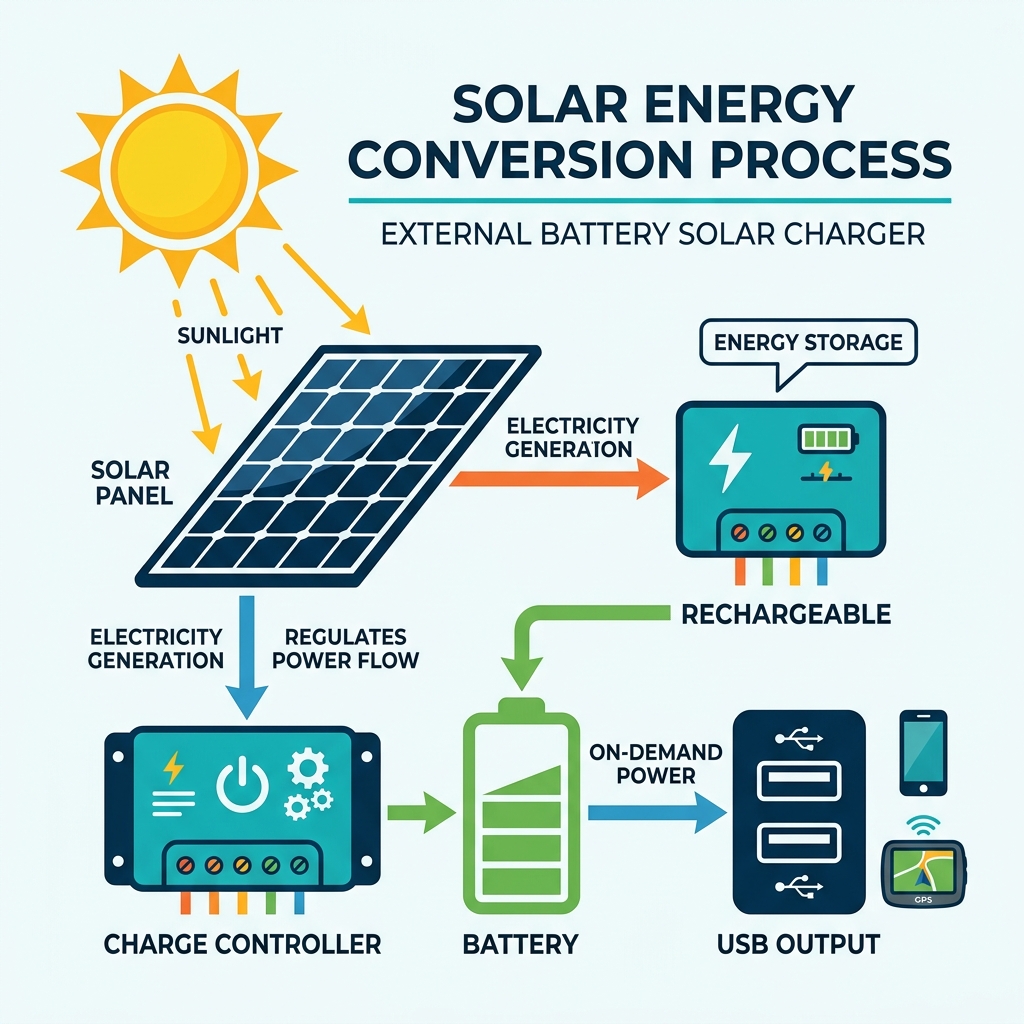
Here’s how it works at a glance:
- Solar panel absorbs sunlight and converts it to electricity
- Charge controller (built-in or separate) regulates the power flow
- Battery cell stores that energy until you need it
- USB output port(s) deliver power to your devices on demand
The key thing to know: not all solar chargers work the same way, and real-world performance often falls short of what the label promises.
You’ve probably been there. You clip a solar charger to your pack, spend a full day hiking under the sun, and come back to find your phone barely moved from 20%. Frustrating — but not random. There are real, explainable reasons this happens.
Testing data backs this up. The best-performing foldable panels generate around 2,177 mAh per hour in direct sunlight. But move into the shade or cloud cover, and that number can drop by 70% or more. Meanwhile, integrated solar power banks — the kind with a small panel built right into the battery case — often produce far less, sometimes only 977 mAh per hour even in full sun.
Understanding why your charger underperforms is the first step to fixing it.
Understanding the External Battery Solar Charger: Integrated vs. Standalone
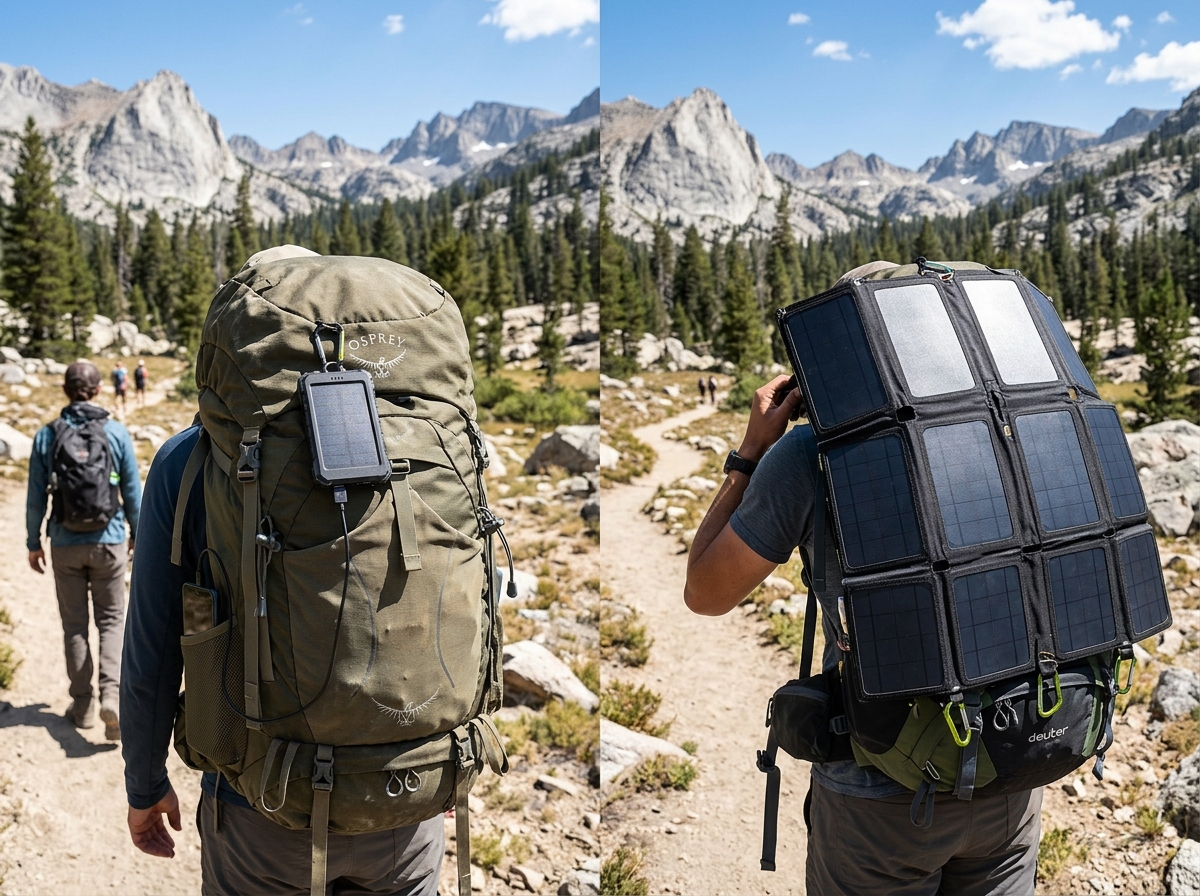
When we talk about an external battery solar charger, we are usually looking at two very different animals. Understanding the difference is like knowing the difference between a snack and a three-course meal. Both provide energy, but one is clearly meant to sustain you longer.
- Integrated Solar Power Banks: These are the “all-in-one” units. They are rugged, often weather-resistant, and have a small solar panel built right into the battery housing.
- Standalone Solar Panels: These are foldable arrays that do not store energy themselves; instead, you plug a separate power bank into them.
As we discuss in our guide on portable-solar-power-banks-the-vanguards-of-outdoor-energy, the integrated versions are fantastic for emergencies, but they have a tiny surface area. A small panel on a 20,000mAh battery might take a week of perfect sun to fully charge the unit from zero. In contrast, a standalone panel has a much larger surface area, allowing it to collect far more energy throughout the day. Most high-quality standalone panels use monocrystalline silicon cells, which offer superior efficiency compared to the smaller cells found in integrated units.
Comparison Table: Integrated vs. Standalone
| Feature | Integrated Solar Power Bank | Standalone Solar Panel + Power Bank |
|---|---|---|
| Portability | Extremely high (fits in a pocket) | Moderate (requires a backpack) |
| Charging Speed | Slow (best for “topping off”) | Fast (can charge a phone in 1-3 hours) |
| Weight | Light (approx. 10-18 oz) | Heavier (approx. 20-40 oz total) |
| Best Use Case | Backups, short hikes, emergencies | Multi-day camping, off-grid living |
| Efficiency | Low (small surface area) | High (large monocrystalline cells) |
For those who need a balance of both, an entry-level solar power bank can work for occasional use, but for higher-performance needs, a separate panel is almost always the better choice.
Why Your Solar Charger Isn’t Delivering the Juice
If you feel like your external battery solar charger is “ghosting” you, it’s likely a victim of physics. The most common reason for failure isn’t a broken device; it’s an expectation gap regarding wattage and environment.
Most chargers are rated by their “peak wattage.” For example, a 10W panel is rated to produce 10 watts under perfect, laboratory-controlled conditions. In the real world-with dust, atmosphere, and less-than-perfect angles-you might only see 50-70% of that rating. If a tree branch casts even a tiny sliver of shade across one corner of a panel, the output can drop dramatically. This is one of the most common troubleshooting-solar-powered-devices issues we see.
The Reality of an External Battery Solar Charger in Low Light
Cloudy days are the ultimate test for any solar setup. Most panels struggle significantly when the sun goes behind a cloud. However, some larger, better-designed panels are engineered to perform more consistently in these conditions.
- Direct Sunlight Performance: A high-quality 28W foldable panel can generate around 2,177 mAh in 1 hour under ideal direct sun.
- Indirect/Cloudy Performance: A strong 25W panel may still generate about 675 mAh in 1 hour of indirect sunlight, which is significantly better than many smaller alternatives.
If you are hiking in the Pacific Northwest or the UK, you need a panel that handles ambient light well. Relying on a small integrated panel in the shade is one of the biggest mistakes travelers make. For more on this, check out our tips-for-charging-gadgets-off-grid.
Common Pitfalls of an External Battery Solar Charger
Beyond just “no sun,” several other factors can cause your charger to stop working:
- Overheating: This is the great irony of solar charging. To get power, the device must be in the sun. But lithium-polymer batteries hate heat. If the battery gets too hot, the internal safety circuit will throttle or stop the charging process to prevent damage or safety issues.
- Compatibility Issues: Some modern smartphones require a specific “handshake” or a minimum voltage to begin charging. If the sun dips and the voltage drops, your phone might stop charging and-annoyingly-keep its screen on to tell you “Charging Stopped,” which can actually drain your battery faster.
- Slow Top-ups: Many users don’t realize that an integrated panel might only provide 300mA per hour. If your phone battery is 4,000mAh, you’d need over 13 hours of perfect sun just to charge it once.
For a deeper dive into these technical hiccups, see our guide on tips-for-charging-gadgets-off-grid-2.
Key Factors for Choosing a Reliable Setup
When we go out to buy an external battery solar charger, we shouldn’t just look at the biggest number on the box. We need to consider the “Holy Trinity” of solar gear: Wattage, Weight, and Portability.
- Wattage: If you are just charging a phone, 10W-15W is plenty. If you have a tablet or a laptop, you’ll want 28W to 40W from a larger portable panel setup.
- Weight: For backpackers, every ounce counts. Some minimalist 10W panels weigh as little as 7.3 oz, while larger battery-and-panel combinations are heavier but offer more flexibility.
- Ports: Look for USB-C PD (Power Delivery) for faster speeds. Some advanced panels also include extra output options for broader compatibility.
We’ve compiled a list of the top-solar-chargers-for-outdoor-use-2026 to help you navigate these choices.
Maximizing Your External Battery Solar Charger Efficiency
To get the most out of your gear, you have to be active about it. You can’t just set it and forget it.
- The 90-Degree Rule: Always try to angle your panels so they are perpendicular to the sun’s rays. This can increase efficiency by up to 30% compared to laying them flat on the ground.
- Charge a Battery, Not the Phone: Solar power is “choppy.” It fluctuates as clouds pass. Phones hate this. It is much more efficient to charge a power bank from the solar panel, and then use the power bank to charge your phone later.
- Use High-Quality Cables: A cheap, thin cable can lose a significant amount of power to heat. Use the short, thick cables that often come with the device.
For more expert hacks, read our articles on how-to-maximize-solar-battery-life and charging-multiple-devices-with-solar-panels.
Maintenance and Best Practices for Longevity
An external battery solar charger is an investment in your freedom. To make sure it lasts for years of adventures, you need to treat it with a little TLC.
- Keep it Clean: Dust, salt spray, and fingerprints are the enemies of photon absorption. Use a microfiber cloth and a tiny bit of water to keep the cells clear.
- Mind the ETFE: Many premium panels use ETFE (Ethylene Tetrafluoroethylene) coating. It is rugged and corrosion-resistant, but it can still be scratched by sharp rocks.
- Storage: Never store your battery completely empty. If you aren’t using it, charge it to about 50-70% and keep it in a cool, dry place.
Proper maintenance is key, as we outline in maintaining-solar-power-banks-for-travel and setting-up-solar-chargers-in-the-outdoors.
Frequently Asked Questions about Solar Charging
Can I fully charge a power bank using only the sun?
Technically, yes, but it’s a test of patience. For an integrated external battery solar charger with a 20,000mAh capacity, it could take 50 to 100 hours of direct sunlight. We always recommend charging the battery from a wall outlet before you leave home and using the solar panel as a topper or for emergency backup.
Are solar chargers weatherproof?
Most are weather-resistant, not waterproof. A rating like IP66 means it can handle a heavy rainstorm or dust, but you shouldn’t take it for a swim. Always keep the USB ports covered with their rubber flaps when not in use. Rugged travel-ready setups can handle rough conditions, but the battery unit should still be kept as dry as possible.
Why is my charger getting hot in the sun?
Solar panels work by absorbing energy, and some of that energy inevitably turns into heat. However, the battery part of your external battery solar charger should stay as cool as possible. If the unit feels hot to the touch, move the battery into the shade using a longer cable while leaving the panels in the sun. This protects the lithium polymer cells from thermal throttling and extends their lifespan.
Conclusion
At Rico Compouco, we believe that staying powered shouldn’t mean being tethered to a wall. Whether you are preparing for a weekend at a festival, a thru-hike of the Appalachians, or just want to be ready for the next power outage, an external battery solar charger is an essential piece of kit.
By choosing the right wattage, understanding the limitations of integrated panels, and keeping your gear clean, you can turn the sun into your own personal power station. Don’t let a dead battery ghost you when you’re in the middle of making memories.
Ready to gear up? Explore our full range of solar gadgets and find the perfect match for your next off-grid escape. Stay charged, stay safe, and keep exploring!
