
The Best Lithium Batteries for Solar: Quick Answer
Lithium batteries for solar are the gold standard for storing solar energy — whether you’re powering a home, an off-grid cabin, or an RV.
Here are the top picks at a glance:
| Battery | Best For | Key Spec |
|---|---|---|
| EG4 Wallmount 314Ah | Whole-home off-grid | 16kWh, 10,000+ cycles |
| BigBattery NEXUS ESS | High-capacity storage | 15kWh, 8,000+ cycles |
| RICH SOLAR ALPHA 1 PRO | Mid-size off-grid | 7,000 cycles, 10-yr warranty |
| Renogy 12V 200Ah | RV and van life | 5,000 cycles, Bluetooth |
| Dakota Lithium 12V 100Ah | Compact mobile use | 11-yr warranty, 27.5 lbs |
All of these use lithium iron phosphate (LiFePO4) chemistry — the safest and most durable option for solar applications.
If you’ve ever swapped out a dead battery in a camp lantern or a solar trail camera, you know the frustration. That single-use cycle — buy, drain, replace — adds up fast. Solar paired with the right lithium battery breaks that loop entirely.
Modern LiFePO4 solar batteries can last 4,000 to 10,000+ charge cycles with efficiencies between 90% and 98%. That’s a decade or more of reliable, low-maintenance power — a massive leap over the old lead-acid batteries that dominated solar storage before 2015.
Costs range from $4,000 to over $25,000 installed, depending on capacity and system size. But the long-term savings — and the freedom from the grid — make them worth a serious look.
Below, we break down exactly how these batteries work, how they compare, and which models are worth your money.
How Lithium Batteries for Solar Work
To understand why lithium batteries for solar have taken over the market, we have to look at what’s happening inside the box. Most modern solar storage solutions use Lithium Iron Phosphate (LiFePO4) chemistry. Unlike the lithium-ion battery in your phone (which prioritizes being tiny), LiFePO4 prioritizes being “deep-cycle”—meaning it can be drained and recharged thousands of times without throwing a tantrum.
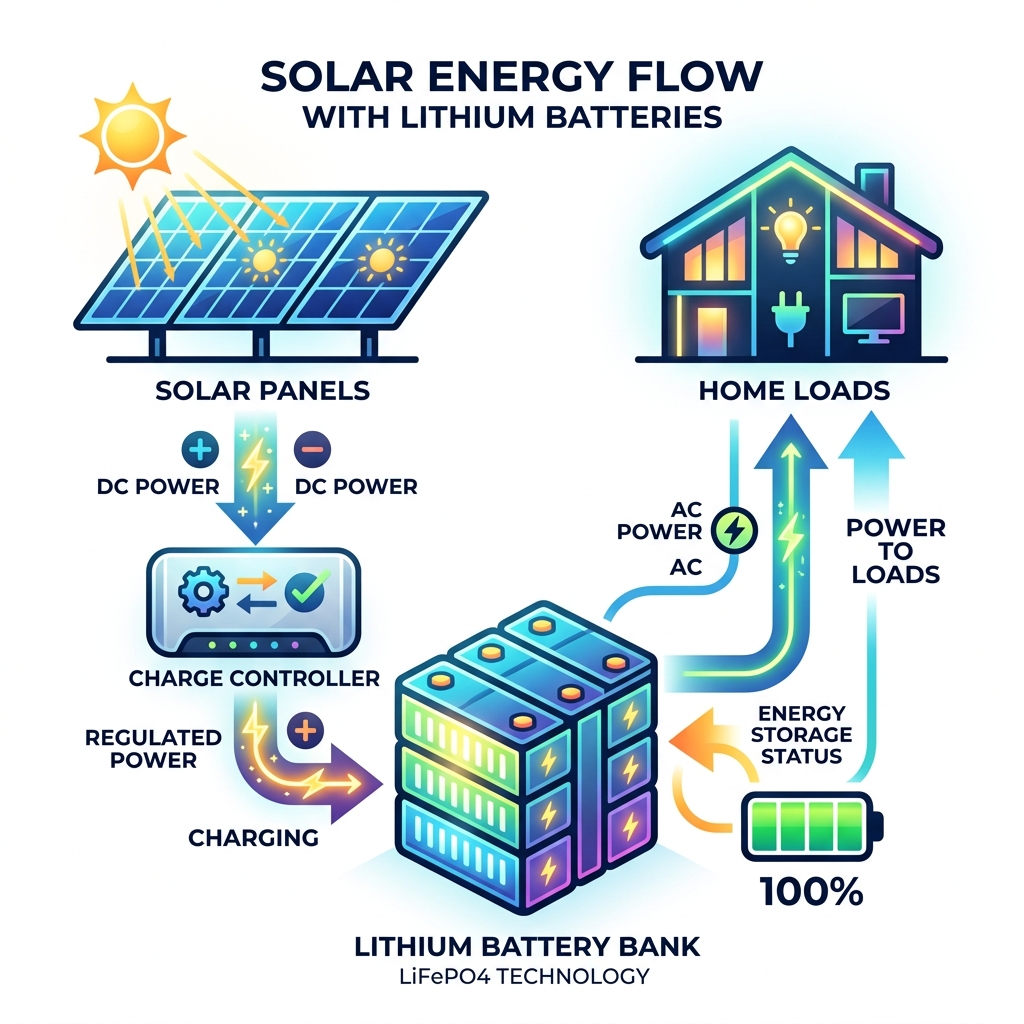
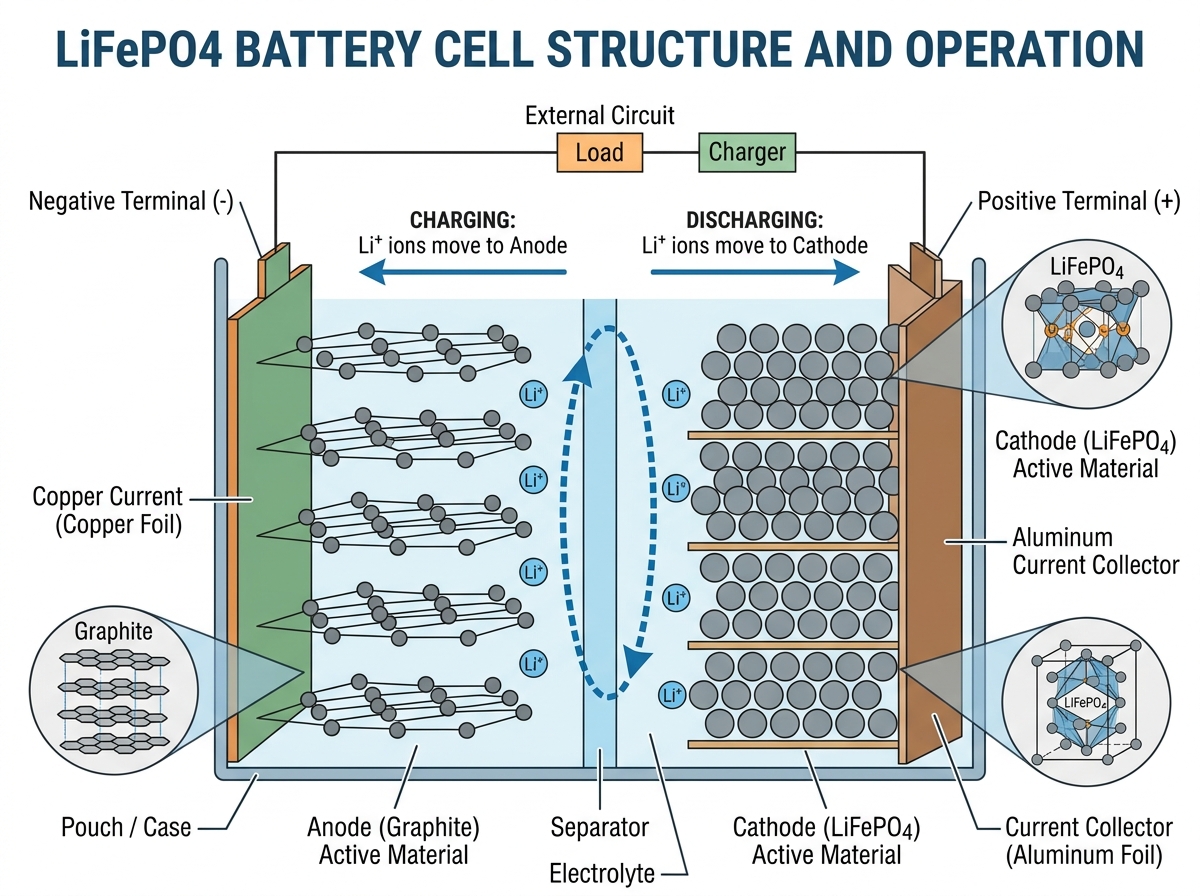
When the sun hits your panels, it creates DC electricity. A charge controller manages this flow into the battery, where lithium ions move from the cathode to the anode to store that energy. When you turn on your lights at night, the process reverses.
Efficiency and Stability
The “magic number” for these batteries is round-trip efficiency. While older technologies lose a lot of energy as heat during the charging process, LiFePO4 batteries boast efficiencies between 90% and 98%. This means for every 100 watts your panels produce, you get nearly all of it back out when you need it.
Furthermore, these batteries are chemically stable. They don’t suffer from “memory effect,” and they handle inconsistent charging—typical of cloudy days—much better than other chemistries. If you want to dive deeper into making your investment last, check out our guide on how to maximize solar battery life.
Lithium vs. Lead-Acid: Why LiFePO4 Wins
Before 2015, if you wanted solar storage, you were likely looking at a massive, heavy bank of lead-acid batteries. Today, that’s like choosing a horse and buggy over a Tesla. Here is why lithium batteries for solar are the undisputed champions.
Depth of Discharge (DoD)
This is the biggest game-changer. Lead-acid batteries should generally only be discharged to 50%. If you go deeper, you permanently damage the battery. Lithium-ion batteries can handle discharging around 80% to 100% of their charge before needing to be refilled.
For example, the Tesla Powerwall II and the Enphase IQ 10 both advertise a 100% depth of discharge. This means you get to use all the energy you paid for.
Lifespan and Maintenance
A lead-acid battery might last 2 to 5 years (roughly 200–900 cycles). In contrast, lithium batteries typically have a minimum warrantied lifespan of 10 years or 10,000 cycles. Some units, like the EG4 Wallmount 314Ah, are rated for over 10,000 cycles while maintaining 80% capacity.
Additionally, lithium is maintenance-free. There is no checking water levels or cleaning off acid corrosion. You set it, forget it, and enjoy the power. This is especially vital for large off-grid solar systems where reliability is a matter of survival, not just convenience.
| Feature | Lithium (LiFePO4) | Traditional Lead-Acid |
|---|---|---|
| Usable Capacity (DoD) | 80% – 100% | 50% |
| Cycle Life | 4,000 – 10,000+ | 200 – 900 |
| Efficiency | 90% – 98% | ~75% |
| Maintenance | Zero | High (Watering/Venting) |
| Weight | Lightweight/Compact | Extremely Heavy |
Top-Rated Lithium Batteries for Solar Systems
Choosing the right battery depends on your “mission.” Are you trying to power a four-bedroom house through a blackout, or are you just trying to keep the beer cold in your van?
High-Capacity Lithium Batteries for Solar Off-Grid Systems
For those living entirely off the grid or looking for serious home backup, capacity and scalability are king.
- EG4 Wallmount 314Ah All-Weather Battery: This is a beast. It packs 16kWh of storage into a single unit and is designed to handle 10,000+ cycles. It’s also IP65 rated, meaning it can live outdoors.
- BigBattery NEXUS ESS: Delivering 15kWh of power, this system uses Tier-1 LiFePO4 cells. It’s scalable up to 225kWh, which is enough to power a small village (or a very tech-heavy homestead).
- RICH SOLAR ALPHA 5 PRO: This 48V system offers 7,000 lifetime cycles and a 10-year warranty. It’s a favorite for its “stackable” nature, allowing you to grow your storage as your needs increase.
If you encounter issues with your setup, our troubleshooting guide for solar devices can help you identify if the issue is the battery or the connection.
Best Lithium Batteries for Solar RV and Marine Use
When space and weight are at a premium, you need high energy density.
- Renogy 12V 100Ah Lithium Battery: A classic for a reason. It’s compact, weighs only 21.8 lbs, and offers 5,000 cycles. The Core Series even includes Bluetooth so you can check your levels from your phone.
- Dakota Lithium 12V 100Ah: Known for their incredible 11-year warranty. These batteries are built for rugged use, weighing in at 27.5 lbs and capable of 5,000 cycles.
- LiTime 12V 560Ah LiFePO4 Deep Cycle Battery: If you have the space, this ultra-high-capacity battery provides 7,168Wh of energy. It features low-temp protection, which is essential if you plan on maintaining solar power banks for travel in cold climates.
- RELiON RB48V300 48V 300Ah LiFePO4: A high-capacity 48V option that is perfect for electric vehicle (EV) conversions or large marine house banks.
Essential Factors for Choosing Solar Storage
Before you drop several thousand dollars on lithium batteries for solar, you need to consider the “ecosystem” they will live in.
System Sizing and Cost
The total cost to install a lithium battery storage system can range anywhere from $4,000 to over $25,000. For instance, a Tesla Powerwall II typically costs around $12,000 including parts and installation. You need to calculate your daily watt-hour usage to ensure you don’t undersize your bank.
The Battery Management System (BMS)
Every quality lithium battery has a “brain” called a BMS. This system prevents the battery from overcharging, over-discharging, or getting too hot. This is what prevents “thermal runaway” (the fancy term for a battery fire). Modern systems like the REGO 12V 400Ah from Renogy feature 62 different BMS protections.
Temperature Protection
Lithium batteries have a weakness: they don’t like to be charged in freezing temperatures. Look for batteries with “internal heating” or “low-temp protection.” These features will either use a small amount of energy to warm the cells or simply shut off the charger to prevent permanent damage to the lithium plating.
Inverter Compatibility
Not all batteries talk to all inverters. Some high-end batteries use CAN Bus or RS485 communication to “handshake” with the inverter, optimizing the charge rate. Always check if your battery is compatible with your specific inverter (like Victron, EG4, or Growatt). If you’re debating between a built-in battery or a separate bank, see our comparison of solar vs battery powered gadgets.
Frequently Asked Questions
Do lithium solar batteries require maintenance?
No. Unlike lead-acid batteries, which require regular “watering” (adding distilled water to cells) and venting to prevent explosive gas buildup, lithium batteries are sealed, solid-state units. There are no moving parts and no chemicals to top off. They are completely maintenance-free.
What is the typical lifespan and warranty?
You should expect a minimum of 10 years. Most top-tier brands offer a 10-year warranty or a cycle-life guarantee (usually 3,000 to 10,000 cycles). Dakota Lithium is a standout here, offering an 11-year warranty on their batteries. Even after the warranty period, the battery isn’t “dead”—it usually just means it has reached 80% of its original capacity.
Are lithium batteries safe for indoor use?
Yes, specifically LiFePO4 batteries. Unlike the lithium-cobalt batteries used in some laptops or older EVs, LiFePO4 does not vent toxic gases and is much harder to ignite. They are non-toxic and often carry UL1973 certifications, making them safe for installation inside closets, garages, or even under your bed in an RV.
Conclusion
Switching to lithium batteries for solar is the single best upgrade you can make for your energy independence. While the upfront cost is higher than old-school lead-acid, the 10-year lifespan, zero maintenance, and 98% efficiency make it the cheaper option over time.
Whether you are building a massive off-grid homestead with an EG4 Wallmount or hitting the open road with a compact Dakota Lithium setup, you are investing in power that actually lasts.
Ready to power your next adventure? Explore more outdoor technology solutions at Rico Compouco and take control of your energy today.
