
Why Every Hiker Needs a Foldable Solar Trail Charger
A foldable solar trail charger is one of the smartest pieces of gear you can carry on a multi-day hike. Your phone, GPS, and headlamp all depend on battery power — and when you’re days from the nearest outlet, that power runs out fast.
Quick answer: the best foldable solar trail charger specs for hiking in 2025:
| Category | Weight | Output (1hr direct sun) | Best For |
|---|---|---|---|
| High-Efficiency 28W | 20.9 oz | 2,177 mAh | Best overall |
| Rugged 20W | 20.9 oz | 1,918 mAh | Premium reliability |
| Compact 10W | 12.6 oz | 1,401 mAh | Best value |
| Ultralight 7W | 7.3 oz | 1,247 mAh | Ultralight backpacking |
These panels fold down small, clip to your pack, and convert sunlight directly into usable power — no grid required.
Solar chargers work by using photovoltaic cells to turn sunlight into electricity. Modern portable panels hit 18–24% conversion efficiency, meaning they pull real, usable power even in less-than-perfect conditions. The best models generate over 2,000 mAh per hour in direct sun — enough to top up a smartphone in a couple of hours.
But not all solar chargers are built the same. Weight, wattage, port types, and whether the panel includes a built-in battery all matter a lot once you’re on the trail.
This guide breaks it all down so you can find the right charger for your setup.
Key Features of a High-Performance Foldable Solar Trail Charger
When we look for a foldable solar trail charger, we aren’t just looking for something that looks cool in a catalog. We need gear that survives the grit, rain, and accidental drops that come with trail life. High-performance models share several critical DNA markers that separate them from cheap “emergency” gadgets.
Monocrystalline Efficiency and ETFE Lamination
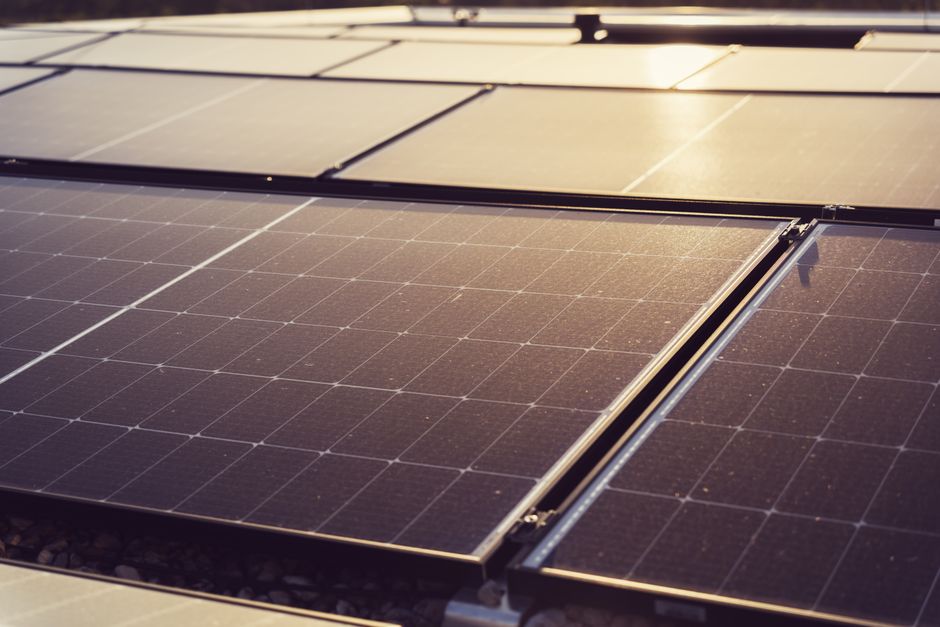
The heart of any charger is the solar cell. We prioritize monocrystalline silicon cells because they offer the highest conversion rates—often reaching between 23% and 24%. Unlike older polycrystalline tech, these cells are more efficient in smaller footprints, which is exactly what a backpacker needs.
To protect these cells, premium chargers use ETFE (Ethylene Tetrafluoroethylene) lamination. This material is superior to standard PET plastic because it allows better light transmission, is more durable against high temperatures, and doesn’t yellow or crack over time. If you want your investment to last 5 to 8 years of rugged use, ETFE is the gold standard.
Portability and Weight-to-Power Ratio
In backpacking, “ounces equal pounds, and pounds equal pain.” A great foldable solar trail charger must balance its power output with its weight. For example, a leading 28W panel strikes a legendary balance, weighing 20.9 oz while delivering enough current to charge a modern smartphone in about two hours of direct sun. On the other end of the spectrum, compact ultralight models are a marvel for weight-weenies, coming in at just 7.3 oz while still generating a respectable 1,247 mAh in an hour of peak sun.
Weatherproofing and Connectivity
Trail gear gets wet. Look for an IP67 or IP68 rating. An IP67 rating means the panel can handle a heavy downpour or a quick splash, while IP68 offers even deeper dust and water protection. Many modern panels now feature a zipped protective pocket to keep your charging devices and cables away from the elements while they’re plugged in.
Connectivity is the final piece of the puzzle. While USB-A is standard, we highly recommend panels with USB-C PD (Power Delivery) ports. These allow for faster charging of modern phones and even some smaller laptops or high-capacity power banks. Portable solar power banks: the vanguards of outdoor energy represent a massive leap forward in how we manage this energy on the go.
Standalone Panels vs. Integrated Solar Power Banks
One of the biggest debates in the hiking community is whether to carry a standalone solar panel or an integrated solar power bank. Both have their place, but they serve very different needs.
Standalone Solar Panels
These are “pure” generators. They do not store energy; they only create it in real-time.
- Pros: Much higher surface area means they charge devices 10x to 20x faster than the tiny panels on power banks. They are generally more durable because they don’t have a sensitive lithium battery exposed to the heat of the sun.
- Cons: You can only charge things when the sun is out. If a cloud passes over, the power drops instantly.
Integrated Solar Power Banks
These are batteries (often 10,000mAh to 20,000mAh) with small solar panels attached to the casing.
- Pros: They offer energy storage and generation in one unit. Some models use tri-fold panels to increase the surface area, allowing for regeneration that is much more effective than a single-panel battery.
- Cons: Standard single-panel power banks are notoriously slow. Some can take 25 to 85 hours of direct sunlight to reach a full charge.
| Feature | Standalone Panel (28W) | Integrated Power Bank (10W) |
|---|---|---|
| Primary Function | High-speed generation | Energy storage + trickle charge |
| Direct Sun Output | ~2,100+ mAh/hour | ~300-500 mAh/hour |
| Weight | 15 – 25 oz | 10 – 18 oz |
| Best Use | Basecamp / Long breaks | Emergency backup / Short trips |
We often suggest a hybrid approach: use a standalone foldable solar trail charger to juice up a separate, high-quality power bank during the day. This protects your expensive phone from overheating in the sun and ensures you have a full “tank” of energy for the night. For more on this strategy, check out our tips-for-charging-gadgets-off-grid.
Choosing the Right Foldable Solar Trail Charger for Your Trip
The “right” charger depends on your group size and device list.
- Solo Ultralight: An ultralight 10W panel (7.3 oz) is perfect for keeping a single GPS or phone topped up.
- The Tech-Heavy Hiker: If you’re carrying a camera, drone, or tablet, you’ll need at least 28W of power. A high-efficiency 28W panel is the industry benchmark here.
- Group Basecamp: Larger folding “blankets” or panels in the 40W to 120W range can charge multiple devices simultaneously via DC and USB ports.
When folded, these units should be no larger than a standard tablet or a thin book. A 21.18-inch unfolded length might sound big, but when it folds down to roughly 8 x 12 inches, it disappears into your pack. For more help narrowing down your specs, see our guide on how-to-choose-the-best-solar-gadgets-for-outdoors.
Real-World Performance: Sunlight, Speed, and Efficiency
Manufacturer specs are often recorded in “Standard Test Conditions”—which basically means a perfect laboratory that doesn’t exist on the Appalachian Trail. In the real world, performance fluctuates wildly based on the environment.
The Angle of Incidence
If your panel is lying flat on the ground while the sun is at a 45-degree angle, you are losing a massive amount of potential energy. To get the most out of your foldable solar trail charger, you need to angle it directly toward the sun. In most of the US, a 37-degree tilt is the “sweet spot” for stationary charging. Many premium models now include built-in kickstands or sun-alignment dots to help you find the perfect angle.
Direct vs. Indirect Sunlight
Sunlight intensity is everything.
- Direct Sun: A 28W panel can generate upwards of 2,177 mAh per hour.
- Indirect/Cloudy Sun: That same panel might drop to 583 mAh per hour—a 73% decrease in efficiency.
Temperature also plays a surprising role. Solar panels actually become less efficient as they get hotter. If you’re hiking in a desert, try to keep the panel slightly elevated off the hot sand or rock to allow for airflow. This prevents the “thermal throttling” that can slow down your charging speeds. Using smart solar-gadget-placement-for-best-efficiency can double your daily power yield.
Maximizing Your Foldable Solar Trail Charger on the Move
Many hikers try to “passive charge” by hanging a panel off the back of their backpack. While this looks cool in photos, it’s often inefficient. As you walk, the panel swings, moves in and out of the shade of trees, and rarely maintains the correct angle to the sun.
We recommend “active charging” during breaks. When you stop for lunch or a water refill, deploy the panel in the best possible sun spot. If you must charge while walking, use carabiners to secure the panel as flat and stable as possible against your pack.
For those needing massive power, some professional-grade panels allow for “daisy-chaining.” By using 8mm chaining ports, you can link two or more panels together to increase the total wattage without needing multiple charge controllers. This is a pro-level move for winter expeditions where sun hours are limited. Learn more about setting-up-solar-chargers-in-the-outdoors to master these techniques.
Essential Safety and Durability for Rugged Use
A foldable solar trail charger is an electronic device, and electronics and the wilderness can be a volatile mix. Safety features aren’t just “extras”—they are essential.
Smart IC Technology and Overcharge Protection
Modern chargers utilize an Integrated Circuit (IC) chip. This chip “talks” to your device to determine the maximum current it can safely handle. It also handles the “auto-restart” feature. On older panels, if a cloud passed over, the charging would stop and wouldn’t start again until you unplugged and replugged the phone. Smart IC tech detects when the sun returns and automatically resumes the flow.
Physical Protection
Look for panels with reinforced grommets. These allow you to lash the panel to a tent, a rock, or a tree without tearing the fabric. A zipped pocket for the junction box is also a must-have; it protects the USB ports from dust and grit, which are the silent killers of trail electronics.
Airline Compliance
If you are flying to your hiking destination, rest easy: most foldable solar panels are perfectly legal for carry-on luggage. Since standalone panels don’t contain large lithium batteries, they face fewer restrictions than high-capacity power banks. Even integrated solar power banks up to 20,000mAh (roughly 100Wh) are generally approved for air travel. Always double-check your gear’s maintenance needs at how-to-maintain-outdoor-solar-gadgets.
Frequently Asked Questions about Solar Trail Charging
Do solar chargers work on cloudy days?
Yes, but don’t expect miracles. A high-quality foldable solar trail charger can still harvest energy from ambient light on an overcast day, but the output will be significantly lower. While you might get 2,000+ mAh in full sun, you might only see 500 mAh on a cloudy day. This is often called “trickle charging.” It’s enough to keep a GPS from dying, but not enough to quickly charge a dead phone. For help when things aren’t working as expected, see our guide on troubleshooting-solar-powered-devices.
Can I charge my phone directly from the panel?
Technically, yes, but we advise against it. Solar power is “choppy.” Every time a shadow falls across the panel, the voltage fluctuates. Modern smartphones (especially iPhones) are very sensitive to these fluctuations and may show an “Accessory Not Supported” error or simply stop charging to protect their internal circuits.
The best practice is to charge a power bank from the solar panel, and then use the power bank to charge your phone. The battery acts as a “buffer,” providing a steady, safe flow of electricity to your expensive devices. Learn more about charging-multiple-devices-with-solar-panels.
How long does it take to charge a device?
In perfect direct sunlight, a 20W to 28W panel can generate about 2,177 mAh per hour. Since a standard smartphone battery is roughly 3,000 to 4,000 mAh, you can expect a full charge in 1.5 to 2.5 hours. In indirect light, this can jump to 6 or 8 hours. Understanding these timelines is key to how-to-maximize-solar-battery-life during a long trek.
Conclusion
At Rico Compouco, we believe that energy independence is the ultimate freedom for the modern adventurer. A foldable solar trail charger isn’t just a gadget; it’s a lifeline that keeps your navigation tools, safety beacons, and memories (cameras!) running no matter how far you roam.
By choosing a panel with high-efficiency monocrystalline cells, durable ETFE lamination, and the right wattage for your needs, you can turn every sunny lunch break into a refueling session for your tech. Whether you’re an ultralight thru-hiker or a basecamp enthusiast, there is a solar solution waiting to lighten your load and brighten your trek.
Ready to dive deeper into wilderness tech? Check out More info about outdoor tech to stay ahead of the curve. Happy hiking, and may your skies always be clear!
