
Why DIY Solar Lanterns Are Worth Making
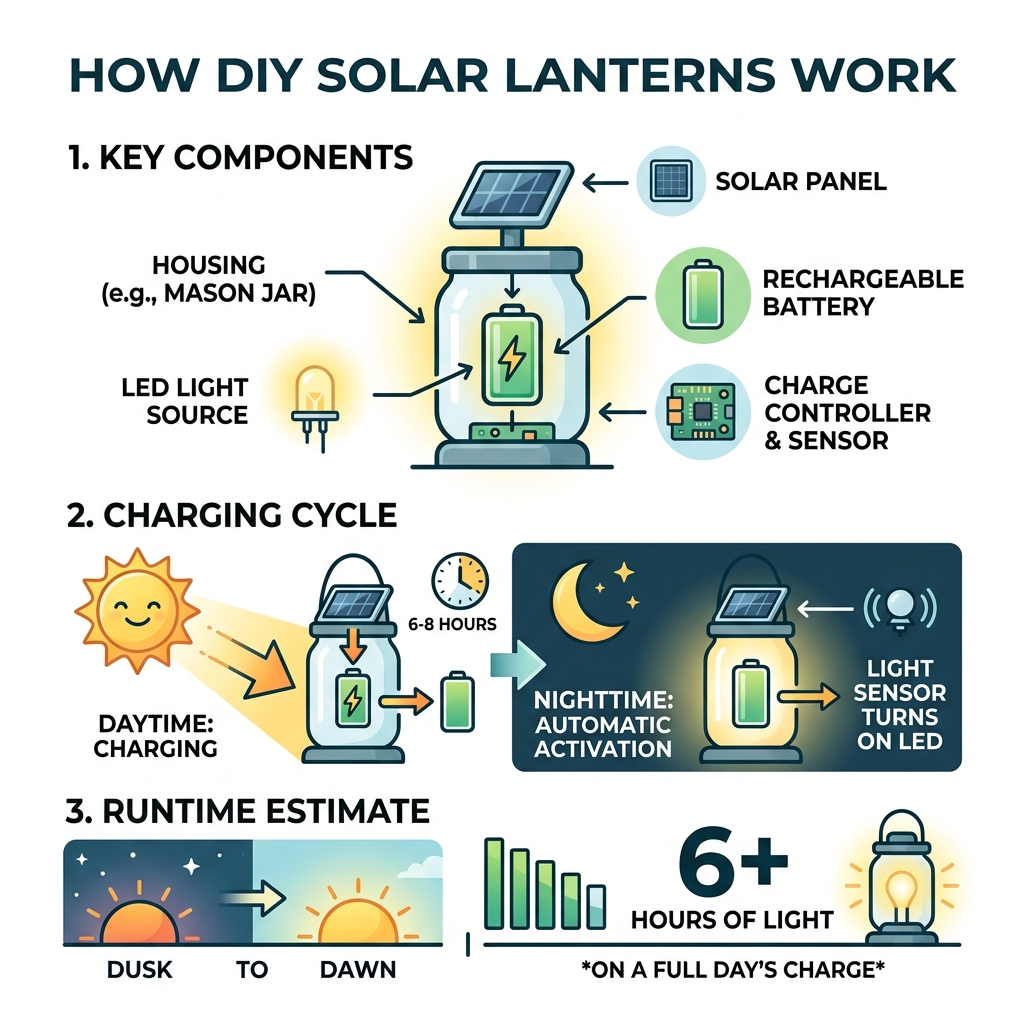
DIY solar lanterns are a simple, affordable way to add outdoor lighting without wiring, batteries, or ongoing costs. Here’s a quick overview of how to make one:
- Get a solar stake light – from a dollar store or home improvement store (~$2-$5)
- Choose a housing – a mason jar, glass candle holder, old lantern, or wood frame
- Attach the solar component – hot glue or wire it into the housing
- Place in sunlight during the day – fully charges in 6-8 hours
- Enjoy free light at night – most DIY solar lanterns run 6+ hours on a full charge
If you’ve ever been frustrated replacing batteries in outdoor lights, you’re not alone. Traditional lanterns eat through batteries fast — especially during camping trips or long summer nights on the patio.
Solar changes that equation completely.
A basic DIY solar lantern can cost as little as $2 using items from a dollar store. Compare that to store-bought solar lanterns that often cost $15-$30 each, and the math becomes obvious fast.
But it’s not just about saving money. Making your own lanterns means you can customize the style, size, and materials to fit your space — whether that’s a rustic mason jar for a backyard patio, a wood-frame lantern for a pergola, or a repurposed vintage lantern with a realistic flame effect.
This guide walks you through everything: materials, step-by-step builds, creative variations, and maintenance tips.
Why Choose DIY Solar Lanterns for Your Outdoor Space?
When we think about outdoor ambiance, we often think of expensive professional lighting installations or the hassle of stringing extension cords across the lawn. By choosing diy solar lanterns, we bypass those headaches entirely.
The primary draw is energy efficiency. Solar cells harness sunlight during the day to charge an internal battery, which then powers an LED at night. It is the ultimate “set it and forget it” lighting solution. Because they don’t rely on the grid, they are incredibly eco-friendly solar lighting solutions that reduce your carbon footprint while keeping your electricity bill at zero.
Cost savings are another massive factor. According to our research, you can pick up a 10-pack of solar copper LED path lights for about $20. That breaks down to just $2 per lantern! Even if you opt for slightly higher-quality path lights from home improvement stores (which run about $5 each), you are still spending a fraction of what a high-end decorative lantern would cost at a boutique.
| Feature | DIY Solar Lantern | Store-Bought Decorative Lantern |
|---|---|---|
| Average Cost | $2 – $15 | $25 – $60 |
| Customization | Infinite (colors, shapes, sizes) | Limited to manufacturer designs |
| Repairability | Easy to swap parts | Often disposable if light fails |
| Portability | High | Varies |
Beyond the wallet, we love the portability. These lanterns aren’t tethered to an outlet, making them perfect for solar cooking and lighting eco tips during camping trips or off-grid adventures. You can move them from the garden path to the dinner table in seconds.
Essential Materials and Tools for Building DIY Solar Lanterns
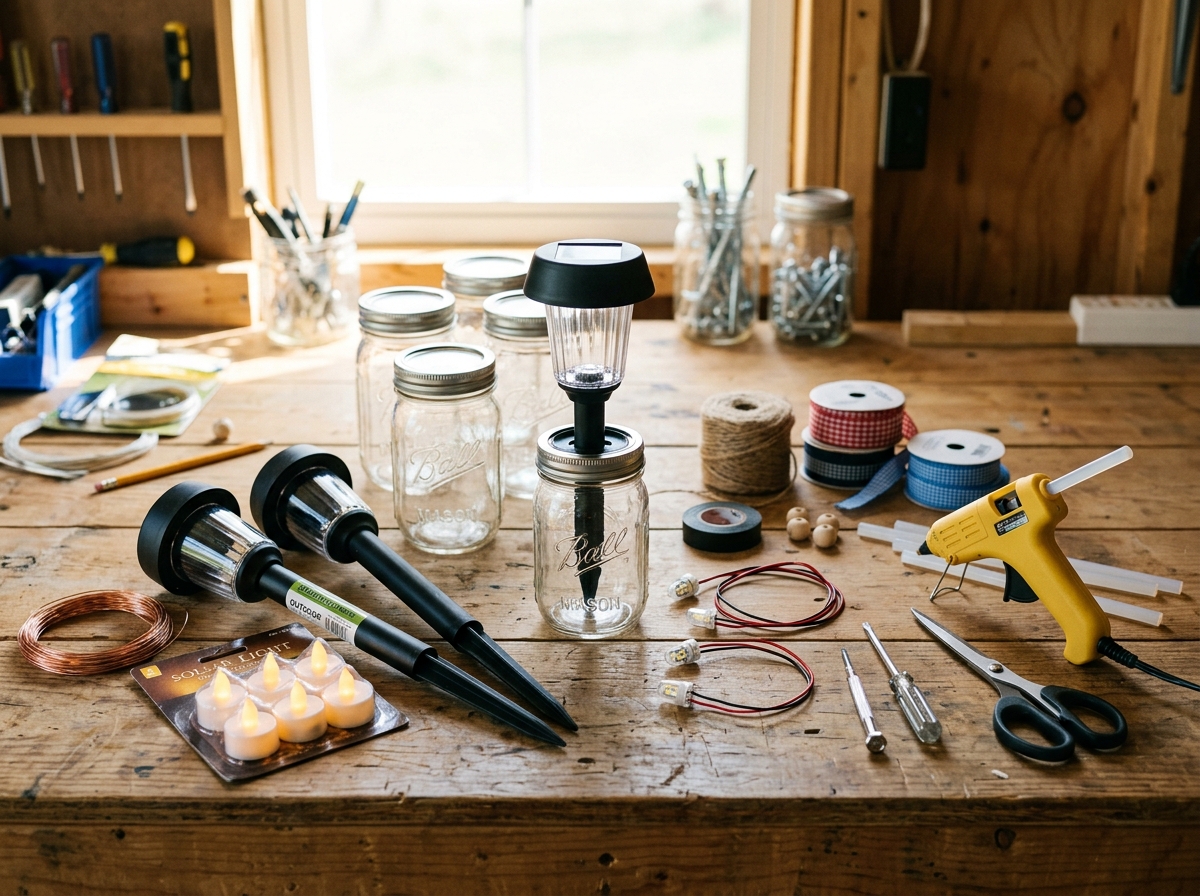
Before we get our hands dirty, we need to gather our supplies. The beauty of these projects is that most materials are likely sitting in your recycling bin or junk drawer.
The “Guts”: Solar Path Lights
The easiest way to source the solar component is to buy inexpensive solar path lights. You can find these at discount retailers like Dollar Tree or bulk stores. For a slightly more robust light (10-15 lumens), check out 2026s-best-solar-lights-for-garden-and-camping to see which brands offer the best longevity.
The Housing: Jars, Wood, and Tins
- Mason Jars: The gold standard for DIYers. They are durable, heat-resistant, and look great.
- Scrap Wood: Cedar is our top choice because it is naturally rot-resistant, making it perfect for outdoor use.
- Repurposed Items: Old kerosene lanterns, jelly jars, or even tin cans with punched-out designs.
Adhesives and Sealants
- Silicone: Essential for weatherproofing. It stays flexible and holds up against rain.
- Hot Glue: Great for quick assembly, but be careful in high-heat climates as it can soften.
- Spar Urethane: If you’re building a wood frame, this provides a protective top coat against the elements.
Essential Tool List
- Miter Saw: For cutting wood frames to precise lengths.
- Drill with Hole Saw Bits: You’ll need a 4-inch hole saw for many standard solar light tops.
- Needle-nose Pliers: Perfect for manipulating wire handles.
- Wire Cutters: For trimming hardware cloth or copper wire.
- Soldering Iron: (Optional) Only needed for advanced projects where you’re wiring custom LED modules.
Step-by-Step Guide: The Simplest Budget-Friendly DIY Solar Lantern
If you’re a beginner, this “Dollar Store Special” is the perfect place to start. It takes about 15 minutes and costs roughly $3 total (including the hook!).
1. Source a Ribbed Glass Candle Holder
Look for a glass vessel that has a slightly tapered neck. Many discount stores sell these with “copper coils” already wrapped around them. If yours doesn’t have wire, you can easily wrap your own 12-inch piece of copper or floral wire around the rim to create a handle.
2. Prepare the Solar Light
Take a standard solar stake light and pull the top (the solar panel and light assembly) off the plastic pole. Important: Remember to remove the orange or clear plastic pull-tab from the battery compartment. If you don’t, the light won’t charge or turn on!
3. Check the Fit
Test the fit of the solar top on your glass holder. If it’s a bit loose, apply a dab of hot glue or a bead of silicone around the rim of the glass before pressing the solar component into place.
4. Create the Handle
If you’re using wire, snip a length of about 12 inches. Using your needle-nose pliers, create small loops in the wire about 4 inches apart. Wrap this around the neck of the jar and interlock the loops. This provides a sturdy point to hang your lantern on a shepherd’s hook.
5. Charging and Runtime
Follow our step-by-step guide for solar lantern setup by placing the finished product in direct sunlight. On a full charge, these simple LEDs typically provide a cozy glow for about 6 to 8 hours.
Creative Variations: From Mason Jars to Wood Frames
Once you’ve mastered the basic jar lantern, it’s time to get creative. We’ve seen some incredible designs that look like they came straight out of a high-end home decor magazine.
The “Glass Gem” Luminary
This is a favorite for patios. Take a clean glass jar and use “Goof Off” or a similar adhesive remover to get rid of any label residue. Use modeling clay to stabilize the jar on your workspace so it doesn’t roll away. Apply glass gems (the kind used in vases) to the outside of the jar using clear silicone. Work in small sections, allowing the silicone to set before rotating the jar. The gems catch the light and create a beautiful, refracted glow.
The Scrap Wood Lantern
For those who enjoy woodworking, building a frame is a rewarding project. You can follow the DIY Outdoor Scrap Wood Lantern {You Can Use With Solar Lights!} method.
- The Base: Use a 7 1/4″ square box made of cedar.
- The Frame: Use 3/4″ dowels for the corners. For a “splayed” look, set your miter saw to 2.5 degrees when cutting the dowels.
- The Siding: Hardware cloth (a fine wire mesh) looks fantastic when spray-painted flat black. It diffuses the light and gives the lantern an industrial-chic vibe.
Realistic Flame Effects
Want something more nostalgic? You can upcycle an old kerosene lantern. By removing the wick and installing a solar panel on top, you can wire in a “flickering flame” LED module. These modules mimic the movement of a real fire without the smoke or fire hazard. This is a top-tier choice for best-solar-lights-for-illuminating-your-camping-experience because it creates a campfire ambiance right at your tent door.
Maintenance and Troubleshooting Your DIY Solar Lanterns
Even the best diy solar lanterns need a little TLC to keep shining through the seasons.
Keeping it Clean
The most common reason solar lights fail is a dirty panel. Dust, pollen, and bird droppings can block the sun’s rays. Periodically wipe the panels with a damp, soft cloth. Avoid abrasive cleaners that could scratch the plastic.
Battery Lifespan
Most inexpensive solar lights use Ni-MH (Nickel-Metal Hydride) rechargeable batteries. These generally last 1-2 years. If your lantern stops holding a charge, don’t throw the whole thing away! Simply pop open the battery compartment and replace the old battery with a new rechargeable one of the same capacity.
Weatherproofing Tips
If you plan to leave your lanterns out all winter, ensure they are properly sealed.
- Use Spar Urethane on wood frames to prevent rot.
- Apply a bead of silicone around any area where the solar panel meets the housing.
- For electronics, ensure all wiring is secure to prevent shorts. If you’re doing advanced wiring, check out LED the way: best solar powered headlamps for hikers in 2026 for insights into durable outdoor LED tech.
Troubleshooting Common Issues
- Light won’t turn on: Is the switch set to “ON”? Is the plastic tab removed? Is it dark enough? (Solar lights won’t turn on if they sense ambient light).
- Dim light: The panel might not be getting enough direct sunlight. Move it to a spot that gets at least 6 hours of sun.
- Condensation inside the jar: This happens with temperature changes. You can drill a tiny “weep hole” in the bottom of the jar or ensure the lid is sealed perfectly with silicone.
For more detailed reviews on components that stand up to the elements, see our solar-lantern-reviews-for-hiking-trips-2026.
Frequently Asked Questions about DIY Solar Lanterns
How long do diy solar lanterns last on a full charge?
On average, a DIY lantern using a standard 600mAh to 900mAh battery will last between 6 and 8 hours. This depends heavily on the “lumen” rating of your LED and how much direct sunlight the panel received during the day. High-efficiency LEDs can sometimes stretch this to 10 hours during the peak of summer.
Can I make diy solar lanterns weatherproof for winter?
Yes! The key is using the right sealants. Silicone is your best friend for sealing gaps between the solar panel and the jar lid. For wooden lanterns, applying several coats of Spar Urethane will protect the wood from moisture and UV damage. If you’re using hardware cloth for the sides, a coat of rust-preventative spray paint is a must.
What is the cheapest way to source parts for diy solar lanterns?
The absolute cheapest method is upcycling. Use old spaghetti sauce or pickle jars (cleaned thoroughly). For the solar components, wait for end-of-summer clearances at home improvement stores, or buy in bulk from discount retailers where a 10-pack can drop the price per unit to under $2. Thrift stores are also gold mines for finding old lanterns that can be converted.
Conclusion
At Rico Compouco, we believe that sustainable living should be accessible, creative, and — most importantly — fun. Building your own diy solar lanterns is a fantastic gateway into renewable energy. Whether you’re lighting up a garden path, preparing for a camping trip, or just adding some sparkle to your back porch, these projects offer a sense of satisfaction that store-bought items just can’t match.
By repurposing everyday items and harnessing the power of the sun, we aren’t just decorating our homes; we’re making a small, positive impact on the planet.
Ready to explore more ways to go green? Check out more info about solar gadgets to see how else you can power your life with the sun!
