
Understanding the Solar Hot Water Shower: How It Works
At its core, a solar hot water shower is a marvel of simplicity. It relies on the principles of solar thermal energy, which is significantly more efficient than photovoltaic (PV) systems for the specific task of heating. While PV panels must convert sunlight into electricity and then into heat, solar thermal systems skip the middleman, achieving up to 80% efficiency by trapping heat directly in the water. If you want a broader overview of the underlying concept, the solar thermal energy article offers helpful background.
Most portable units are constructed from heavy-duty, black PVC or reinforced EVA materials. These dark surfaces are designed for maximum heat absorption, acting as a thermal sponge for the sun’s rays. High-quality models often feature UV resistance to ensure the material doesn’t degrade or become brittle after days of baking in the sun. If you are interested in how other eco-friendly tech can enhance your trips, check out our guide on green-tech-for-adventure-travelers.
The Science of Solar Absorption
The “magic” happens through heat trapping. When sunlight hits the dark surface of the shower reservoir, the energy is converted into thermal energy. Because the water is contained within an insulated or semi-insulated bladder, that heat has nowhere to go but into the liquid. Some advanced DIY setups even use a “batch collector” method, where 100+ feet of black poly-pipe is coiled inside a glass-topped box to reach temperatures over 60 degrees C (140 degrees F).
Passive vs. Active Systems
We generally categorize these showers into two camps:
- Passive Systems: These are the most common for campers. They rely on gravity. You fill the bag, let it sit in the sun, and then hang it from a tree or a high branch. Gravity pulls the water down through the hose.
- Active Systems: These are more sophisticated and often used in off-grid cabins or high-end van builds. They use 12V brushless pumps to circulate water through a heating element or to provide consistent pressure. Some even use a “thermosyphon” effect, where hot water naturally rises into a storage tank placed higher than the collector, moving the water without any electricity at all!
Types of Solar Showers for Every Camper
Choosing the right solar hot water shower depends entirely on your mode of travel. Are you carrying everything on your back, or do you have a truck bed full of gear?

Portable Solar Hot Water Shower Bags for Backpackers
For the minimalist, the portable bag is king. These are usually 4 to 5-gallon bladders made of lightweight EVA or PVC. A great example is the Coghlan’s Camp Shower, which holds 4.2 gallons (16L). This is surprisingly efficient; it provides enough water for 3-4 quick showers and weighs almost nothing when empty.
When you’re trekking through the wilderness, every ounce counts. Using lightweight, solar-heated gear is a cornerstone of environmentally-friendly-hiking-gear practices because it eliminates the need to carry heavy fuel canisters just for hygiene.
Freestanding and Pressurized Systems
If you aren’t worried about weight, you can upgrade to more “luxurious” options:
- Freestanding Towers: These models stand over 7 feet tall and look like a permanent fixture. They often feature a 10-gallon tank built directly into the black PVC stand. These are perfect for base camps or poolside use.
- Pressurized Canisters: The Nemo Helio is a fan favorite here. Instead of hanging it and hoping for good gravity flow, you use a foot pump to pressurize the tank. This gives you 5-7 minutes of continuous, strong spray—much more like your shower at home. Some of these can handle up to 3.5 bar of pressure! These systems are widely available through outdoor gear retailers.
Key Features and Choosing the Right Solar Hot Water Shower Capacity
Before you click “buy,” we recommend looking at more than just the price tag. The durability of the materials is paramount. You want something BPA-free to ensure no nasty chemicals leach into your water while it’s heating up. For a deeper dive into selecting gear, read our article on how-to-choose-the-best-solar-gadgets-for-outdoors.
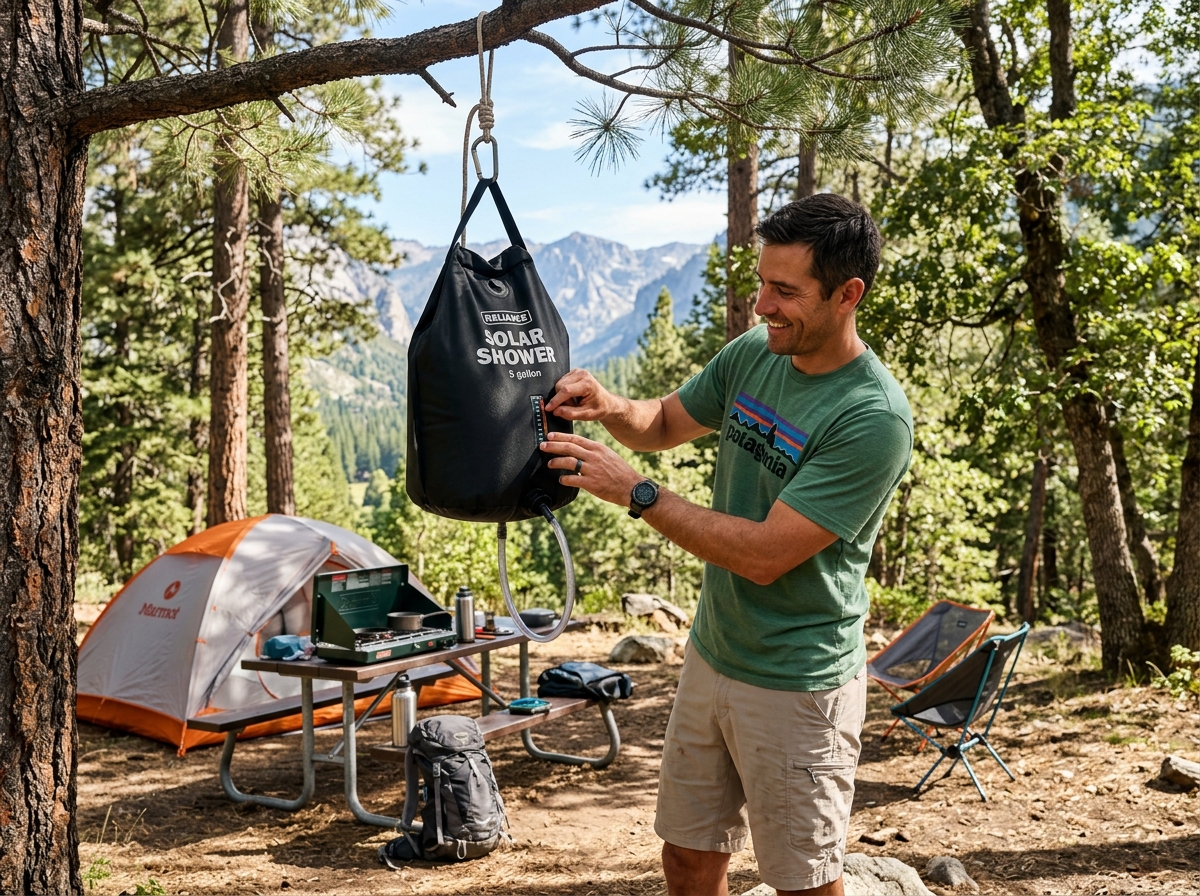
Essential Components: Shower Heads and Gauges
A basic hose with a “pinch” valve works, but it isn’t ideal. Look for these features:
- 360° Swivel Heads: Found on freestanding models, these allow you to rinse off comfortably.
- Temperature Strips: Many modern bags include a built-in thermometer. This is a safety essential, as water in a solar hot water shower can easily reach 140°F—hot enough to scald!
- Tempering Valves: In more permanent off-grid setups, a tempering valve is used to automatically mix cold water with the solar-heated water to keep the temperature safe. This is a must-have for solar-powered-gear-for-eco-friendly-trips.
Selecting the Best Volume for Your Group
- 5 Gallons (20L): The “Goldilocks” size. It’s the standard for 1-2 people and is still manageable to hang once full (remember, 5 gallons of water weighs about 40 lbs!).
- 10 Gallons (40L): Ideal for families or small groups. These are usually freestanding units or heavy-duty bags meant to stay in one place.
- High-Capacity (35L-40L): Larger capacity models offer these volumes, which are excellent for eco-conscious-gadgets-for-camping-trips where you might be washing dishes as well as people.
Heating Times and Efficiency Factors
How long until you can actually wash off the trail grit? It depends on the technology and the “Solar Gods.”
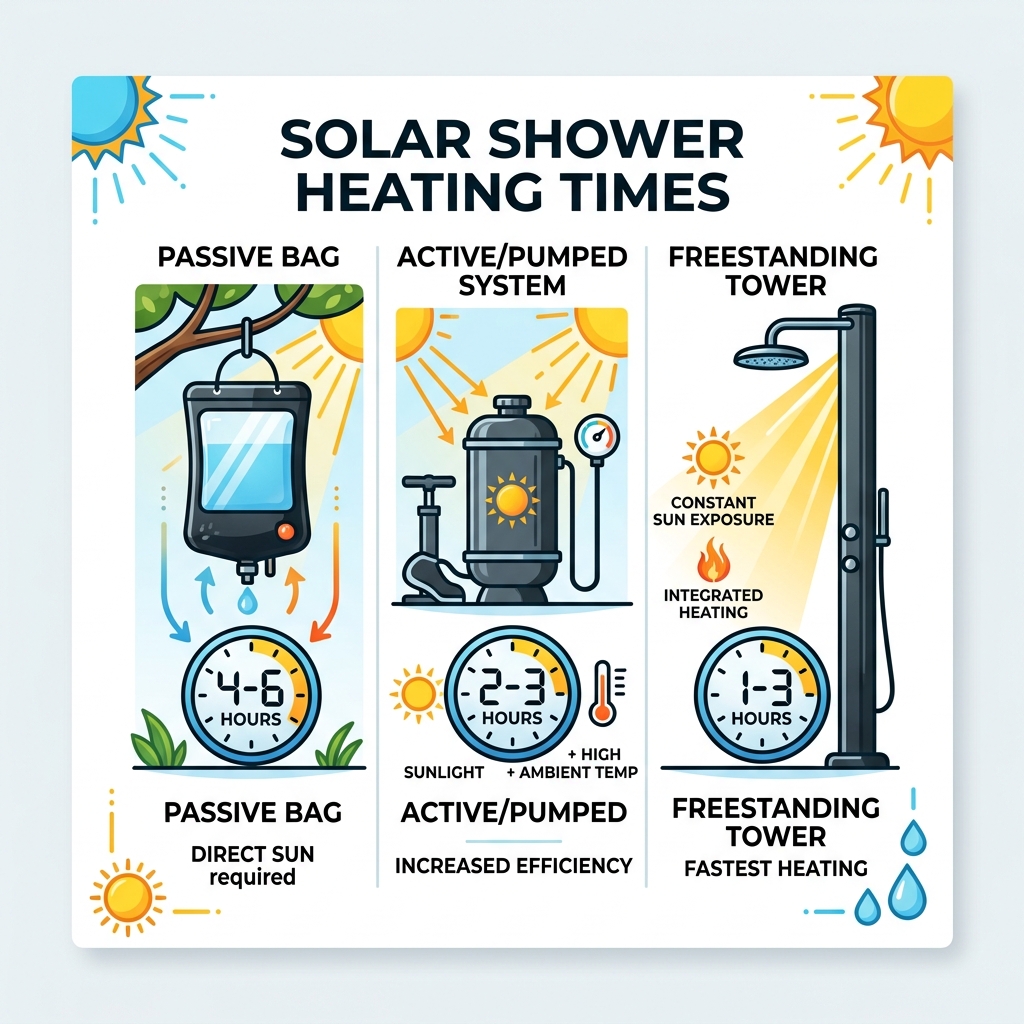
| System Type | Heating Time | Best Conditions |
|---|---|---|
| Passive Bag | 4-6 Hours | Direct, overhead sun |
| Active/Pumped | 2-3 Hours | High ambient temp + sun |
| Freestanding Tower | 1-3 Hours | Constant sun exposure |
Optimizing Sun Exposure
To get the most out of your solar hot water shower, you can’t just throw it in the grass.
- Orientation: In the Northern Hemisphere, face your collector True South.
- Angle: For maximum gain, angle the collector at your latitude plus 22.5 degrees. This helps capture the sun more effectively, especially in the “shoulder” seasons.
- Reflectors: Some DIYers place a shiny galvanized sheet or a space blanket behind their shower bag to bounce extra sunlight onto the back of the unit. Just like setting-up-solar-chargers-in-the-outdoors, positioning is everything.
Weather and Seasonal Limitations
Cloudy days are the nemesis of the solar shower. On an overcast day, you might only get “lukewarm” at best. In the winter, thermal loss is a major factor. Even if the sun is out, the cold air will strip heat away from the bag. Insulating your lines with UV-rated foam can help, but generally, solar showers are best suited for late spring through early autumn. For more tips on keeping your gear running in all conditions, see maintaining-solar-power-banks-for-travel.
Pro Tips for Using Your Solar Shower Effectively
We have learned a few things the hard way so you don’t have to. First and foremost: Always test the water on your elbow before jumping in. Solar showers can reach 140°F to 180°F, which is hot enough to cause serious burns. If it’s too hot, simply pour in some cold water to reach a comfortable temperature.
When hanging your bag, height is your friend for better pressure, but make sure the branch can support the weight. A 5-gallon bag is heavy! For more camping wisdom, check out our tips-for-zero-waste-camping.
Maintenance and Longevity
To keep your shower in top shape:
- Descaling: If you use “hard” water from a well or lake, flush the system with a mild descaling solution every year to prevent mineral buildup in the shower head.
- Winterization: If you have a freestanding unit, drain it completely before the first frost. Water expands when it freezes and will crack the PVC pipes or the tank.
- Valve Cleaning: If your shower head starts dripping, there might be dirt in the valve core. Most are easy to unscrew and clean. Learn more about gear care at how-to-maintain-outdoor-solar-gadgets.
Common Applications Beyond Camping
A solar hot water shower isn’t just for the woods. We see them used for:
- Pet Washing: Warm water makes bath time much less stressful for your dog.
- Surf Showers: Keep one in the back of your van to rinse the salt and sand off your wetsuit.
- Poolside Rinsing: A freestanding unit is perfect for a quick rinse before jumping in the pool.
- Beach Trips: Use a portable bag to wash sand off feet and gear before loading the car. These are great sustainable-travel-hacks-for-backpackers.
Frequently Asked Questions about Solar Showers
How long does it take for a solar shower to heat up?
Passive bags typically take 4-6 hours of direct sunlight to reach a comfortable temperature. Active systems with circulation pumps or high-efficiency freestanding towers can do the job in 2-3 hours.
Can a solar shower get hot enough to cause burns?
Absolutely. On a very hot, sunny day, water temperatures can climb above 140°F (and in some specialized systems, up to 180°F). Always use a built-in thermometer or test the water before use.
How many showers can I get from a 5-gallon bag?
If you are being “water-frugal” (wetting down, turning the water off to soap up, then rinsing), you can get 3-4 quick showers. If you leave the water running, it will usually last for 1-2 full showers.
Conclusion
At Rico Compouco, we believe that sustainable travel doesn’t have to mean sacrificing comfort. A solar hot water shower is a perfect example of how simple, green technology can provide energy independence and off-grid luxury. By harnessing the power of the sun, you reduce your footprint while enjoying the simple pleasure of a warm rinse under the stars.
Ready to upgrade your outdoor setup? Explore more solar gadgets for your next adventure and see how easy it is to go green. Happy camping!
