
The Dirty Little Secret of Hiking Gear (And How to Fix It)
Sustainable hiking gear is outdoor equipment made from recycled, biobased, or responsibly sourced materials — manufactured by brands that meet verified environmental and ethical standards.
Quick answer: What to look for when buying sustainable hiking gear:
| Category | What to Look For |
|---|---|
| Materials | Recycled nylon/polyester, merino wool, bamboo, biobased fibers, cork |
| Waterproofing | PFC/PFAS-free DWR coatings |
| Certifications | bluesign®, B Corp, Fair Trade, 1% for the Planet |
| Best first step | Buy secondhand before buying new |
Here’s the uncomfortable truth: the outdoor industry has a problem. The very gear we wear into nature often harms it. Traditional hiking equipment relies heavily on synthetic materials that shed microplastics, leach harmful chemicals, and take decades to break down.
It’s a little counterintuitive to wear environmentally damaging clothing while trying to enjoy the outdoors.
The good news? That’s changing fast.
Brands are now building high-performance gear from 100% recycled fabrics, biobased fibers, and responsibly sourced natural materials — without asking you to sacrifice comfort or durability on the trail. From backpacks made with post-consumer recycled nylon to trail runners built from sugarcane foam and natural rubber, the options are genuinely impressive in 2025.
This guide cuts through the noise. We’ve rounded up the best sustainable options across every gear category — footwear, outerwear, base layers, accessories, and more — so you can kit out for your next hike without leaving a trail of environmental damage behind you.
What Defines Sustainable Hiking Gear?
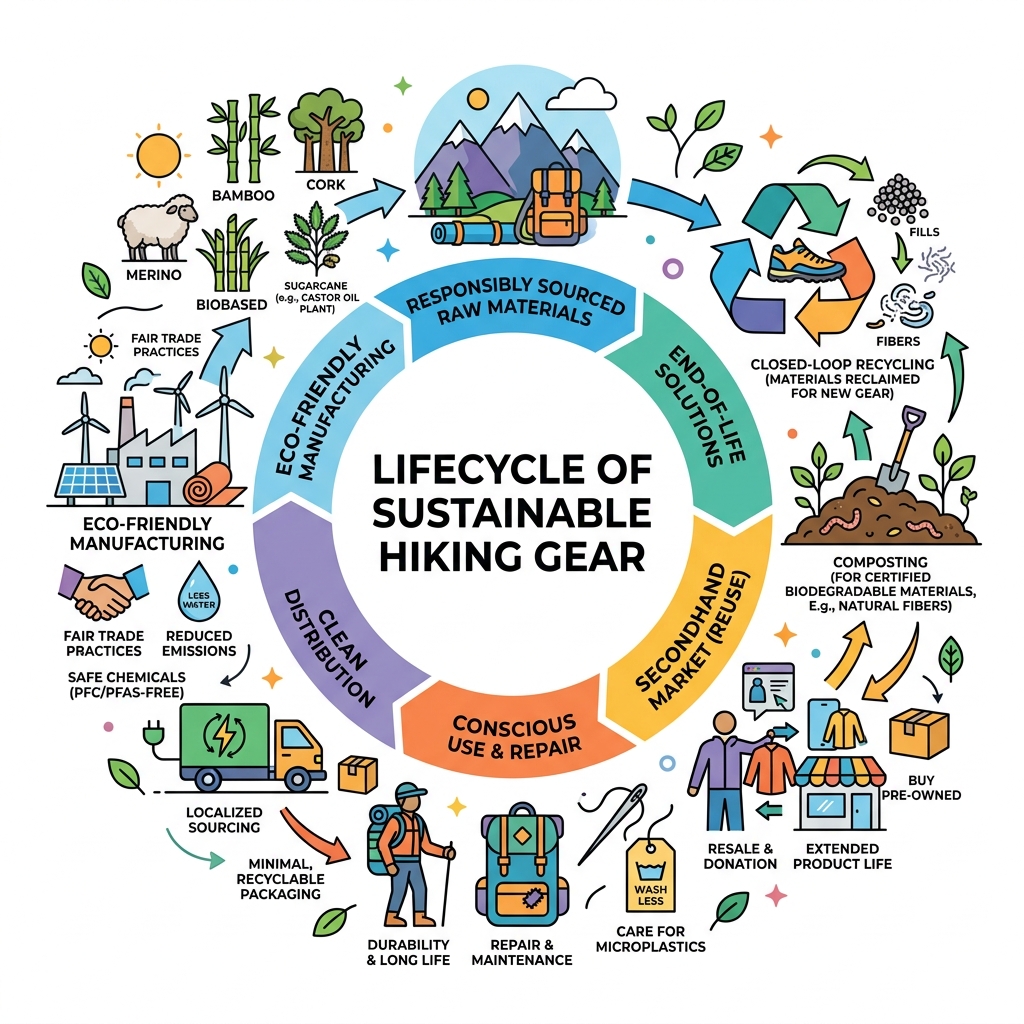
When we talk about sustainable hiking gear, we aren’t just talking about a “green” label. True sustainability involves the entire lifecycle of a product-from how the raw materials are extracted to how the item is disposed of years later.
To identify truly eco-friendly gear, we look for a combination of high-quality materials and ethical manufacturing. Key materials include:
- Recycled Fabrics: Look for 100% post-consumer recycled nylon or polyester. This diverts plastic from landfills and oceans.
- Biobased Fibers: These are derived from renewable biological sources like corn, sugarcane, or castor bean oil rather than petroleum.
- Organic and Responsible Wool: Natural fibers like merino and alpaca are biodegradable and naturally odor-resistant, meaning you wash them less (saving water).
- PFC-Free DWR: Traditional “Durable Water Repellent” coatings used “forever chemicals.” Sustainable gear uses PFC-free or PFAS-free alternatives.
Certifications provide the “receipts” for these claims. bluesign approved fabrics ensure the manufacturing process is safe for workers and the environment. B Corp certification means a company meets high standards of social and environmental performance. Fair Trade ensures the people sewing your jacket were paid a living wage. For a broader overview of what these standards mean in practice, the B Corporation certification model is a useful reference point.
Identifying Greenwashing Red Flags
As sustainability becomes a selling point, “greenwashing” (making false or misleading eco-claims) is on the rise. For a deeper dive into spotting these tactics, this guide from Good On You is a helpful resource. We recommend keeping an eye out for these red flags:
- Vague Claims: Terms like “eco-conscious” or “natural” without specific data are often meaningless.
- Hidden Trade-offs: A brand might highlight a recycled zipper while the rest of the jacket is virgin polyester.
- Lack of Transparency: If a brand won’t tell you where their factory is or what’s in their fabric, they probably have something to hide.
The Role of Natural and Biobased Materials
Nature often provides the best solutions for the trail. Alpaca fiber is a standout; it has a hollow structure that provides incredible temperature regulation and requires less water to process than traditional wool. Merino wool remains a gold standard for its antimicrobial properties.
We are also seeing a surge in “harvested” gear. Bamboo shafts for trekking poles are incredibly strong and renewable, while cork handles provide a natural, biodegradable grip that wicks sweat better than plastic. Even the foam in our sleeping pads is evolving-biobased foams derived from sugarcane now make up 60% or more of the material in leading sleeping pad designs. You can find more about these innovations in our guide to environmentally friendly hiking gear.
Top Categories for Sustainable Hiking Gear

Building a sustainable kit doesn’t happen overnight. We suggest focusing on these core categories where the environmental impact is highest.
Sustainable Footwear and Trail Runners
Footwear is traditionally one of the most “toxic” categories due to complex glues and synthetic rubbers. However, a growing number of brands are shifting the needle by incorporating recycled materials and vegan-friendly designs.
Look for trail runners that utilize merino-Tencel uppers and sugarcane-based foams. While they might not be the choice for a technical mountaineering expedition, they are a massive win for the average day hiker. Also look for shoes featuring LWG gold-rated leather, which ensures the tannery meets strict environmental protocols.
Essential Outerwear and Sustainable Hiking Gear Layers
Your layering system is where you can make the biggest difference.
- Base Layers: Ditch the synthetic polyester for 100% biobased alpaca or merino wool. Several dedicated sustainable brands now lead in this space.
- Insulation: Look for jackets that use 100% recycled fabric and insulation — these are now widely available from eco-focused manufacturers.
- Shells: Seek out jackets that use a recycled face fabric and a partially biobased membrane for waterproofing.
Using these materials helps with microplastic reduction, as natural fibers don’t shed permanent plastic particles into our waterways. Plus, many of these brands utilize renewable energy solutions for hikers in their production facilities.
Accessories and Tech: Completing Your Sustainable Hiking Gear Kit
Don’t overlook the small stuff.
- Hydration: Replace plastic bottles with 100% recycled aluminum bottles.
- Utensils: A bamboo spoon is 100% biobased and much lighter than stainless steel.
- Lighting: Look for headlamps with casings made from recycled plastic and natural fibers like hemp.
For those looking to power their trek cleanly, we’ve led the way best solar powered headlamps for hikers in 2026 to show how solar tech is integrating into sustainable kits.
Performance and Innovation: The Future of Eco-Friendly Gear
The “performance gap” between sustainable and traditional gear is closing rapidly. In 2025 and 2026, the focus has shifted toward the circular economy.
Durability vs. Environmental Impact
A common concern is whether sustainable hiking gear can take a beating. Generally, yes! Recycled nylon often has the same tensile strength as virgin nylon. However, there are some trade-offs to consider:
| Feature | Sustainable Material (e.g., Recycled/Bio) | Traditional Synthetic |
|---|---|---|
| Durability | High (especially recycled nylon) | High |
| Weight | Can be slightly heavier (bio-foams) | Optimized for ultralight |
| Waterproofing | Good (PFC-free) | Slightly better (but toxic) |
| Repairability | High (often brand-supported) | Low (designed to be replaced) |
Innovations in Recyclability
The biggest trend for 2026 is fully recyclable gear. Leading eco-conscious manufacturers have introduced packs and sleeping bags designed to be fully recyclable at the end of their life. Instead of a mix of ten different plastics that can’t be separated, these use mono-material constructions or specific take-back programs.
We are also seeing more “upcycled” products, like wallets and pouches made from camp tarp scraps. If you’re interested in how technology aids this, see our tips on using solar gadgets efficiently for hikers.
Maximizing Impact: Secondhand Gear and Trail Ethics
The most sustainable piece of gear is the one that already exists. Buying used is the ultimate way to reduce your carbon footprint.
The Power of Pre-Owned Equipment
Many leading brands now run their own resale platforms. This ensures the gear is inspected and often carries a limited version of their lifetime warranty.
- Benefits: You save money, keep gear out of landfills, and bypass the carbon-heavy manufacturing process.
- Where to look: Online marketplaces, gear swap events, and brand-specific resale programs.
Even when buying used, you can still integrate essential tech for hiking trips to stay safe and efficient.
Sustainable Trail Hygiene and Consumables
Sustainability doesn’t stop at your backpack. What you leave behind (or don’t) matters.
- Toiletries: Use toothpaste tabs in compostable packaging and bamboo toothbrushes.
- Waste: Pack out everything. Look for 100% recycled, biodegradable toilet paper options.
- Meals: Some brands now offer freeze-dried meals in omnidegradable bags that break down in any environment where microbes are present.
Sustainable Hiking Gear Starter Kits
Whether you’re a weekend warrior or a thru-hiker, here is how to build your kit.
The Beginner’s Eco-Friendly Kit
You don’t need the most expensive tech to be sustainable. Focus on:
- A used daypack (15-25L).
- Recycled wool socks from an eco-certified brand.
- A reusable stainless steel bottle.
- Mineral-based sunscreen (safe for water sources).
For more ideas, check out hiking tech gadgets for beginners.
The Advanced Backpacker’s Sustainable Setup
For those going deep into the backcountry, weight matters:
- Recyclable Backpack: Look for packs made with mono-material construction for end-of-life recyclability.
- Biobased Trekking Poles: Bamboo-shafted poles are strong, lightweight, and renewable.
- Recycled Sleeping System: Choose a tent and quilt made from recycled materials and responsibly sourced down.
- Navigation: gps devices for hikers and campers to ensure you stay on trail and protect fragile ecosystems.
Frequently Asked Questions
Is used gear more sustainable than new eco-friendly gear?
Yes, almost always. Manufacturing any new product—even a sustainable one—requires energy, water, and shipping. Buying used extends the life of a product already in circulation.
How do I verify a brand’s sustainability claims?
Look for third-party certifications like B Corp, Fair Trade, or bluesign®. Check if the brand publishes an annual impact report or provides detailed transparency regarding their manufacturing processes and material sourcing.
Do sustainable materials perform as well as traditional synthetics?
In most cases, yes. Recycled nylon and polyester are virtually identical in performance. Bio-based foams and PFC-free coatings have improved significantly and are now standard in high-end gear.
Conclusion
At Rico Compouco, we believe that the joy of hiking comes from a deep respect for the land. Choosing sustainable hiking gear is one of the most direct ways you can protect the trails you love. By prioritizing used gear, looking for recycled and biobased materials, and supporting brands with ethical certifications, you ensure that the wilderness remains wild for generations to come.
Ready to make the switch? Explore our full guide to environmentally friendly hiking gear and start your journey toward a smaller trail footprint today.
