
Are Solar Insect Killers Actually Worth It? Here’s What Reviews Say
Solar insect killer reviews tell a split story: buyers love the ambiance, but results on actual bug control vary a lot. According to integrated pest management principles, these devices work best as part of a multi-layered approach rather than a standalone solution.
Here’s a quick summary before you dig in:
| Factor | What Reviews Say |
|---|---|
| Aesthetics | Highly praised — flickering LED flame looks great |
| Mosquito control | Mixed — some users catch very few bugs |
| Battery life | Claims 6+ hours; real-world results vary widely |
| Build quality | Plastic parts can be fragile during installation |
| Best use case | Backyard ambiance + light bug control |
| Average online rating | 4.0/5 stars from 2,617 ratings |
| Consumer site rating | 3.7/5 stars from 287 ratings |
One reviewer summed it up perfectly after finding just two mosquitoes in the catch tray over four to five nights in a mosquito-heavy area. That said, 53% of verified buyers still gave it five stars — mostly for how it looks and works as a patio light.
The gap between what solar bug zappers promise and what they actually deliver is exactly what we’re here to unpack.

Understanding Key Features of Solar Insect Killer Models
When we dive into solar pest control, we see a fascinating blend of decorative lighting and high-voltage engineering. Most leading models, such as the popular PIC Solar Insect Killer Torch, are designed to solve two problems at once: lighting up your walkway and zapping unwanted guests.
The core technology usually revolves around a 600V zapping grid. While 600 volts sounds like a lot, it is actually considered a “low-noise” voltage in the industry. Unlike the loud, aggressive CRACK of old-school plug-in zappers, these solar versions offer a more subtle “pop.” To attract the bugs, these devices use a blue UV LED light. Insects are naturally drawn to this specific wavelength, and once they fly through the outer protective mesh, they hit the grid.
One of the most praised features in solar insect killer reviews is the LED flame effect. This isn’t just a static bulb; it’s a patented flickering light that mimics a real tiki torch. Because it’s solar-powered, it’s a sustainable alternative to traditional oil torches, reportedly replacing up to 90 refills of torch fuel over its lifespan.
To make them versatile, manufacturers often include:
- Adjustable stake heights: You can usually set them at 24, 36, or 48 inches to match your landscaping.
- Tabletop base options: If you don’t want to stick them in the mud, you can set them directly on your patio table.
- 1/2 acre coverage claims: Most brands market a wide coverage area, though real-world effectiveness often depends on placement and local bug density.
Real-World Performance: Solar Insect Killer Reviews and Effectiveness
We’ve looked at the data across various major retailers and home improvement stores, and the consensus is clear: these devices are better “ambiance makers” than “mosquito terminators.” Across major shopping platforms, the PIC torch holds a respectable 4.0 out of 5 stars from over 2,600 ratings. Meanwhile, on other consumer review sites, the rating sits at 3.7 stars.
The sheer volume of sales is staggering—over 10,000 units of certain models were purchased in a single week at leading home improvement centers. This tells us that people want this technology to work. However, user satisfaction trends show a divide. About 53% to 58% of users are thrilled, often citing the “beautiful flickering flame” and the fact that they don’t have to deal with messy oils or extension cords.
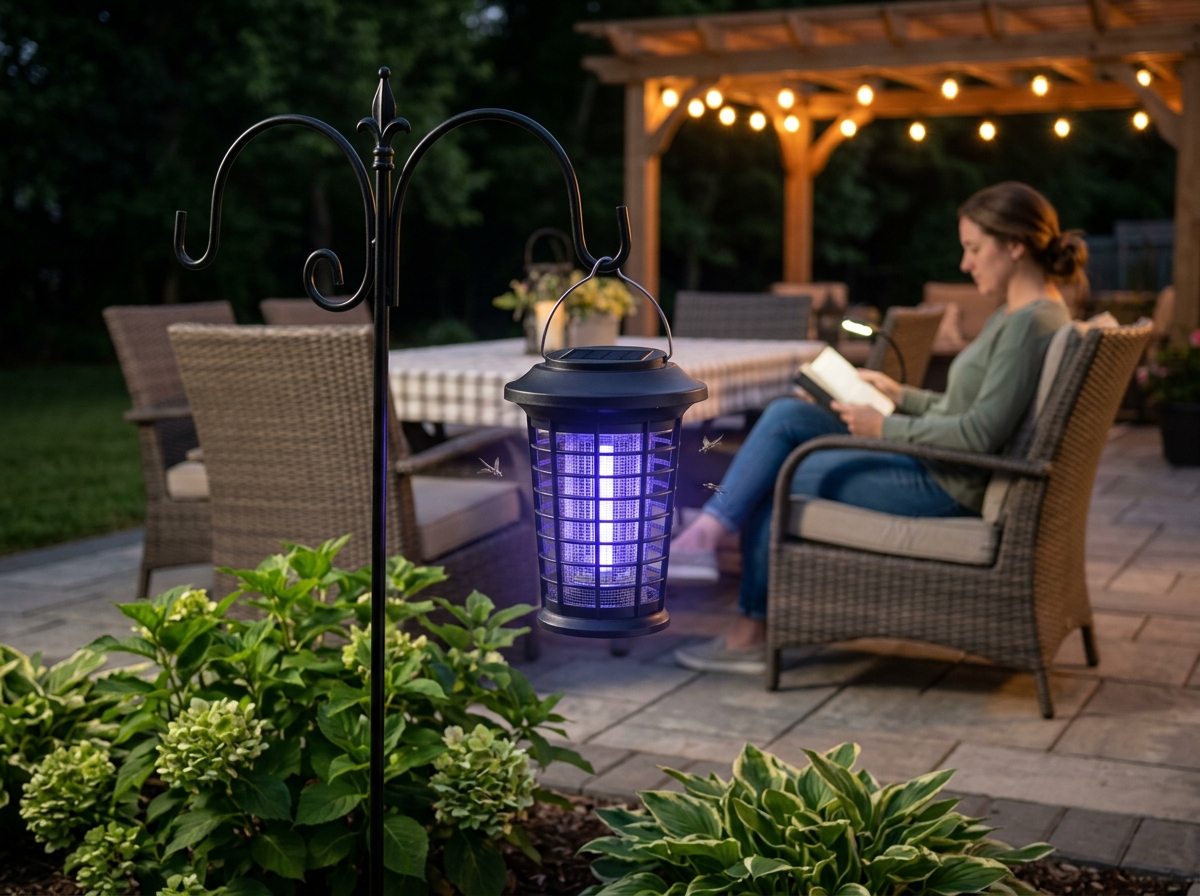
When it comes to the “kill rate,” the reviews get spicy. One user on a 10-acre property reported that even with 10 units running, mosquitoes still made it into the house. Another reviewer mentioned that after four nights in a mosquito-heavy area, the tray contained only two mosquitoes.
This brings up an important point in the Solar vs. Battery-Powered Outdoor Gadgets debate. Solar units are limited by the energy they can harvest during the day. While they claim a 6-hour runtime, some users report the light fading by 10:00 PM or lasting only a few hours after a month of use.
Are Solar Insect Killer Reviews Accurate About Mosquitoes?
If you are buying a solar zapper specifically for mosquitoes, you need to manage your expectations. Mosquitoes are primarily attracted to the CO2 we exhale and heat, not necessarily UV light. While the blue UV light attracts moths, beetles, and flies, it isn’t a “mosquito magnet” on its own.
To boost effectiveness, many experts and reviewers suggest using Octenol lures. These are small chemical scent packets you can attach to the zapper to mimic human breath. Without these lures, your catch-tray evidence might mostly consist of harmless moths rather than the biting pests you’re actually after. The “1/2 acre coverage” claim is often best interpreted as the distance at which the light is visible, rather than the area it can effectively “clear” of all insects.
Comparing Solar Insect Killer Reviews on Battery and Charging
Not all solar zappers are created equal. While the standard torch models use basic solar cells, newer high-end models (like the PhatroyYee or PestSniper) are raising the bar.
Some of these advanced units feature a 4000mAh battery capacity, which is significantly larger than the standard cells found in cheaper torches. This allows for a 12-hour runtime, essentially lasting the entire night. Another “pro tip” found in reviews involves the photocell sensors. These sensors tell the unit to turn on when it gets dark. However, if you have bright porch lights, the zapper might “think” it’s still daytime and refuse to turn on. Some clever DIYers solve this by covering the solar panel with a black coaster or piece of tape at night.
For those with shady yards, models that include solar panel extension cords (often up to 10 feet) are a lifesaver. This allows you to place the zapper in the shade of a porch while the panel sits in direct sunlight on the roof or a nearby fence.
Durability and Build Quality: What Users Report
Durability is where many solar insect killer reviews take a turn for the worse. The most common complaint involves the plastic stake fragility. Because the poles are often made of thin plastic, they can snap if you try to force them into hard, sun-baked soil.
| Feature | Standard Solar Torch | High-Performance Zapper |
|---|---|---|
| Voltage | 600V | 4,000V – 4,500V |
| Waterproof Rating | Weather-resistant | IPX4 / IPX5 |
| Battery Life | 6 Hours | 12 – 15 Hours |
| Charging | Solar Only | Solar + USB-C |
Weatherproofing is another mixed bag. While most are rated for “outdoor use,” an IPX5 rating is what you really want if you live in a rainy climate. This rating ensures the device can handle splashes and rain from any angle. Some users have reported that the internal switches on cheaper models aren’t fully sealed, leading to rust or failure after a single season.
If you’re looking for something more permanent, check out our guide on 2026’s Best Solar Lights for Garden and Camping to see which brands prioritize metal construction over plastic.
Setup and Maintenance for Optimal Results
To get the most out of your purchase and avoid becoming a “one-star reviewer,” follow these setup tips gleaned from years of user feedback:
- The Rubber Mallet Trick: Never push the plastic stakes into the ground by the top of the torch. Use a rubber mallet to drive the stake into the ground first, then attach the torch. If the ground is too hard, water the area first to soften the soil.
- Strategic Placement: Place the zappers about 10 to 20 feet away from where you actually sit. You want to lure the bugs away from your guest, not invite them to the dinner table.
- Clean the Grids: A clogged grid is an ineffective grid. Use a soft brush or compressed air to clear out “the victims” once a week. If the grid is covered in bug debris, the electrical arc won’t be able to jump to the next insect.
- Solar Panel Care: Wipe the solar panel with a damp cloth every few weeks. Dust, pollen, and bird droppings can significantly reduce charging efficiency.
For more detailed advice, see our full breakdown on How to Maintain Outdoor Solar Gadgets. Also, lithium-ion batteries hate the cold. For winter storage, it is best to bring your torches inside to a garage or basement to preserve the battery life for next summer.
Frequently Asked Questions about Solar Bug Zappers
How long does a solar insect killer last on a full charge?
Most standard models like the PIC torch claim 6+ hours, which usually covers the peak bug hours from dusk until midnight. However, high-capacity models with 4000mAh batteries can last up to 12 to 15 hours, effectively running until the sun comes up.
Are solar bug zappers safe for pets and children?
Yes, generally. Most units feature an outer protective housing with gaps small enough to let bugs in but too small for curious fingers or paws to reach the high-voltage grid. Additionally, because they are solar-powered, there are no tripping hazards from extension cords.
Can these zappers withstand heavy rain and storms?
Most are “weatherproof,” meaning they can handle a standard rain shower. However, unless they have a specific IPX4 or IPX5 rating, they may struggle with heavy thunderstorms or high-pressure sprinklers. It is always a good idea to check the seal on the charging port if your model has a USB backup.
Conclusion
At Rico Compouco, we believe in the power of sustainable outdoor tech, but we also believe in being honest about how it performs. Solar insect killer reviews make one thing very clear: if you are looking for a beautiful, eco-friendly way to add ambiance to your backyard while knocking out a few flies and moths, these torches are a fantastic investment. They are safer than open flames and much prettier than industrial zappers.
However, if you are facing a “mosquito apocalypse,” you should view these as just one part of a larger strategy. Pair them with Octenol lures, clear out standing water in your yard, and perhaps keep a bottle of repellent handy for those particularly humid nights.
Ready to upgrade your outdoor space with more green energy solutions? Explore more in our Solar Gadgets Category to find the latest in sustainable backyard technology.
