
Why Every Rancher Is Switching to a Ranch Solar GPS Locator
A ranch solar gps locator is a self-charging GPS tracking device that attaches to your livestock — usually as an ear tag or collar — and sends real-time location data without needing cellular towers or manual recharging.
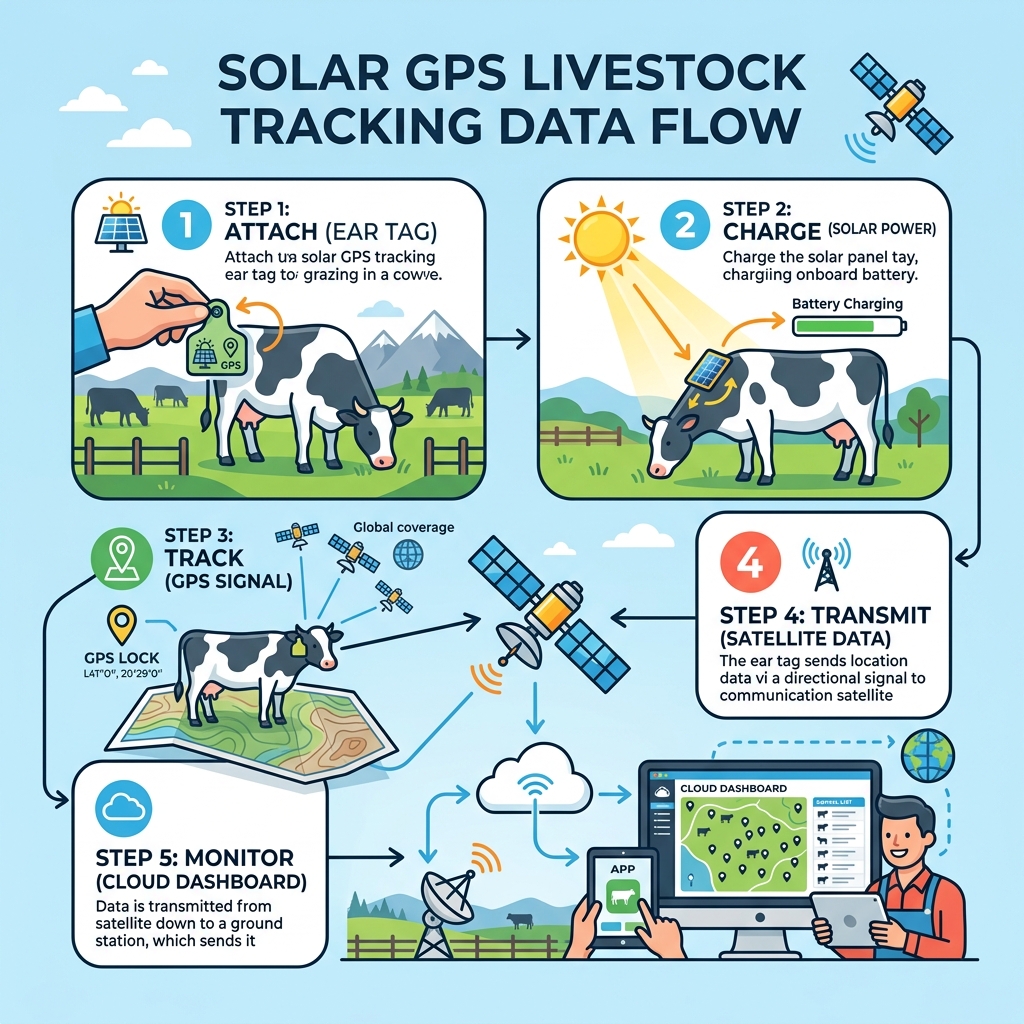
Quick answer: Here’s how a ranch solar GPS locator works:
| Step | What Happens |
|---|---|
| 1. Attach | Device clips onto cattle ear or collar |
| 2. Charge | Solar panel charges onboard battery via sunlight |
| 3. Track | GPS locks onto animal’s position |
| 4. Transmit | Location sent via satellite or cellular network |
| 5. Monitor | You view herd on app or web dashboard |
Picture this: you wake up, open an app, and instantly see exactly where every animal on your ranch is standing. No driving. No searching. No guessing.
That’s not a luxury anymore — it’s becoming the new normal for ranchers who are done wasting hours tracking down strayed or stolen cattle.
Livestock theft alone costs U.S. ranchers over $1 billion every year. And that doesn’t count the time and fuel spent searching for animals that simply wandered past a fence line.
For ranchers who already know the frustration of dead batteries in remote gear, solar-powered trackers solve two problems at once: no cellular dependency and no charging stops. These devices run indefinitely on sunlight, making them a natural fit for off-grid grazing land where neither power outlets nor cell towers exist.
The global market for solar-powered GPS trackers in livestock management is projected to exceed $2.8 billion by 2030 — growing at 14.2% per year. Over 65% of mid-to-large farms already use real-time tracking systems. The shift is well underway.
Below, we break down exactly how these devices work, which products lead the market, and how to pick the right one for your herd size and terrain.
What is a Solar GPS Locator and How Does It Work?
At its core, a ranch solar gps locator is a marvel of miniaturized engineering. We often get asked how something the size of a matchbox can track a 1,200-pound steer across thousands of acres of rugged terrain. The secret lies in three main components: the positioning engine, the communication radio, and the power management system.
Most modern trackers use multi-constellation GNSS (Global Navigation Satellite System) receivers. This means they aren’t just looking for U.S. GPS satellites; they are also talking to GLONASS (Russia), Galileo (Europe), and sometimes Beidou (China). By “listening” to dozens of satellites at once, the device can calculate its position even in deep canyons or under moderate tree cover.
Once the device knows where it is, it needs to tell you. In remote ranching, this usually happens via LEO (Low Earth Orbit) satellites. Unlike cellular trackers that need a nearby tower, satellite-based trackers send data directly to space.
The “magic” that keeps it running is the combination of high-efficiency photovoltaic cells (solar panels) and a specialized lithium polymer battery. These batteries are designed to handle “micro-charging”—the process of taking small bits of energy from the sun throughout the day—while surviving the extreme temperature swings of the open range.
Understanding Positioning Technologies
When we talk about accuracy in a ranch solar gps locator, we usually refer to “2.0m CEP.” This stands for Circular Error Probable, meaning that 50% of the time, the location shown on your map is within two meters of the animal’s actual physical spot. For cattle ranching, this is more than enough to tell which side of a fence an animal is on or which water hole they are frequenting.
The frequency of these updates is what we call the “reporting interval.” Some devices are set to update every six hours to save power, while others can be configured for real-time updates as fast as every ten seconds. However, we’ve found that for most “smart ranching” applications, an update every 1 to 4 hours provides the perfect balance between data resolution and battery longevity.
Key Benefits of Solar-Powered Tracking for Modern Ranches
We’ve seen how high-tech tracking transforms a ranch from a reactive operation into a proactive one. The most immediate benefit is anti-theft protection. With livestock theft exceeding $1 billion annually in the U.S., a tracker acts as both a deterrent and a recovery tool. If an animal moves outside a designated “geofence” at 2:00 AM, you get an instant alert on your phone.
Labor efficiency is the second major win. Think about the hundreds of hours spent every year just “checking the herd.” By using a ranch solar gps locator, you can verify that the herd is where they should be before you even put your boots on. This reduces fuel costs, vehicle wear and tear, and human labor.
Furthermore, these devices enable advanced management techniques like virtual fencing. Instead of spending thousands on physical barbed wire, some systems use GPS collars that provide auditory or mild stimulus cues to keep cattle within a digitally mapped boundary. This allows for precise rotational grazing, which improves soil health and prevents overgrazing.
For those of us who also spend time in the wilderness beyond the ranch, we know that outdoor tech to improve adventure safety is a growing field, and many of the same rugged standards used for hikers are now being applied to our four-legged assets.
Improving Herd Health and Safety
Beyond just “where is my cow?”, modern trackers monitor “how is my cow?” By using onboard accelerometers, a ranch solar gps locator can detect movement patterns. If an animal hasn’t moved in six hours, or if it’s moving with unusual speed (indicating it’s being chased by predators or humans), the system flags it as an anomaly.
Some high-end models even offer:
- Estrus Detection: Identifying when a cow is in heat based on increased activity levels.
- Heat Stress Monitoring: Tracking ambient temperature near the animal to prevent losses during extreme weather.
- Illness Alerts: Detecting lethargy early, allowing you to treat a sick animal before the condition becomes critical.
Choosing the Right Ranch Solar GPS Locator: Satellite vs. Cellular
Choosing between satellite and cellular connectivity is the most important decision you’ll make. It’s a classic “right tool for the job” scenario.
Cellular GPS Trackers (4G LTE/GSM): These are generally more affordable upfront and offer faster update intervals. However, they are entirely dependent on cell towers. If your ranch has “dead zones” (which most do), the tracker becomes a paperweight the moment the animal walks into a valley. They are best for smaller farms or ranches located near major infrastructure.
Satellite GPS Trackers (LEO Networks): These are the gold standard for remote ranching. They work anywhere on Earth—from the Australian Outback to the Canadian Rockies. Because they communicate with satellites overhead, they don’t care about ground-level infrastructure. While the hardware and service plans can be more expensive, the reliability is unmatched for off-grid operations.
| Feature | Cellular Tracker | Satellite Tracker |
|---|---|---|
| Coverage | Limited to cell towers | Global (100% coverage) |
| Update Speed | Very fast (seconds) | Moderate (minutes/hours) |
| Infrastructure | None needed | None needed |
| Reliability | Fails in remote valleys | Works in remote valleys |
| Best For | Near-town farms | Remote, off-grid ranches |
Connectivity for Remote Grazing Lands
For those of us managing massive acreages, we often look at hybrid solutions. Some systems use a “Tower” approach where you install one gateway at your farmhouse that has internet. This tower can then “talk” to collars up to 15km away using LoRaWAN technology. However, for truly vast or multi-location operations, infrastructure-free satellite solutions are the only way to ensure you never lose a signal.
Essential Features: Durability, Battery, and Mounting Options
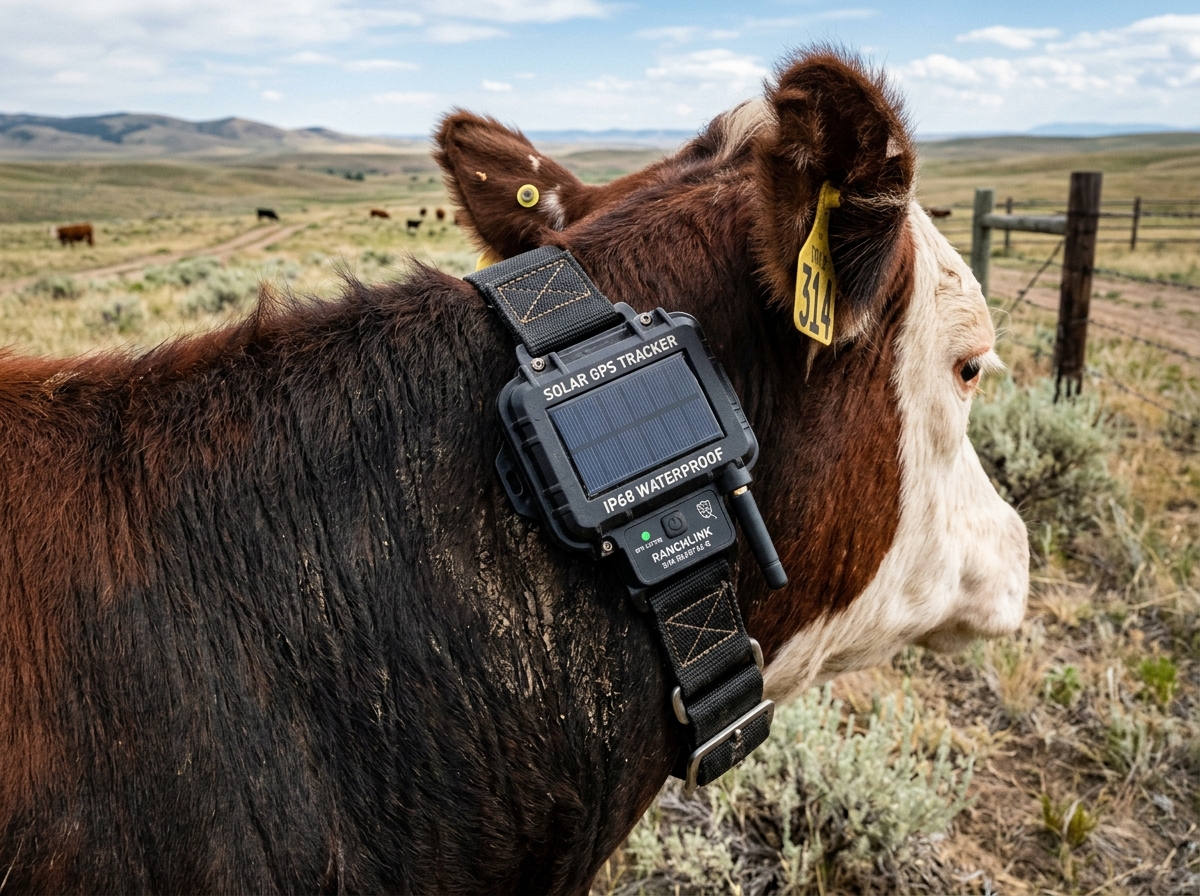
A ranch solar gps locator has to be tough. We aren’t talking “office tough”—we’re talking “kicked by a horse, dragged through a thorn bush, and submerged in a muddy pond” tough.
Top Features to Look for in a Ranch Solar GPS Locator
When we evaluate these devices, we look for several non-negotiables:
- IP67 or IP68 Rating: This ensures the device is completely dustproof and can handle being submerged in water. An IP68 rating is preferred for cattle that might spend time in deep watering holes.
- UV Resistance: The plastic casing must be high-grade to prevent it from becoming brittle and cracking after years of direct sun exposure.
- Operating Temperature: Look for a range of at least -30°C to +50°C (-22°F to 122°F) to handle both winter blizzards and summer heatwaves.
- Battery Capacity: While solar keeps it charged, you want a large enough internal battery (like 5,000mAh to 10,000mAh) to bridge the gap during weeks of heavy cloud cover or winter months with short days.
If you ever run into issues with your gear, we recommend checking out our guide on troubleshooting solar powered devices for quick fixes in the field.
Installation and Maintenance of Your Ranch Solar GPS Locator
The two primary mounting options are ear tags and collars.
- Ear Tags: These are incredibly lightweight (some as low as 22 grams). They are applied using a standard or “power” tagger. The key is to ensure “free air space” between the tag and the ear to prevent infection and allow for proper healing.
- Collars: These are better for larger devices with bigger batteries or virtual fencing features. They are more durable but can be more labor-intensive to fit on a large herd.
Maintenance is surprisingly minimal. Because there are no ports to plug in, there are fewer points of failure. We suggest a quick inspection every six months to ensure the solar panel is clean. A layer of dried mud or heavy dust can reduce charging efficiency by 20-30%. For those looking to expand their solar setup beyond livestock, you might also be interested in the top solar chargers for outdoor use 2026.
Cost Analysis and ROI for Livestock Tracking
Let’s talk numbers, because we know that at the end of the day, the ranch has to be profitable. The cost of a ranch solar gps locator varies wildly based on the tech.
- Upfront Costs: You can find basic wholesale units for as low as $17-$80, while high-end satellite units with 3 years of service included can start at $389.
- Subscription Fees: Most cellular or “Tower” based systems charge between $10 and $20 per month per animal. Some satellite systems offer a “Buy it All” model where you pay a higher upfront fee but only $20 per year for software access.
- Bulk Discounts: If you are collaring a herd of 1,000+, you can often negotiate up to 40% off the per-unit price.
The Return on Investment (ROI): If a single high-value bull is recovered thanks to a tracker, the system has often paid for itself. When you factor in the 60-80% reduction in “search time” labor, most ranchers see a total return on investment within 12 to 18 months. Additionally, many agricultural grants now cover up to 80% of the upfront costs for this technology, as it promotes sustainable grazing and better land management.
Frequently Asked Questions about Ranch Solar GPS Locators
How accurate is the GPS positioning for cattle?
Most ranch-grade locators use multi-constellation GNSS, providing accuracy within 2 to 5 meters in open areas. This is precise enough to identify which pasture an animal is in or if it has moved into a “no-graze” zone. Accuracy can dip slightly in very dense timber or at the bottom of steep, narrow ravines, but it remains highly reliable for general herd management.
Do solar trackers work in cloudy weather or winter?
Yes! Modern solar panels are surprisingly efficient. Even on a completely overcast day, they can generate 10-25% of their normal power output. Most devices are designed with enough battery “buffer” to last 2 to 4 weeks without any direct sunlight. For example, a 150mAh satellite tag can last about 12 days on a single charge if it’s reporting every 6 hours, giving it plenty of time to find a sunny day to top off.
Are there monthly subscription fees for livestock trackers?
Usually, yes. Just like a cell phone, these devices use a network to send data.
- Cellular plans are typically month-to-month.
- Satellite plans are often bundled into 1-year or 3-year service packages.
- Hybrid systems might charge a lower fee for the software if you own the “Tower” infrastructure. Always check the “Total Cost of Ownership” (TCO) over three years rather than just the sticker price.
Conclusion
At Rico Compouco, we believe that technology should serve the land, not complicate it. Transitioning to a ranch solar gps locator system is one of the smartest moves a modern rancher can make. It protects your investment, saves your sanity during calving season, and provides the data needed to manage your land sustainably for the next generation.
As we move through 2025, the trend is clear: the “connected ranch” is no longer a futuristic concept—it’s a practical reality. Whether you choose a lightweight ear tag for your sheep or a heavy-duty satellite collar for your prize bulls, the peace of mind that comes from knowing exactly where your livestock are is priceless.
Ready to gear up? If you’re planning your next trip out to the remote corners of your property, don’t forget to explore GPS devices for hikers and campers to keep yourself just as safe as your herd.
