
The Best Foldable Solar Camping Lanterns at a Glance
A foldable solar camping lantern is one of the smartest upgrades you can make to your outdoor kit — no more hunting for batteries mid-trip, no fuel to haul, and no emissions in your tent.
Here are the top options worth knowing about:
| Lantern | Max Brightness | Battery | Weight | Best For |
|---|---|---|---|---|
| Goal Zero Lighthouse 600 | 600 lumens | 5200mAh | 1 lb 1.6 oz | Car camping, base camp |
| FLEXTAIL EVO Lantern | 500 lumens | 12000mAh | 25.4 oz | Extended off-grid trips |
| LuminAID Max | 200 lumens | 2000mAh | 12.5 oz | Backpacking |
| LED Solar Foldable 2400LM | 2400 lumens | 5000mAh | 0.7 lbs | Group camping |
| SolarPuff Warm Light | 90 lumens | 1200mAh | 2.6 oz | Ultralight and emergencies |
| LUM LIGHT Solar Lantern | Low output | 800mAh | 5.12 oz | Pocket-sized backup |
If you’ve ever been deep in the woods with dead batteries and a useless flashlight, you already know why solar matters.
Traditional battery-powered lanterns are reliable until they’re not — and gas lanterns bring weight, fuel costs, and fire risk. Foldable solar lanterns solve all three problems. They charge during the day while you hike, fold down to near-nothing in your pack, and many even double as phone chargers when you’re miles from the nearest outlet.
The technology has come a long way. Today’s models range from featherlight inflatable cubes to rugged telescoping tripod lights with 12,000mAh batteries and IPX7 waterproofing. Whether you’re a weekend car camper or a serious backcountry hiker, there’s a solar lantern built for exactly how you camp.
This guide breaks down the best-rated models, what specs actually matter, and how to pick the right one for your next trip.
Why Switch to a Foldable Solar Camping Lantern?
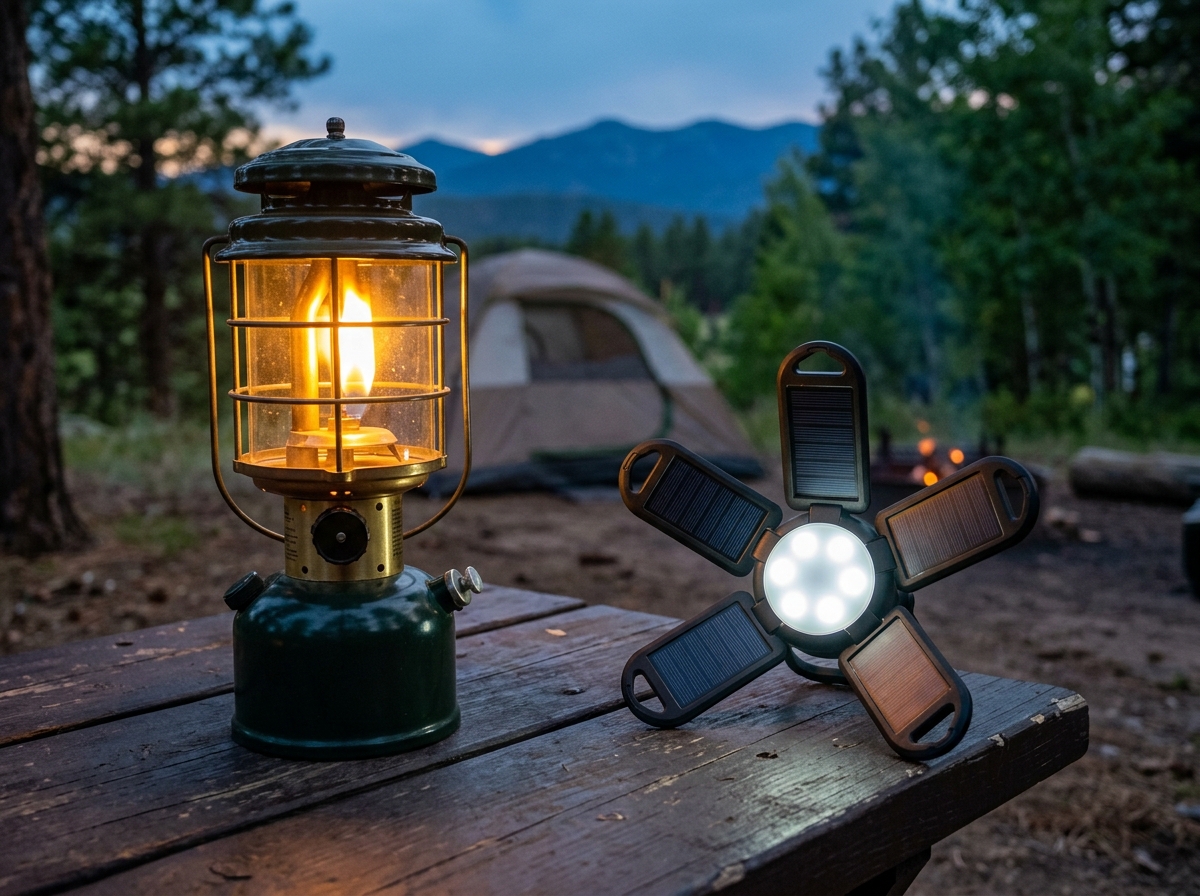
Making the switch to solar isn’t just about being “green” – though that is a fantastic bonus. It is about self-sufficiency. When we are miles away from the nearest power grid, the sun is the only reliable energy source we have. A foldable solar camping lantern eliminates the anxiety of wondering if your spare AA batteries are actually charged or if you have enough propane left for the final night of the trip.
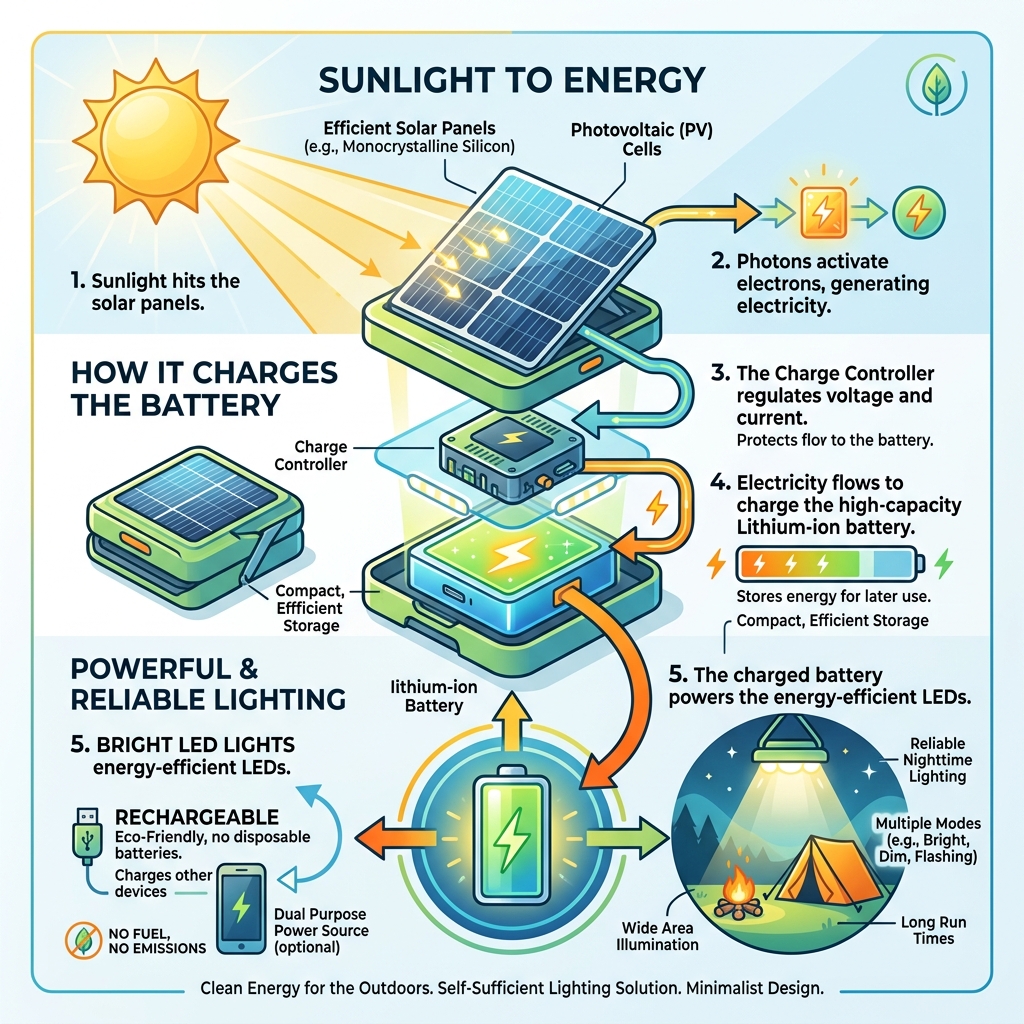
Modern solar lanterns use high-efficiency monocrystalline or polycrystalline silicon panels that can trickle-charge internal lithium-ion batteries even on slightly overcast days. Unlike gas lanterns, which can be noisy, emit heat, and pose a fire risk inside a tent, solar lanterns are cool to the touch and completely silent. They provide a safe, eco-friendly solar lighting solution that you can leave on as a nightlight for the kids without a second thought. If you want a quick technical overview of how solar energy works, it helps explain why these lanterns are so practical for off-grid travel.
Safety is another major factor. We have all heard stories of fuel leaks in a backpack or the delicate glass mantles of gas lanterns shattering on a bumpy trail. Solar lanterns are built with durable materials like ABS plastic, silicone, or even TPU-coated sailcloth, making them virtually indestructible in normal camping scenarios.
| Feature | Solar Lantern | Battery-Powered (Alkaline) | Gas/Propane Lantern |
|---|---|---|---|
| Fuel Source | Sunlight / USB | Disposable Batteries | Propane / Isopro / White Gas |
| Weight | Very Light (1.8oz – 25oz) | Moderate (Batteries add weight) | Heavy |
| Safety | High (No heat/fumes) | High | Low (Fire risk/CO2) |
| Ongoing Cost | $0 | High (Replacement batteries) | Moderate (Fuel canisters) |
| Best Use | Off-grid, backpacking | Short trips | Extreme cold |
Benefits for Backpackers and Hikers
For those of us who carry our entire lives on our backs, every ounce counts. This is where the “foldable” part of the foldable solar camping lantern really shines. Many models, like the origami-inspired designs, collapse to less than an inch thick. You can easily slide them into the hydration sleeve of your pack or clip them to the outside with a carabiner to charge while you walk.
We often recommend checking out solar lantern reviews for hiking trips 2026 to see how these units hold up over long distances. The lightweight design does not just save your shoulders; it allows for more creative lighting. You can hang a 2-ounce lantern from a thin gear loft in a tent where a heavy battery lantern would cause the fabric to sag. Plus, the durability of these units means they can survive being stuffed into a crowded pack day after day.
Top-Rated Foldable Solar Camping Lantern Models
When we look at the current market, the variety is staggering. You have everything from “pocket rockets” that provide enough light to read by, to “stadium lights” that can illuminate an entire cook station. The key is matching the lumen output and battery capacity to your specific needs. If you’re looking for a general overview of the market, our guide on the best solar lights for illuminating your camping experience is a great place to start.
High-Performance Foldable Solar Camping Lantern Options
If you aren’t counting every gram and want a light that performs like a piece of professional equipment, these high-performance models are the way to go.
- Goal Zero Lighthouse 600: This is a powerhouse in the camping world. It delivers a staggering 600 lumens of multidirectional light. What makes it special is its versatility; you can light up 360 degrees or just half to save power. It features a 5200mAh battery that can be charged via the built-in solar panel (though we recommend a larger external panel for speed), USB, or even a built-in hand crank for emergencies. It weighs just over a pound, making it perfect for car camping.
- FLEXTAIL EVO Lantern: This is a unique 2-in-1 telescopic design. It’s a bit heavier at 25.4 ounces, but it packs a massive 12000mAh battery. The light head is rotatable (720 degrees!), and it features a built-in tripod. It’s essentially a portable streetlamp for your campsite. It’s rated IPX7 waterproof, meaning it can handle a serious downpour or even a quick dip in the lake.
- LED Solar Foldable 2400LM: For those who need maximum brightness, this model offers up to 2400 lumens. It’s surprisingly lightweight at 0.7 lbs and features a 5000mAh battery. It’s designed to open up to 220 degrees, allowing it to light up two large areas simultaneously. It even includes a magnetic module so you can stick it to the side of your van or the hood of your car for repairs.
Ultra-Lightweight and Origami Designs
For the minimalists and emergency preppers, these designs focus on weight and packability.
- LuminAID Max Quick Inflate: This is a classic for a reason. It’s an inflatable lantern that provides 200 lumens and weighs only 12.5 ounces. When deflated, it’s flat and easy to pack. It offers about 50 hours of light on its lowest setting, which is plenty for a multi-day trip. It’s often cited as a top-tier option because it’s so reliable and easy to use.
- Solight SolarPuff: This is a marvel of “origami” engineering. Made from PET sailcloth, it pops open into a cube without needing to be blown up by mouth. It weighs a mere 2.6 ounces and provides 90 lumens of warm, cozy light. It’s the perfect tent light for reading or creating a relaxing ambiance.
- Twilight Petite: Even smaller than the SolarPuff, the Twilight weighs only 1.8 ounces. It’s IP68 waterproof and features a red SOS mode for emergencies. It’s small enough to fit in a pocket but bright enough to guide you to the latrine at 2 AM.
- LUM LIGHT Solar Lantern: This 2-in-1 device acts as both a lantern and a flashlight. It’s pocket-sized, weighing 5.12 ounces, and folds down to about 3 inches. While its 800mAh battery is smaller, it’s an excellent backup for short trips or power outages.
Key Features to Consider When Buying a Foldable Solar Camping Lantern
Choosing the right foldable solar camping lantern isn’t just about picking the brightest one. You need to consider how you’ll actually use it. A 2400-lumen light is great for a group dinner, but it’s blindingly bright if you just want to read in your sleeping bag. We recommend looking at 2026s best solar lights for garden and camping to see how different brightness levels translate to real-world use.
Durability and Material Quality
Camping is tough on gear. Your lantern will get dropped, rained on, and stuffed into tight spaces. Look for materials like:
- Aviation Aluminum: Found in high-end models like the FLEXTAIL, this provides excellent heat dissipation and structural strength.
- ABS Plastic and PC: These are standard for a reason—they are impact-resistant and lightweight.
- Recyclable PET/EVA: Used in origami designs, these materials are PVC-free, non-toxic, and surprisingly tough. Some, like the Twilight Petite, can even maintain their shape if punctured.
Check the IP (Ingress Protection) rating. An IPX4 rating means it can handle splashes, while IPX7 or IPX8 means it can be fully submerged. If you do a lot of water-based camping (kayaking or canoeing), an IPX7 rating is a must.
Battery Life and Charging Efficiency
The battery capacity (measured in mAh) tells you how much “juice” the lantern can hold, but the runtime tells you how long that juice lasts at a certain brightness. For example, a lantern might last 7 hours at 500 lumens but over 60 hours at 40 lumens.
Solar charging efficiency is also vital. Most small lanterns take 8-10 hours of direct sunlight to reach a full charge. Look for models that also offer USB-C charging for a quick boost before you leave home. Many modern lanterns now include a power bank functionality, allowing you to use the lantern’s battery to top off your smartphone in an emergency.
If you are new to this gear, we have a step-by-step guide for solar lantern setup that explains how to prime your battery and position the panels for the best results.
Maximizing Performance in Real-World Scenarios
To get the most out of your foldable solar camping lantern, you need to think like a solar engineer. The biggest mistake we see is people leaving their lanterns in the shade or behind a window. Glass actually blocks a significant portion of the UV rays needed to charge the panels, increasing charge times by up to 30%.
Always aim the solar panel directly at the sun. If you’re hiking, clip the lantern to the top of your pack where it gets the most exposure. If you’re at camp, move the lantern throughout the day to follow the sun. It sounds like a chore, but it becomes second nature after a few trips.
How to Maintain Your Foldable Solar Camping Lantern
Maintenance is simple but essential:
- Clean the Panels: Dust, mud, and finger oils can reduce charging efficiency. Wipe the panels with a damp cloth regularly.
- Avoid Deep Discharge: Lithium-ion batteries don’t like being completely drained. Try to recharge your lantern before it hits 0%. Most high-quality models have built-in voltage protection to prevent damage, but it’s still a good habit.
- Storage: If you aren’t using the lantern for a few months, charge it to about 50-70% and store it in a cool, dry place. Every few months, take it out and give it a quick “top-up” charge to keep the battery healthy.
- Check Seals: For waterproof models, ensure the USB charging port cover is tightly sealed before taking it out into the rain.
Frequently Asked Questions about Solar Lanterns
How long does it take to charge a solar lantern in the sun?
For most standard foldable solar camping lantern models, expect 8 to 12 hours of direct, bright sunlight for a full charge. If it’s a cloudy day or you are charging through a window, this can double. This is why we always recommend lanterns that have a USB charging backup—you can charge it at home in 2 hours and use the sun to maintain the charge while in the field.
Can these lanterns charge my phone during an emergency?
Many can! Look for models with a “USB Output” or “Power Bank” feature. Units like the Goal Zero Lighthouse 600 or the FLEXTAIL EVO have large enough batteries (5000mAh+) to give a modern smartphone a full charge. Smaller origami lights (like those with 800mAh-1200mAh batteries) are better suited for “emergency boosts”—enough to make a quick call or check a map—rather than a full charge.
Are foldable solar lanterns fully waterproof?
It depends on the model. Most carry an IPX4 rating, which means they are fine in a light rain shower. However, premium models like the Solight SolarPuff or the LuminAID Max are often rated IP67 or IP68, meaning they are dustproof and can be submerged in water. Always check the specific rating if you plan on being near water. For more on water-resistant tech, see our eco-friendly solar lighting solutions 2 guide.
Conclusion
At Rico Compouco, we believe that the best gear is the gear that makes your adventures easier and more sustainable. A foldable solar camping lantern is a perfect example of that philosophy. It’s a small investment that pays off in every campsite, from the weight you save in your pack to the peace of mind you get knowing you have an “infinite” power source.
Whether you choose the high-output power of a Goal Zero or the featherlight convenience of a SolarPuff, you’re choosing a more reliable way to light up the night. Don’t let your next trip be dictated by how many batteries you can carry.
Ready to upgrade your kit? Explore more innovative solar gadgets and find the perfect tools for your next off-grid adventure. Happy camping!
