
Why Your Next Bulb Should Be a Low Energy LED Light
Low energy LED lights are the most efficient lighting option available for your home today. Here’s a quick summary of what you need to know:
- Energy savings: LEDs use at least 75% less energy than traditional incandescent bulbs
- Lifespan: A quality LED lasts up to 25,000 hours — roughly 22+ years of typical use
- Cost: Simple bulbs start as low as $2.49 each, with multi-packs offering even better value
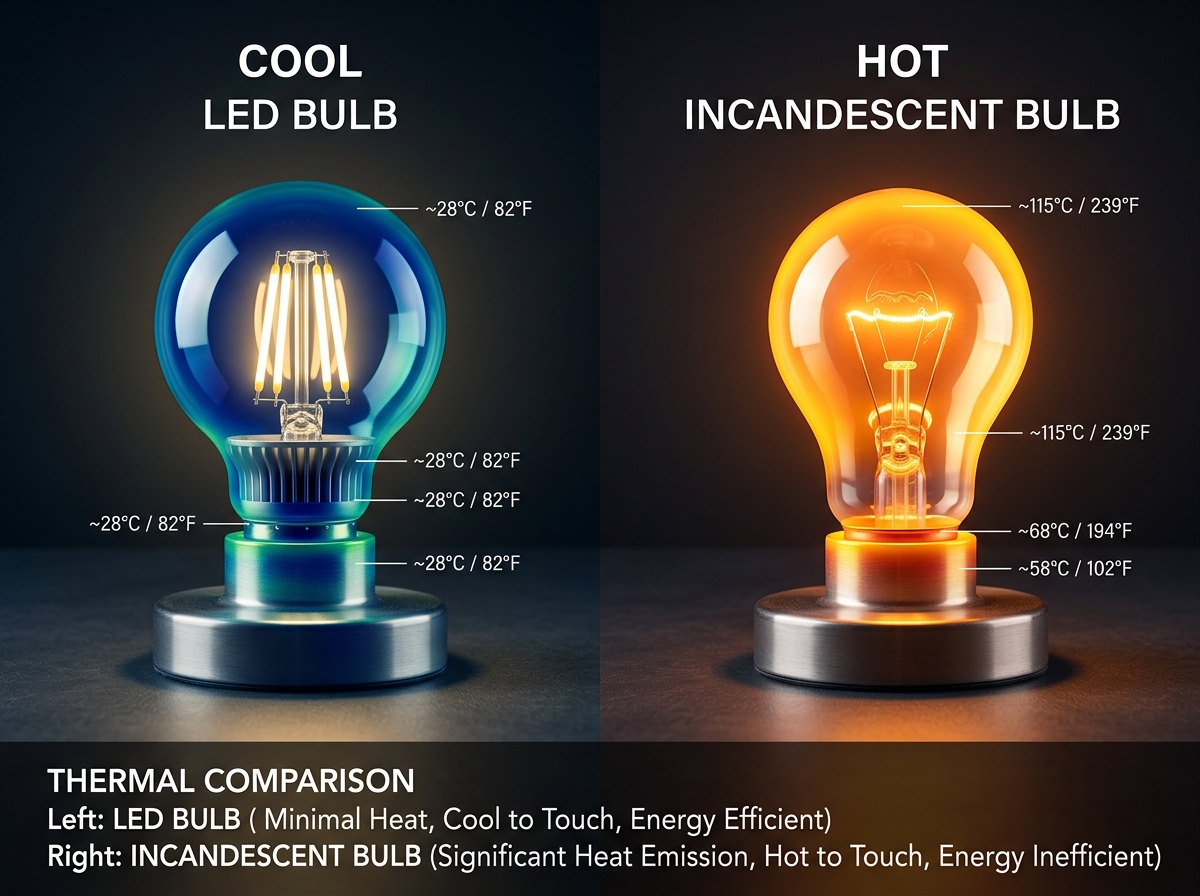
- Heat output: LEDs convert 80–90% of energy into light; incandescents waste 90% as heat
- Eco-friendly: No mercury, lower carbon footprint, and compatible with most existing fixtures
Most people still have incandescent or CFL bulbs in at least a few fixtures. That’s money quietly leaking out every month.
The good news? Switching is simple. LEDs fit the same sockets, turn on instantly, and last years longer than older bulb types. Whether you’re lighting a living room, a backyard, or an off-grid campsite, there’s an LED built for the job.
This guide breaks down the brightest and most efficient options — so you can make a smart choice for your home and your energy bill.

Why Switch to Low Energy LED Lights?
Making the switch to low energy LED lights isn’t just a home improvement trend; it is a fundamental shift toward smarter, more sustainable living. If you have ever touched a traditional incandescent bulb after it has been on for an hour, you know exactly why they are inefficient. They are essentially small heaters that happen to produce a little bit of light as a byproduct.
Massive Energy Reduction
The most immediate impact of switching to low energy LED lights is the dramatic reduction in power consumption. On average, residential LEDs use at least 75% less energy than incandescent lighting. To put that in perspective, a 9-watt LED can easily replace a 60-watt incandescent bulb while providing the same level of brightness. Some ultra-efficient models go even further, using 40% less energy than even standard LED bulbs. If you want a neutral, authoritative overview of the technology behind LED lighting, the U.S. Department of Energy LED Lighting page is a helpful resource.
Unmatched Lifespan
How many times have you had to drag a ladder out of the garage just to change a blown bulb in a high ceiling? With LEDs, those days are largely over. A high-quality LED bulb is designed to last up to 25 times longer than an incandescent predecessor. While an old-school bulb might give you 1,000 hours of light, a modern LED can shine for 15,000 to 25,000 hours. If you use a bulb for three hours a day, that is over 22 years of service!
Environmental and Financial Impact
From an eco-friendly perspective, low energy LED lights are a win-win. They contain no toxic mercury-a common concern with older fluorescent (CFL) bulbs-and their efficiency directly reduces your household’s carbon footprint. By 2035, the widespread adoption of LED technology in the U.S. alone is projected to save 569 TWh annually, which is the equivalent output of over 90 large power plants.
Financially, the “payback period” for an LED is incredibly short. While the initial cost might be slightly higher than a cheap incandescent, the energy savings usually cover the cost of the bulb within the first year. With multi-packs of 60W-equivalent bulbs available for around $19.95 (roughly $2.49 per bulb), the barrier to entry has never been lower.
Key Features to Consider for Your Home
When shopping for low energy LED lights, it is easy to get overwhelmed by the rows of boxes at the hardware store. Understanding a few technical specifications will ensure you get the right light for the right room.
Common Shapes and Bases
- A19 Shape: This is the “classic” light bulb shape we all know. It is perfect for floor lamps, table lamps, and ceiling fixtures.
- BR30 and BR40: These are “bulged reflectors.” They are wider and designed to direct light downward, making them the standard choice for recessed “can” lights or track lighting.
- E26 Base: The most common screw-in base found in North American homes.
- GU24 Base: A “twist-and-lock” base often found in energy-efficient fixtures. Using a 14W (100W Replacement) Daylight (5000K) GU24 Base A19 Dimmable General Purpose LED is a great way to upgrade these specific fixtures to modern standards.
Color Rendering Index (CRI)
If you’ve ever put on a navy blue sock and a black sock thinking they matched, you’ve experienced low CRI lighting. CRI measures how accurately a light source reveals the true colors of objects. For spaces like kitchens, bathrooms, or art studios, look for a CRI of 90+. High-CRI bulbs, such as a 20W (150W Replacement) Daylight (5000K) E26 Base BR40 Dimmable Enhance LED Bulb, make colors appear more vibrant and realistic.
Understanding Brightness and Color Temperature in Low Energy LED Lights
We used to buy bulbs based on “watts,” but watts only measure energy use. For low energy led lights, we look at Lumens for brightness and Kelvins for color.
- Lumens (Brightness): If you want to replace a 100W bulb, look for approximately 1,500 lumens. For a 60W replacement, 800 lumens is the sweet spot.
- Kelvin Scale (Color Temperature):
- 2700K – 3000K (Warm White): Soft, yellowish light that creates a cozy atmosphere. Best for bedrooms and living rooms.
- 4000K (Cool White/Neutral): A clean, white light often used in kitchens and workspaces.
- 5000K (Daylight): A crisp, bluish-white light that mimics natural sunlight. It is excellent for reading and detail-oriented tasks. Options like a 12.2W (75W Replacement) Daylight (5000K) E26 Base A19 Dimmable LED Bulb provide this energizing daylight feel while keeping energy costs low—about $1.47 per year!
Smart Features and Dimmability in Low Energy LED Lights
Modern LEDs offer more than just “on” and “off.” Many low energy LED lights are now fully dimmable, allowing you to adjust the atmosphere of a room instantly. For example, a 14W (100W Replacement) Daylight (5000K) E26 Base BR30 Dimmable LED can be dialed back for a movie night or pushed to full brightness for cleaning.
Beyond simple dimming, smart LEDs can be scheduled via smartphone apps or integrated with home assistants. This allows you to set “vacation modes” or have your lights slowly brighten in the morning to wake you up naturally.
Advanced Efficiency: Ultra-Efficient and Eye-Comfort Technology
As technology evolves, some manufacturers are pushing the boundaries of what low energy LED lights can do. One of the most significant advancements is the “UltraEfficient” line. These bulbs are designed to use at least 40% less energy than even a standard LED. This means you can get the brightness of a 100W bulb while using a fraction of the power—sometimes as little as 12 to 14 watts.
Visual Comfort and Eye Health
Have you ever noticed a slight headache after working under office lights all day? This is often caused by invisible flicker or glare. Advanced EyeComfort technology addresses this by meeting strict criteria for visual comfort. These bulbs are designed to reduce eye strain, which is vital in our world of increased screen time.
Durability and Warranty
When you invest in high-end low energy LED lights, you aren’t just buying a bulb; you’re buying peace of mind. Many premium products offer a five-year manufacturer-guaranteed warranty. This ensures that if the bulb fails to live up to its multi-decade lifespan, you are covered.
Versatile Applications for Modern Lighting
The beauty of low energy LED lights is their versatility. They aren’t just for the lamp on your nightstand.
- Recessed Downlights: With over 600 million recessed fixtures in U.S. homes, switching to LED reflectors like the BR30 shape is one of the most impactful changes you can make.
- Track Lighting: Directional LEDs are perfect for highlighting artwork or architectural features without the massive heat output of halogen bulbs.
- High-Lumen Needs: For large garages or outdoor areas, you can find high-output options like a 28W (150W Replacement) Daylight (5000K) E26 Base A21 Dimmable High Lumen LED Bulb. It pumps out over 2,600 lumens while remaining incredibly efficient.
- Damp and Outdoor Rated: Many LEDs are IP44-certified or damp-rated, making them safe for bathrooms, kitchens, and covered patios.
Comparison of LED Lighting Specifications
| Application | Recommended Shape | Typical Wattage | Ideal Color Temp | Key Feature |
|---|---|---|---|---|
| Living Room | A19 | 9W – 11W | 2700K (Warm) | Dimmable |
| Kitchen/Work | A19 / BR30 | 12W – 16W | 4000K – 5000K | High CRI (90+) |
| Recessed Cans | BR30 / BR40 | 10W – 20W | 3000K – 5000K | Directional Beam |
| Outdoor Security | PAR38 / A21 | 15W – 28W | 5000K (Daylight) | Weatherproof |
Maximizing Efficiency with Solar Low Energy LED Lights
For outdoor lighting, you can achieve 100% energy savings by going solar. Solar low energy LED lights are wire-free and incredibly easy to install. They often include proximity sensors that only trigger the light when motion is detected, preserving battery life.
If you are looking for sustainable ways to light up your exterior or your next adventure, check out our guide on eco-friendly solar lighting solutions or explore 2026s best solar lights for garden and camping. These options allow you to illuminate your property without adding a single cent to your utility bill.
Frequently Asked Questions about Low Energy LED Lights
Can I use low energy LED bulbs in my existing traditional fixtures?
In almost every case, yes! Low energy LED lights are designed to be “drop-in” replacements. As long as the base type (like E26) and the bulb shape fit the fixture, you are good to go. One thing to check is the wattage rating of your fixture. Since LEDs use much less power, you can often put a “100W equivalent” LED in a fixture that was previously limited to a “60W incandescent” because the actual energy draw (wattage) of the LED is very low.
How do I properly dispose of old LED lighting products?
Unlike CFLs, LEDs do not contain mercury, which makes them much safer. In many areas, they can be disposed of with regular household waste. However, because they contain electronic components (the semiconductor and circuit board), many local guidelines recommend recycling them at designated e-waste centers. Check with your local waste management facility to see if they have a specific program for LED recycling.
Are low energy LEDs durable enough for extreme outdoor temperatures?
Yes. Most quality low energy LED lights are built to be robust. Many models are rated to operate in temperatures ranging from -10°C to 40°C (14°F to 104°F). Unlike fluorescent bulbs, which can struggle to turn on in the cold, LEDs are instant-on regardless of the temperature. For outdoor use, just ensure the bulb is “damp rated” or “wet rated” depending on its exposure to the elements.
Conclusion
Switching to low energy LED lights is one of the easiest and most effective ways to upgrade your home. At Rico Compouco, we believe that sustainable living should be accessible and practical. By replacing your old, heat-wasting bulbs with modern LED technology, you are choosing a path that saves money, protects your eyes, and benefits the planet.
The long-term ROI is clear: lower monthly bills, fewer trips to the hardware store, and a brighter, more comfortable home environment. Whether you are looking for a simple 2-pack of 100-watt replacement daylight A19 general purpose bulbs or specialized high-output reflectors, there has never been a better time to make the switch.
Ready to light up your life more efficiently? Explore more of our guides and lighting solutions at https://ricocompouco.com/.
